

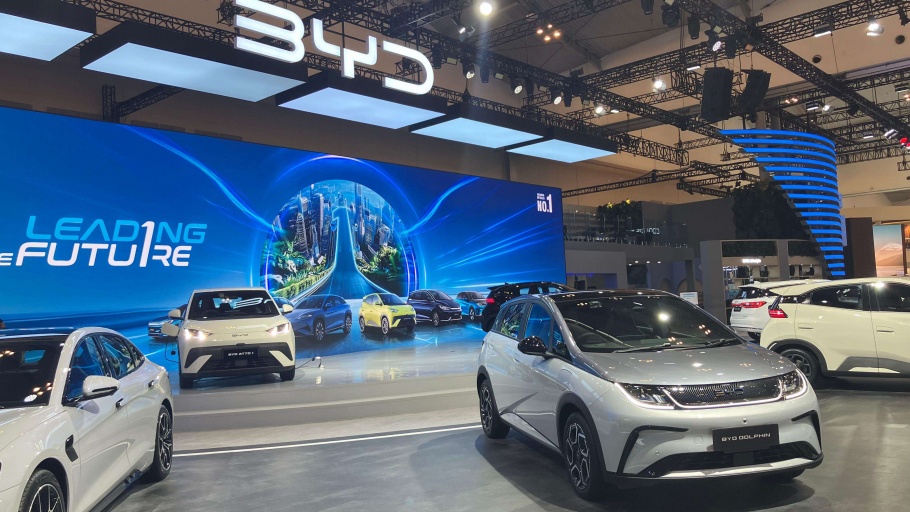
For years, Tesla was seen as the untouchable king of electric vehicles. It made EVs cool, fast, and desirable, while most traditional carmakers were still playing catch-up. Then something unexpected happened: BYD, a Chinese automaker that many people outside Asia barely noticed before, quietly overtook Tesla in key areas and reshaped the global EV landscape.
This isn’t a story about one company failing and another getting lucky. It’s about strategy, timing, and understanding the market better than anyone else.
So how exactly did BYD beat Tesla?
BYD Didn’t Start as a Car Company
One of the biggest reasons BYD succeeded is also one of the least talked about. BYD didn’t start by making cars—it started by making batteries.
Founded in 1995, BYD was originally a battery manufacturer supplying rechargeable batteries for phones and electronics. This gave the company deep expertise in battery chemistry, cost control, and large-scale manufacturing long before EVs went mainstream.
When BYD entered the auto industry, batteries weren’t a weakness to solve. They were already BYD’s strongest weapon.
Tesla, on the other hand, relied heavily on external battery suppliers for years. While Tesla focused on performance and software, BYD focused on controlling the most expensive part of an EV from day one.
Vertical Integration Changed Everything
BYD’s biggest advantage is vertical integration. The company makes almost everything in-house: batteries, motors, power electronics, chips, and even some raw material processing.
This matters a lot in the EV world.
When global supply chains were disrupted, BYD kept producing cars while others slowed down. When battery prices fluctuated, BYD had more control over costs. When competitors struggled with shortages, BYD kept shipping vehicles.
Tesla is vertically integrated too, but BYD takes it to another level. This allowed BYD to scale faster and sell cars at prices many rivals simply couldn’t match.
The Blade Battery Was a Game Changer
BYD’s Blade Battery is often cited as one of the company’s biggest breakthroughs. Instead of focusing only on range and performance, BYD emphasized safety, durability, and cost efficiency.
The Blade Battery uses lithium iron phosphate (LFP) chemistry, which is:
-
Cheaper than traditional lithium-ion
-
More stable and less prone to fire
-
Longer-lasting over many charge cycles
For years, LFP batteries were seen as “inferior” because of lower energy density. BYD turned that weakness into a strength by redesigning the battery structure itself.
Tesla eventually adopted LFP batteries for many of its standard-range models—an indirect admission that BYD’s approach made sense.
BYD Understood the Mass Market Better
Tesla’s brand is built on innovation, performance, and premium appeal. That worked incredibly well, especially in the US and Europe. But the global EV market is not just premium buyers.
BYD focused heavily on:
-
Affordable EVs
-
Plug-in hybrids for transition markets
-
Practical designs for everyday users
In China, Southeast Asia, Latin America, and parts of Europe, buyers care more about price, reliability, and running costs than acceleration times.
BYD offers a wide range of models—from compact city cars to SUVs and buses—covering almost every price segment. Tesla’s lineup, by comparison, is relatively narrow.
Volume matters, and BYD went all in on volume.
China’s Home Advantage Played a Role
It’s impossible to talk about BYD’s rise without mentioning China’s EV ecosystem.
China invested early and heavily in EV infrastructure, battery supply chains, and manufacturing capacity. BYD benefited from:
-
Proximity to battery raw materials
-
A massive domestic market
-
Faster production scaling
While Tesla built an impressive factory in Shanghai, BYD was already deeply embedded in the local supply network. This gave BYD speed and flexibility that foreign companies struggled to match.
BYD Played the Long Game on Profit
Tesla prioritized growth, innovation, and brand dominance—even if it meant thinner margins at times. BYD took a more conservative approach.
By focusing on cost control and steady expansion, BYD built a business that could survive price wars. When Tesla started cutting prices aggressively, BYD was already prepared.
In fact, BYD often forced competitors to react, not the other way around.
Hybrid Strategy Gave BYD an Edge
While Tesla went all-in on fully electric vehicles, BYD took a more flexible approach. Alongside pure EVs, BYD continued developing plug-in hybrid vehicles (PHEVs).
This turned out to be a smart move.
In regions where charging infrastructure is still developing, hybrids are more practical. They reduce emissions without requiring full dependence on charging networks.
BYD’s hybrid lineup helped it dominate markets where full EV adoption is slower, while Tesla simply had no equivalent offering.
Tesla Focused on Tech, BYD Focused on Manufacturing
Tesla is often described as a tech company as much as a car company. Its strengths lie in:
-
Software
-
Autonomy features
-
Over-the-air updates
-
Performance optimization
BYD’s strength is manufacturing execution.
BYD doesn’t always have the flashiest tech or the longest range, but it delivers solid vehicles at scale, with fewer surprises and lower costs.
In the EV race, perfection matters less than consistency—especially when selling millions of cars.
Global Expansion Changed the Narrative
For a long time, BYD was seen as “just a Chinese brand.” That perception is changing fast.
BYD is expanding aggressively into:
-
Europe
-
Southeast Asia
-
Australia
-
Latin America
In many of these markets, BYD offers EVs that are cheaper than Tesla while still meeting local regulations and expectations. As brand awareness grows, Tesla’s first-mover advantage is starting to fade.
Did BYD Really Beat Tesla?
The answer depends on how you define “beat.”
Tesla still leads in:
-
Brand recognition
-
Software and autonomy
-
Profit per vehicle in some segments
But BYD has overtaken Tesla in:
-
Total vehicle sales (including hybrids)
-
Battery production scale
-
Market dominance in China
In a global sense, BYD has proven that Tesla is no longer alone at the top.
Final Thoughts
BYD didn’t beat Tesla by copying it. It beat Tesla by doing almost the opposite.
While Tesla chased innovation and disruption, BYD focused on manufacturing, cost control, and mass-market appeal. While Tesla bet on premium branding, BYD bet on scale. While Tesla pushed full EVs everywhere, BYD offered flexible solutions.
The result is a new balance of power in the EV industry.
This isn’t the end of Tesla—but it is the end of Tesla being untouchable. And for consumers, that’s probably the best outcome of all. Competition means better cars, lower prices, and faster progress toward a cleaner future.
The EV race is far from over—but BYD has proven it knows exactly how to win battles that really matter ⚡🚗