

The FIFA World Cup 2026 is set to become the biggest and most ambitious football tournament in history. Hosted jointly by the United States, Canada, and Mexico, the competition will feature 48 national teams instead of the traditional 32-team format used in previous editions. This expansion has opened the door for new footballing nations to qualify while giving established powers another opportunity to compete on the world stage. In this article, we take a closer look at the Qualified Teams for World Cup 2026 and what fans can expect from this historic event.
The qualification process for the 2026 FIFA World Cup has produced dramatic storylines, historic first-time qualifiers, emotional comebacks, and surprising eliminations. Traditional football giants such as Brazil, Argentina, France, Germany, and England have secured their spots, while emerging nations like Uzbekistan, Jordan, Curaçao, and Cape Verde have made history by reaching the tournament for the first time. :contentReference[oaicite:0]{index=0}
The tournament will take place across 16 cities in North America and is expected to attract billions of viewers globally. FIFA has also introduced a new format featuring 12 groups of four teams, with 104 total matches to be played from June 11 to July 19, 2026. :contentReference[oaicite:1]{index=1}
This article provides a detailed and comprehensive overview of the qualified teams for World Cup 2026, including qualification pathways, continental breakdowns, key players, emerging football nations, tournament favorites, and the significance of this historic expansion.
The 2026 edition marks the first time FIFA has expanded the World Cup to 48 teams. Previously, only 32 nations participated from 1998 through 2022.
The expanded format aims to:
Under the new structure, the 48 teams are divided into 12 groups of four. The top two teams from each group, along with the eight best third-placed teams, advance to the Round of 32. :contentReference[oaicite:2]{index=2}
This change significantly increased qualification slots across all confederations, especially in Africa, Asia, and CONCACAF.
As co-hosts of the tournament, three countries automatically qualified:
This marks the first time in World Cup history that three countries are hosting the tournament together on such a massive scale. Mexico will become the first nation to host the men’s FIFA World Cup three times after previously hosting in 1970 and 1986. :contentReference[oaicite:3]{index=3}
The United States enters the tournament with high expectations. The country has invested heavily in football infrastructure, youth development, and Major League Soccer growth over the past two decades.
With talented players competing in Europe’s top leagues, the U.S. national team hopes to make a deep run in front of home supporters.
Canada has emerged as one of the fastest-rising football nations in recent years. After qualifying for the 2022 World Cup, the Canadian team continues to develop a strong generation of players.
The nation sees hosting duties as an opportunity to elevate football’s popularity even further.
Mexico remains one of the strongest football nations in CONCACAF history. The passionate football culture and iconic stadiums such as Estadio Azteca will play central roles during the tournament.
The expanded World Cup format has allowed more nations from each confederation to qualify.
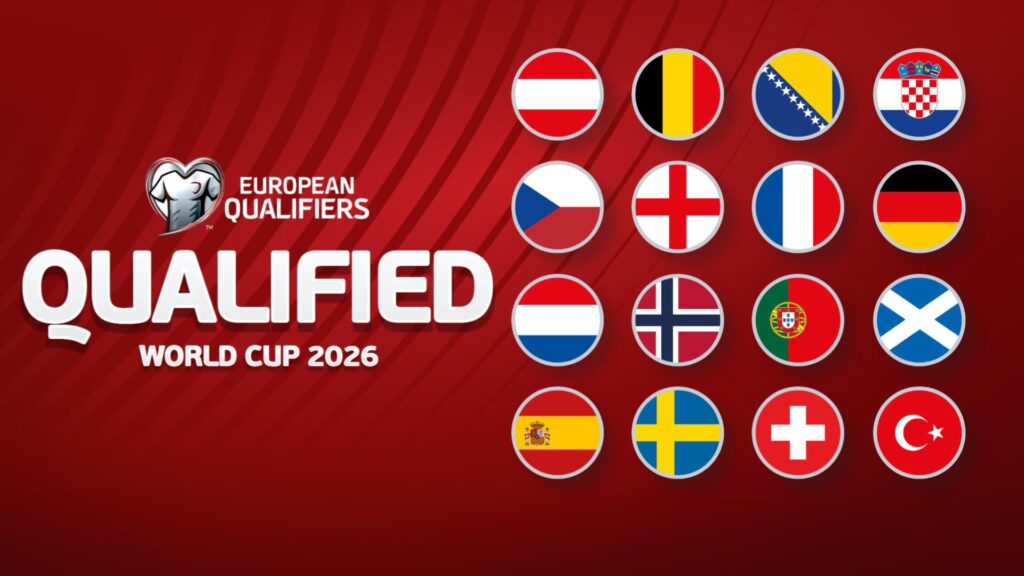
Europe continues to produce many of the tournament favorites. UEFA received 16 qualification slots.
Qualified European nations include:
Several European nations are returning after long absences. Norway qualified for its first World Cup since 1998, while Sweden returned after missing out in 2022. Bosnia and Herzegovina also qualified for the first time since 2014. :contentReference[oaicite:4]{index=4}
South America remains home to some of football’s greatest teams and players.
Qualified South American nations include:
Argentina enters the tournament as defending champions after winning the 2022 FIFA World Cup in Qatar. Lionel Messi may potentially appear in his final World Cup, making Argentina one of the most closely watched teams in the tournament. :contentReference[oaicite:5]{index=5}
Asian football has experienced tremendous growth over the last decade.
Qualified Asian teams include:
Japan became the first non-host nation to qualify for the 2026 World Cup. Uzbekistan and Jordan qualified for the tournament for the first time in history, representing a major milestone for football development in Central and West Asia. :contentReference[oaicite:6]{index=6}
Africa received more qualification spots than ever before due to the tournament expansion.
Qualified African nations include:
Morocco enters the tournament with immense confidence after becoming the first African nation to reach a World Cup semifinal in 2022.
Cape Verde’s qualification is considered one of the most remarkable achievements of the qualifying campaign. The island nation secured its first-ever World Cup appearance despite limited resources and infrastructure compared to global football powers. :contentReference[oaicite:7]{index=7}
Aside from the automatic qualification of the hosts, several additional CONCACAF nations secured places.
Curaçao’s qualification shocked many football observers and demonstrated how smaller football nations can benefit from expanded tournament access. Haiti also returned to the World Cup for the first time since 1974. :contentReference[oaicite:8]{index=8}
With FIFA granting Oceania a guaranteed qualification spot for the first time, New Zealand successfully secured its place at the tournament.
The expanded format created opportunities for several nations to qualify for their first-ever FIFA World Cup.
Uzbekistan became the first Central Asian country to qualify for a FIFA World Cup. The nation has invested heavily in youth football and domestic league development for years.
The qualification achievement reflects long-term planning and football infrastructure improvements.
Jordan’s qualification represents one of the greatest sporting achievements in the nation’s history. The team displayed resilience throughout the Asian qualifying campaign.
Cape Verde’s qualification stunned African football fans. Despite a relatively small population, the country built a disciplined and competitive squad capable of defeating larger football nations.
Curaçao’s qualification showcases the growing strength of Caribbean football. The country has benefited from Dutch football influences and strong player development pathways.
While many nations celebrated qualification, others experienced heartbreak.
Italy once again failed to qualify for the FIFA World Cup. This marks another disappointing chapter for one of football’s most successful nations. Despite winning Euro 2020, Italy struggled during qualification and playoff matches. :contentReference[oaicite:9]{index=9}
The absence of Italy highlights the increasing competitiveness of modern international football.
Several traditionally competitive nations narrowly missed qualification through playoff defeats.
Several teams enter the tournament as strong title contenders.
As defending champions, Argentina remains one of the favorites. The team combines experienced leaders with exciting young talent.
Argentina’s balanced squad, tactical flexibility, and winning mentality make them dangerous opponents.
France continues to possess one of the deepest squads in international football. The country consistently produces elite-level talent across all positions.
With players competing at Europe’s biggest clubs, France remains a major contender.
England has reached the latter stages of multiple recent international tournaments. Their squad includes experienced stars and rising young talents.
Football analysts believe England has one of its best opportunities in decades to win the World Cup.
Brazil always carries enormous expectations at World Cups. The nation’s attacking tradition and football culture make it one of the tournament’s most exciting teams.
Spain’s young generation has revitalized the national team. Their technical style and tactical organization make them strong championship candidates. :contentReference[oaicite:10]{index=10}
World Cup 2026 will feature many of the world’s biggest football stars.
Messi remains one of football’s greatest icons. Fans worldwide hope to see him compete once more on the sport’s biggest stage.
The French superstar is expected to be among the tournament’s leading players. His speed, finishing ability, and experience already make him one of football’s elite performers.
Norway’s return to the World Cup means Haaland will finally appear at football’s biggest event. His goal-scoring ability could transform Norway into a dangerous outsider.
The English midfielder has emerged as one of the best young players in world football. His leadership and versatility are expected to play a major role for England.
The 2026 World Cup will feature 12 groups of four teams.
Examples of confirmed groups include:
The format allows more matches and increased opportunities for smaller nations to progress beyond the group stage. :contentReference[oaicite:11]{index=11}
The tournament is expected to generate billions of dollars in economic activity across North America.
FIFA estimates the tournament will attract millions of international visitors.
Ticket demand has already reached record levels, with millions of tickets sold before the tournament begins. :contentReference[oaicite:12]{index=12}
Morocco’s historic semifinal run in the 2022 FIFA World Cup inspired African football nations and demonstrated that non-European and non-South American teams can compete at the highest level.
The country invested heavily in:
Many African federations are now attempting to replicate Morocco’s development model.
Japan’s football success reflects decades of strategic planning.
The Japanese Football Association focused on:
Japan’s consistent qualification for World Cups highlights the effectiveness of long-term investment in football systems.
Modern football qualification campaigns increasingly rely on technology.
Teams now use data analysis to improve tactics, monitor player fitness, and identify opponents’ weaknesses.
The qualification of several smaller nations reflects football’s increasing globalization.
Countries previously considered outsiders are now:
The expanded World Cup format may accelerate football development in regions traditionally underrepresented at elite tournaments.
Although qualification is a major achievement, many teams face significant challenges before the tournament begins.
Smaller nations often struggle with injuries and limited player pools compared to football superpowers.
The large geographical scale of the 2026 World Cup across North America may create travel fatigue for teams and supporters.
Favorites such as Brazil, France, and England face enormous pressure from fans and media.
The qualification campaign produced several notable statistics.
The expansion has dramatically changed the scale and competitiveness of the tournament.
The expanded format may produce the most unpredictable World Cup in history.
Reasons include:
Traditional powerhouses can no longer underestimate smaller nations.
The FIFA World Cup 2026 represents a historic turning point in international football. With 48 qualified teams, the tournament will showcase unprecedented global diversity, competitive balance, and football development. Traditional giants such as Argentina, Brazil, France, Germany, and England will battle for supremacy, while emerging nations like Uzbekistan, Jordan, Cape Verde, and Curaçao seek to make history on football’s biggest stage.
The expanded format has created opportunities for countries that previously struggled to qualify, reflecting FIFA’s vision of making football more globally inclusive. At the same time, the qualification campaign demonstrated that international football is becoming increasingly competitive, with even major nations vulnerable to elimination.
World Cup 2026 promises unforgettable moments, passionate fan support, rising stars, legendary players, and dramatic matches across North America. As billions of fans prepare for the tournament, one thing is certain: the road to football glory has never been more exciting, unpredictable, or globally representative.