

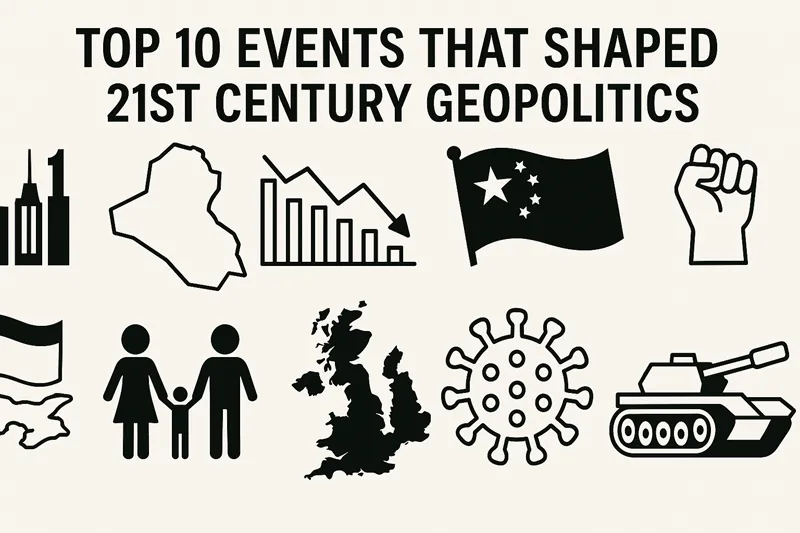
International relations are undergoing one of the most significant transformations since the end of the Cold War. Major Geopolitical Events Shaping International Relations Today are influencing the way nations interact on the world stage. The global political landscape is increasingly characterized by strategic competition among major powers, regional conflicts, technological rivalry, economic fragmentation, climate-related security challenges, and the emergence of new alliances. As countries navigate an interconnected yet increasingly divided world, geopolitical events have profound implications for diplomacy, global trade, military strategy, international law, and economic development.
Governments, multinational corporations, investors, and citizens alike are adapting to an era marked by uncertainty and rapid change. Traditional assumptions about globalization, international cooperation, and the balance of power are being challenged by new realities. This article explores the major geopolitical events and trends shaping international relations today, examining their causes, impacts, and potential future consequences.
One of the defining characteristics of modern international relations is the renewed competition among major global powers. Unlike the relatively unipolar period following the Cold War, today’s international system is increasingly multipolar, with several influential states seeking to shape global governance.
The United States continues to maintain the world’s largest military budget and remains a leading force in technological innovation and global finance. However, China’s rapid economic growth and expanding military capabilities have significantly altered the global balance of power.
Russia also continues to play a major geopolitical role despite economic sanctions and diplomatic isolation from many Western countries. Its military capabilities, energy resources, and strategic partnerships allow it to remain an influential global actor.
This renewed competition affects nearly every aspect of international politics, including:
The conflict between Russia and Ukraine has become one of the most consequential geopolitical events of the 21st century. Beyond the battlefield, it has reshaped European security architecture, influenced global food supplies, disrupted energy markets, and accelerated military cooperation among Western allies.
European countries have significantly increased defense budgets while seeking to reduce dependence on Russian energy. Many governments accelerated investments in renewable energy, liquefied natural gas infrastructure, and alternative suppliers.
The conflict has also revitalized transatlantic cooperation, with NATO members expanding military coordination and increasing joint exercises.
The war demonstrates how regional conflicts can quickly produce worldwide economic and diplomatic consequences.
The relationship between the United States and China increasingly defines global geopolitics. While economic interdependence remains significant, strategic rivalry has intensified across multiple sectors.
Trade disputes, technology restrictions, semiconductor production, artificial intelligence, telecommunications, and supply chain security have become central issues in bilateral relations.
The Indo-Pacific region has emerged as a primary arena for strategic competition. Maritime security, freedom of navigation, and territorial disputes continue to influence diplomatic and military planning.
Economic competition extends beyond tariffs. Governments increasingly focus on securing critical minerals, protecting advanced manufacturing, and reducing dependence on foreign suppliers for strategically important technologies.
Despite tensions, both countries remain deeply interconnected economically, making complete decoupling unlikely in the near future.
The Middle East remains central to global geopolitics due to its energy resources, strategic waterways, and complex regional rivalries. Recent conflicts and diplomatic initiatives continue to reshape regional dynamics.
The Israel-Hamas war has had significant humanitarian, political, and diplomatic consequences, influencing regional stability and affecting international diplomacy. Neighboring countries have sought to prevent wider regional escalation while global powers continue diplomatic engagement.
Meanwhile, Gulf countries are diversifying their economies through ambitious national development plans, investing heavily in renewable energy, tourism, logistics, and advanced technologies.
Energy markets remain closely tied to developments in the region, particularly regarding oil production decisions and maritime security.
The Indo-Pacific has become one of the world’s most strategically important regions. It accounts for a substantial share of global trade, manufacturing, and economic growth.
Countries including India, Japan, Australia, South Korea, Indonesia, Vietnam, and members of ASEAN play increasingly important diplomatic roles.
Governments are expanding maritime cooperation while investing in naval modernization to secure shipping lanes that carry trillions of dollars in annual trade.
The region also represents one of the fastest-growing digital economies, making it central to future technological competition.
Technology has become an essential component of national security. Artificial intelligence, advanced semiconductors, cloud computing, biotechnology, and cybersecurity increasingly influence diplomatic relations.
Countries are investing billions of dollars into research and development while implementing industrial policies designed to strengthen domestic technological capabilities.
Technology competition now includes:
Cyberattacks targeting government agencies, financial institutions, healthcare systems, and critical infrastructure demonstrate how digital security has become inseparable from national security.
Globalization is evolving rather than disappearing. Many governments now prioritize resilience alongside efficiency.
The COVID-19 pandemic exposed vulnerabilities in global supply chains, particularly for medical equipment, pharmaceuticals, semiconductors, and strategic raw materials.
Businesses increasingly adopt diversification strategies that include:
These changes influence investment decisions and international trade policies worldwide.
Climate change is no longer viewed solely as an environmental concern. Increasingly, governments recognize it as a geopolitical and security challenge.
Extreme weather events, droughts, rising sea levels, and resource scarcity can contribute to migration pressures, food insecurity, and political instability.
The transition toward clean energy is also reshaping international relations. Competition for critical minerals such as lithium, cobalt, nickel, and rare earth elements has become strategically important because these resources are essential for batteries, renewable energy technologies, and electric vehicles.
Countries investing early in green technologies may gain long-term economic and geopolitical advantages.
International institutions continue to play an important role, but they also face increasing challenges in responding to geopolitical competition.
Organizations such as the United Nations, the World Trade Organization, the International Monetary Fund, and the World Health Organization remain essential forums for diplomacy and global cooperation. However, disagreements among major powers often complicate collective decision-making.
At the same time, regional organizations and issue-specific partnerships have become increasingly influential in addressing trade, security, infrastructure, and development challenges.
Many emerging economies are assuming more prominent roles in international affairs. Countries across Asia, Africa, Latin America, and the Middle East are expanding diplomatic influence while pursuing more independent foreign policies.
Rather than aligning exclusively with one major power, many governments seek flexible partnerships that maximize economic opportunities and strategic autonomy.
This trend contributes to a more complex and multipolar international system in which regional actors possess greater influence over global outcomes.