

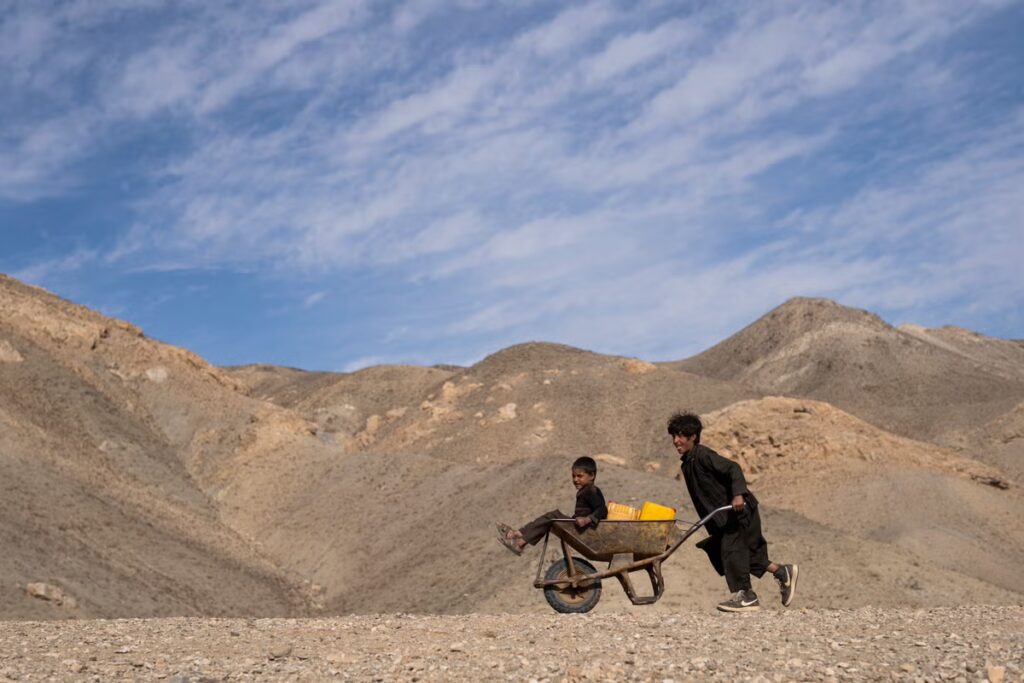
Afghanistan is facing one of the most devastating droughts in its modern history, a catastrophe that has compounded decades of war, economic instability, displacement, and political upheaval. Afghanistan enduring the worst drought in decades highlights how the prolonged lack of rainfall, worsening climate conditions, and collapsing agricultural systems have pushed millions of Afghans into severe food insecurity and humanitarian distress. International organizations, including the International Rescue Committee (IRC), have warned that the crisis could displace millions and deepen poverty across the country.
The drought is not simply an environmental issue. It is a multidimensional emergency affecting agriculture, health, migration, education, gender equality, and national stability. For a country where nearly 80% of the population depends on farming and livestock for survival, prolonged water shortages have devastated livelihoods and increased vulnerability among already struggling communities.
Afghanistan’s drought conditions have reached alarming levels over recent years. According to humanitarian assessments, more than 80% of the country has been affected by severe drought conditions, with provinces such as Herat, Helmand, Badghis, and Kandahar among the hardest hit.
The International Federation of Red Cross and Red Crescent Societies (IFRC) described the situation as “the worst drought and hunger crisis in decades.” Millions of people have experienced crop failures, livestock losses, and shrinking water supplies.
Several factors have intensified the crisis:
The consequences are severe. Communities that once depended on subsistence farming are now reliant on humanitarian aid for survival. Wells are drying up, rivers are shrinking, and food prices continue to rise beyond the reach of ordinary families.
Afghanistan contributes minimally to global greenhouse gas emissions, yet it is among the countries most vulnerable to climate change. The country’s geography, dependence on rain-fed agriculture, and fragile infrastructure make it especially susceptible to droughts, floods, and extreme weather events.
Climate experts have observed increasingly erratic rainfall patterns across Central and South Asia. Afghanistan has experienced recurring drought cycles over the last two decades, but the current crisis stands out because of its duration and intensity. :contentReference[oaicite:4]{index=4}
Ironically, while droughts have become more common, Afghanistan has also suffered destructive flash floods. In 2024, severe flooding killed hundreds of people and destroyed roads, homes, and farmland. The contrast between drought and sudden floods highlights how climate instability is disrupting traditional weather patterns.
Climate change affects Afghanistan in multiple ways:
Experts warn that climate-induced disasters could worsen in the coming years unless substantial investments are made in resilience, water management, and sustainable agriculture.
Food insecurity is one of the most immediate and devastating consequences of the drought. Afghanistan already faced widespread poverty and hunger following decades of conflict and political instability. The drought has pushed millions closer to famine-like conditions.
According to humanitarian organizations, more than 22 million Afghans have experienced acute food shortages in recent years.
Farmers across rural regions have watched their crops fail repeatedly. Wheat production, which is central to Afghan food security, has declined dramatically in drought-affected provinces. Livestock owners have also suffered enormous losses as grazing lands disappear and water becomes scarce.
The IRC reported that many families are resorting to desperate survival measures, including:
Children are especially vulnerable. Severe acute malnutrition affects millions of Afghan children under five years old, placing them at risk of lifelong health complications or death.
The drought has also created a critical water crisis. Many rural communities have lost access to clean drinking water as wells and streams dry up. Women and children often walk several kilometers each day to collect water, reducing time available for education and income-generating activities.
Water scarcity has triggered numerous public health concerns:
The IRC found that more than 80% of surveyed families with young children reported illnesses linked to lack of clean water.
Kabul, the capital city, faces its own water emergency. Reports indicate groundwater reserves are rapidly declining due to overuse, population growth, and prolonged drought. Some experts fear the city could face catastrophic shortages in the coming decade.
The water crisis also affects healthcare facilities. Hospitals and clinics struggle to maintain sanitation standards, especially in remote areas where infrastructure is weak.
Drought-induced displacement has become a growing humanitarian concern. As agricultural livelihoods collapse, families are forced to leave their villages in search of food, water, and work opportunities.
The IRC warned that millions could be displaced if drought conditions persist. :contentReference[oaicite:10]{index=10}
Internal displacement places enormous strain on urban centers already struggling with poverty and inadequate infrastructure. Informal settlements around cities such as Kabul and Herat continue to grow as displaced families seek survival opportunities.
Displacement creates additional challenges:
Migration patterns are also influenced by neighboring countries. Many Afghans attempt to migrate to Iran or Pakistan, but deportations and border restrictions have complicated the situation. Returning migrants often arrive with no resources and limited support systems.
The humanitarian impact of the drought is not distributed equally. Women and children are disproportionately affected due to existing social inequalities and economic vulnerabilities.
Women in rural Afghanistan often carry responsibility for household water collection and food preparation. As resources become scarce, their workloads increase dramatically.
Girls are particularly vulnerable to school dropout. Families struggling financially may prioritize boys’ education while girls remain home to assist with domestic labor. In extreme cases, child marriage becomes a coping mechanism for impoverished households.
The drought has also worsened maternal health challenges:
Humanitarian organizations continue to emphasize the importance of protecting women and children during climate-related crises.
Afghanistan’s drought crisis cannot be separated from its broader economic collapse. After the Taliban’s return to power in 2021, international funding was drastically reduced, financial systems weakened, and unemployment soared.
The economy had already been fragile due to decades of conflict. The drought intensified existing vulnerabilities by destroying agricultural income and reducing food production.
Key economic challenges include:
For many families, even when food is available in markets, it is simply unaffordable. Humanitarian agencies have repeatedly warned that aid funding remains insufficient to meet growing needs.
International organizations and local aid groups are working to mitigate the crisis despite immense operational challenges.
The International Rescue Committee (IRC) has expanded food assistance programs, cash support initiatives, healthcare services, and climate resilience efforts in several provinces.
Other organizations responding to the drought include:
Humanitarian assistance typically includes:
However, aid agencies continue to face funding shortfalls. Political instability, banking restrictions, and security concerns complicate relief operations.
Herat Province in western Afghanistan illustrates the devastating impact of prolonged drought. Traditionally known for agriculture and livestock production, the region has suffered repeated crop failures and shrinking water resources.
Many families in Herat have abandoned farming altogether because irrigation systems no longer provide sufficient water. Communities dependent on wheat and saffron production have seen incomes collapse.
The IRC identified Herat as one of the provinces most severely affected by drought-related displacement.
At the same time, Herat has experienced destructive flooding events that further damaged infrastructure and agricultural land.
This combination of drought and floods demonstrates how climate instability is creating recurring disasters that prevent long-term recovery.
Agriculture remains the backbone of Afghanistan’s economy. When drought destroys crops and livestock, entire communities lose their primary source of income.
Farmers face numerous difficulties:
Many Afghan farmers rely on traditional irrigation systems known as karezes. These underground water channels have deteriorated due to years of neglect and environmental stress.
Without investment in sustainable agriculture and water infrastructure, rural communities will remain highly vulnerable to future climate shocks.
Afghanistan’s environmental challenges are deeply connected to its long history of conflict. Decades of war have weakened institutions, damaged infrastructure, displaced populations, and limited economic development.
Conflict has undermined the country’s ability to prepare for and respond to climate disasters. Irrigation systems, dams, roads, and healthcare facilities have all suffered from neglect or destruction.
The IRC reported that drought conditions have contributed to rising tensions and local conflicts over water resources.
Competition for scarce resources can intensify instability, especially in fragile regions where governance structures are weak.
While emergency humanitarian aid is essential, long-term solutions are needed to help Afghanistan adapt to worsening climate conditions.
Experts emphasize several priority areas:
Community-based resilience programs can also help rural populations better prepare for future droughts and disasters.
International cooperation will be critical. Afghanistan lacks the financial capacity to address climate adaptation independently, especially given ongoing economic difficulties.
The global community faces difficult questions regarding engagement with Afghanistan. Political tensions have complicated aid delivery, yet humanitarian needs continue to grow.
Humanitarian organizations stress that ordinary Afghan civilians should not bear the consequences of geopolitical disputes. Millions of people require immediate support regardless of political circumstances.
International donors can contribute by:
Failure to act could lead to larger regional instability, increased migration, and worsening humanitarian suffering.
Behind every statistic lies a human story. Afghan families facing drought are not simply numbers in humanitarian reports. They are farmers watching generations of work disappear, children suffering from hunger, and mothers struggling to provide clean water for their families.
Many communities display remarkable resilience despite overwhelming hardship. Families share resources with neighbors, local organizations continue relief efforts under difficult conditions, and farmers adapt using traditional knowledge and innovative survival strategies.
Yet resilience alone cannot solve a crisis of this magnitude. Without sustained support and structural change, millions remain at risk.
Afghanistan’s drought crisis represents one of the most severe humanitarian and climate emergencies in the world today. The combination of prolonged drought, economic collapse, political instability, and decades of conflict has created a perfect storm of suffering for millions of Afghans.
The International Rescue Committee and other humanitarian organizations have repeatedly warned that the situation could deteriorate further without urgent international action. Food insecurity, displacement, malnutrition, and water shortages continue to threaten vulnerable communities across the country.
Climate change is no longer a distant threat for Afghanistan. It is a daily reality shaping livelihoods, migration patterns, public health, and national stability. The drought serves as a stark reminder that climate vulnerability and humanitarian crises are deeply interconnected.
Addressing Afghanistan’s crisis will require both immediate humanitarian relief and long-term investments in climate resilience, infrastructure, agriculture, and public services. The international community, humanitarian agencies, and local Afghan organizations must work together to prevent further catastrophe.
Ultimately, the story of Afghanistan’s drought is not only about environmental disaster. It is about survival, resilience, and the urgent need for global solidarity in the face of one of the defining humanitarian challenges of our time.