

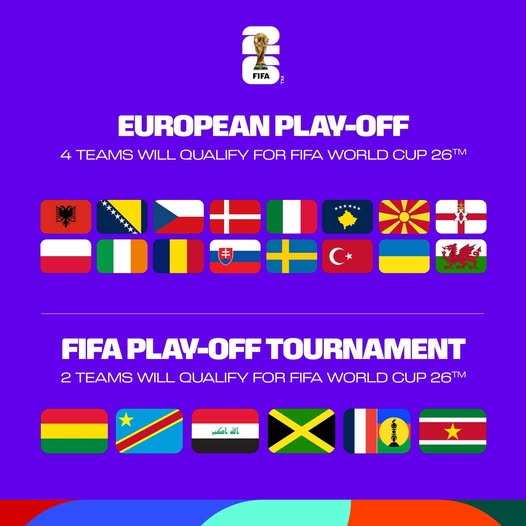
The FIFA World Cup 2026 is set to become one of the most historic tournaments in football history. For the first time ever, the competition will feature 48 teams instead of 32, expanding opportunities for emerging football nations and reshaping the global landscape of the sport. This year, Congo Turkey and Iraq qualify for FIFA World Cup 2026, each marking a new chapter in the tournament. Among the most inspiring stories of qualification are those of DR Congo, Turkey, and Iraq—three nations whose journeys to the tournament symbolize resilience, national pride, and the growing competitiveness of international football.
Each country arrives at the World Cup with its own unique narrative. DR Congo returns to the global stage for the first time since 1974, ending a decades-long absence. Turkey finally qualifies again after years of frustration and near misses, while Iraq secures a remarkable return to the World Cup after a 40-year wait. Their qualification campaigns captivated fans around the world and highlighted the increasingly global nature of football excellence.
According to FIFA’s official qualification list, DR Congo, Iraq, and Türkiye secured their places among the 48 qualified nations for the 2026 FIFA World Cup hosted by the United States, Canada, and Mexico.
This article explores how Congo, Turkey, and Iraq qualified, the key players and tactical developments behind their success, the significance of their qualification for their nations, and what fans can expect from these teams on football’
s grandest stage.
The 2026 FIFA World Cup will be unlike any previous edition. Hosted jointly by the United States, Canada, and Mexico, the tournament expands from 32 to 48 teams for the first time.
This expansion significantly altered qualification opportunities across every continent:
The expanded format gave ambitious football nations a realistic opportunity to compete globally. Countries that historically struggled to qualify suddenly had pathways to success if they could maintain consistency and tactical discipline.
For DR Congo, Turkey, and Iraq, the expansion created opportunity—but qualification still required overcoming difficult opponents and intense pressure.
DR Congo’s qualification for the 2026 FIFA World Cup is one of the most emotional stories in modern African football. The country last appeared at the World Cup in 1974 under the name Zaire.
That means an entire generation of Congolese football fans grew up without seeing their national team compete on the world’s biggest stage.
DR Congo secured qualification through the intercontinental playoffs after defeating Jamaica in extra time.
The dramatic victory sparked celebrations across Kinshasa and throughout the Congolese diaspora worldwide.
DR Congo’s success reflects years of football development and the emergence of talented players competing in top European leagues.
The nation has long produced technically gifted footballers, but instability, administrative challenges, and inconsistent coaching often hindered progress.
The 2026 qualification campaign showcased a more organized and disciplined team.
Key strengths of the Congolese squad included:
Players with European club experience brought composure and professionalism to the squad.
DR Congo’s qualification also represents the growing strength of African football. African teams have consistently improved over the last two decades, with Morocco’s semifinal run at the 2022 World Cup demonstrating the continent’s potential.
The return of DR Congo adds another dangerous and unpredictable African side to the tournament.
For many African football supporters, Congo’s qualification symbolizes persistence and revival.
Turkey’s qualification for the 2026 FIFA World Cup marks the country’s first appearance since 2002, when they famously finished third in the tournament.
Despite producing talented players and competing strongly in European competitions, Turkey repeatedly failed to qualify for major tournaments over the last two decades.
The team finally secured qualification by defeating Kosovo in the UEFA playoffs.
The victory sparked emotional celebrations across Turkey, where football remains deeply tied to national identity.
Turkey’s 2002 World Cup campaign remains one of the greatest underdog stories in football history.
Led by stars such as:
Turkey stunned football fans by defeating strong opponents and finishing third.
That success created enormous expectations for future generations, but qualification failures in subsequent years led to frustration and criticism.
The 2026 qualification therefore feels like redemption for Turkish football.
Turkey’s resurgence has been driven by a talented new generation of players competing at elite European clubs.
The national team now combines youthful creativity with tactical maturity.
Key factors behind Turkey’s qualification included:
Turkey’s supporters now hope the team can replicate the magic of 2002.
Iraq’s qualification for the 2026 FIFA World Cup is arguably one of the most inspiring football stories of the decade.
The Iraqi national team last appeared at the World Cup in 1986. Since then, the country has endured wars, political instability, sanctions, and immense social challenges.
Despite these difficulties, football remained a source of unity and hope for millions of Iraqis.
Iraq finally secured qualification after defeating Bolivia 2-1 in the FIFA intercontinental playoffs.
The victory ended a 40-year wait and triggered massive celebrations across Iraq.
Iraq’s football history is filled with adversity and resilience.
For years, the national team faced:
Yet Iraqi football continued producing talented and passionate players.
The country’s most famous football achievement before 2026 came in 2007, when Iraq won the AFC Asian Cup despite ongoing conflict within the country.
That triumph demonstrated football’s emotional significance for Iraqis worldwide.
Iraq’s route to qualification was exceptionally difficult.
The team navigated multiple rounds of Asian qualifying before entering the intercontinental playoffs.
According to FIFA, Iraq became the final nation to qualify for the 2026 World Cup after defeating Bolivia.
The victory reflected tactical discipline, defensive resilience, and mental strength.
Key Iraqi strengths included:
World Cup qualification means far more than football for Congo, Turkey, and Iraq.
For these nations, qualification represents:
In countries facing economic or political challenges, football success often becomes a rare source of collective joy.
The emotional scenes following qualification demonstrated how deeply football is connected to national identity.
Qualification for the FIFA World Cup generates substantial economic benefits.
Participating nations receive FIFA prize money, sponsorship growth, tourism exposure, and increased commercial opportunities.
Potential benefits include:
For Iraq and DR Congo especially, qualification may encourage greater investment in sports infrastructure and player development.
The expanded World Cup format played a major role in enabling emerging football nations to compete globally.
Critics initially argued that expansion might dilute tournament quality.
However, supporters countered that broader representation would:
The qualification of countries such as Iraq and DR Congo demonstrates the positive impact of expansion.
New teams bring fresh stories, diverse football styles, and passionate fan cultures to the tournament.
One of football’s greatest powers is its ability to unite people across political, ethnic, and social divisions.
Football creates moments where millions of people share the same emotions simultaneously.
The World Cup remains the world’s most universally watched sporting event because of this emotional connection.
DR Congo benefited from a squad filled with athletic and technically gifted players.
Important contributors included experienced defenders and energetic midfielders capable of competing against physically strong opponents.
Turkey’s squad featured creative attacking players and disciplined defenders competing in top European leagues.
The team’s tactical flexibility became a major strength during qualification.
Iraq relied heavily on collective teamwork and disciplined organization.
Players such as Aymen Hussein and Ali Al-Hamadi played decisive roles in important matches.
The qualification campaigns of Congo, Turkey, and Iraq also reflect broader trends in modern football.
International football has become increasingly tactical and data-driven.
Successful teams now emphasize:
Even traditionally smaller football nations now employ advanced tactical systems.
This has reduced the performance gap between elite teams and emerging nations.
Football fans worldwide reacted enthusiastically to the qualification stories.
Social media platforms exploded with celebrations, emotional videos, and messages of support.
Reddit football communities praised the emotional significance of the achievements, especially Iraq’s return after four decades and DR Congo’s first appearance since 1974.
Many neutral fans expressed excitement about seeing new and returning nations at the World Cup.
The 2026 tournament promises unprecedented diversity and excitement.
With 48 teams participating, fans will witness:
According to FIFA, more than six million fans are expected to attend matches across North America.
Turkey may enter the tournament as a dangerous dark horse capable of upsetting stronger opponents.
DR Congo’s athleticism and physicality could create problems for established teams.
Iraq’s passionate style and disciplined defense may also surprise many observers.
Despite qualification success, all three teams face significant challenges before the tournament.
These include:
The World Cup demands exceptional physical and mental preparation.
However, underdog teams often thrive because they play with freedom and lower external expectations.
The qualification of Congo, Turkey, and Iraq highlights football’s increasing globalization.
Talent now emerges from every continent, and modern scouting networks identify players from increasingly diverse backgrounds.
Football’s global growth has been accelerated by:
The 2026 World Cup may become the most globally representative football tournament ever.
Behind every qualification campaign are deeply personal stories of sacrifice and perseverance.
Many players from Iraq and DR Congo overcame difficult childhoods, limited resources, and political instability to reach the highest level of football.
For supporters, these players represent hope and national pride.
The emotional power of football lies not only in trophies and victories but in the journeys that lead there.
The qualification of DR Congo, Turkey, and Iraq for the FIFA World Cup 2026 represents far more than sporting achievement. It symbolizes resilience, ambition, national unity, and the continuing globalization of football.
DR Congo’s return after more than 50 years, Turkey’s long-awaited comeback since 2002, and Iraq’s emotional qualification after four decades have already become defining stories of the 2026 World Cup cycle.
The expanded 48-team format has opened doors for nations that previously struggled to compete on football’s biggest stage. Rather than diminishing the tournament, these new stories add depth, diversity, and emotional richness to the World Cup experience.
As the world prepares for the 2026 FIFA World Cup in North America, fans can look forward to seeing these nations bring passion, energy, and unforgettable moments to the tournament.
Football remains the world’s most powerful sporting language because it transcends borders, politics, and cultures. The journeys of Congo, Turkey, and Iraq remind us why the World Cup continues to inspire billions of people around the globe.
For these nations and their supporters, qualification is not the end of the story—it is the beginning of a new chapter on football’s grandest stage.