

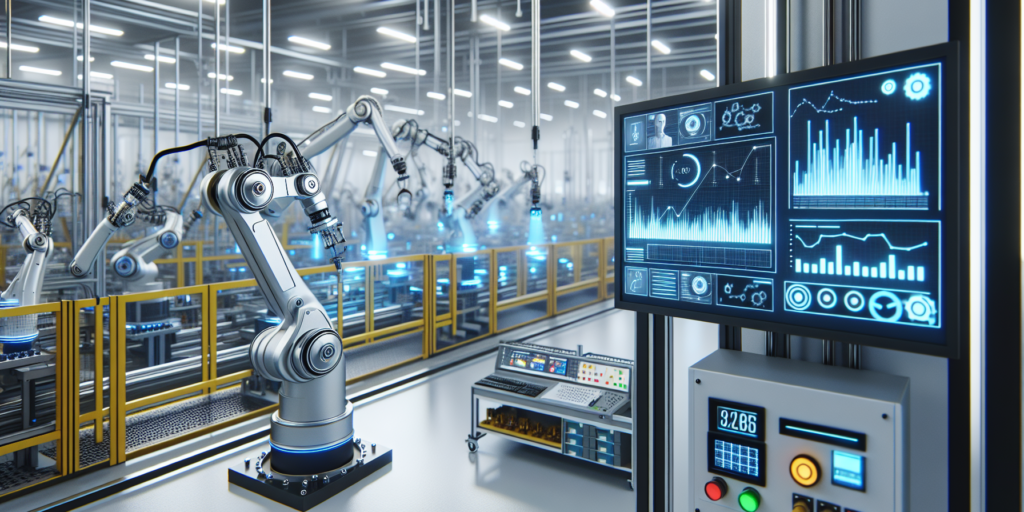
The factories of 2026 look nothing like the smoky assembly lines of the past. We are living through the “Fourth Industrial Revolution,” where Artificial Intelligence (AI) is the main engine of change. AI-Powered Automation in Industrial Manufacturing Processes is revolutionizing how factories operate. AI is no longer just for tech giants; it is now a tool that every factory needs to survive in a fast-paced global market.
Bringing AI into manufacturing is about more than just moving robot arms. It marks a shift from machines that simply follow orders to “smart” systems that can think and adapt. By using sensors and smart cameras, modern factories act like living things that can fix their own problems. This article looks at how AI affects everything from checking for tiny errors to managing global ship routes.
In the past, when a machine broke down, the whole factory stopped, costing thousands of dollars every minute. To avoid this, factories used to replace parts on a set schedule, even if they were still good. AI has changed this to “predictive” maintenance—knowing exactly when a part is about to fail.
AI models listen to the sounds of motors and watch for small heat changes. They can find tiny cracks or friction that a human would miss. By knowing when a part will break, managers can fix it during a lunch break instead of during a busy shift. Data from 2025 shows that this saves companies 20% on repair costs and keeps machines running much longer.
Predictive maintenance division for technology fix control outline diagram
In old factories, humans would check a few items by hand to look for mistakes. But humans get tired and miss things. Today, AI cameras check every single item at high speed. These cameras use “deep learning” to find flaws that are too small for the human eye to see.
In computer chip making, AI can find a tiny speck of dust in less than a second. In car factories, it makes sure every weld is perfect. This means less waste and fewer broken products reaching the customer. By 2026, using AI to check quality has cut product recalls in half for the electronics industry.
For a long time, factory robots were kept in cages because they were dangerous. AI has created “Cobots”—robots that work right next to people. These robots have sensors that act like skin; if they touch a person, they stop instantly.
These robots learn from their human partners. A worker can guide a robot arm through a task once, and the AI remembers it. This allows robots to handle the heavy lifting and boring, repetitive work. Humans can then focus on the tricky parts of the job that require real thinking. This makes factories more flexible and safer for everyone.
A “Digital Twin” is a computer copy of a real machine or factory. AI uses data from the real factory to run the virtual one. This lets engineers run “what-if” tests without stopping the real work. If they want to try a new layout, they can test it on the computer first.
Studies show that companies using Digital Twins bring new products to stores 30% faster. If a car company wants to start making batteries instead of engines, the AI can predict where the problems will be. This stops expensive mistakes before they happen in the real world.
Making things is only half the battle. You also need parts from all over the world. Bad weather or war can stop these parts from arriving. AI acts like the “brain” of the shipping network, watching the news and weather to spot trouble early.
In 2026, many factories have “self-healing” supply chains. If an AI sees that a steel shipment will be late because of a storm, it can find a new supplier and order the parts automatically. This keeps the factory running smoothly even when the world is messy. It turns shipping from a headache into a major advantage.
AI is not just building products; it is helping design them. “Generative design” lets a computer come up with thousands of ideas based on a few rules, like how strong or light a part needs to be. The shapes the AI creates often look like something from nature.
In the airplane industry, these AI-designed parts are often 40% lighter but twice as strong. These shapes are often too complex for old machines, so they are made using 3D printers. This allows companies to make parts that are perfectly tuned for their job without making them more expensive.
Factories use a huge amount of power. In 2026, saving energy is vital for both the bank account and the planet. AI watches the power use of every machine and light bulb in the building.
The AI can decide to run power-hungry machines at night when electricity is cheaper. It can also turn off areas of the factory that aren’t being used. Most importantly, AI reduces “scrap”—the wasted material that usually goes in the trash. Using AI to be “green” is now the standard for modern manufacturing.
Many people fear that AI will take their jobs. While simple tasks are being done by machines, the need for skilled workers is growing. The factory worker of today is no longer just a laborer; they are a manager of smart systems.
Companies are spending a lot to retrain their staff. Someone who used to weld car parts by hand is now being taught how to program a laser robot. This shift leads to higher pay and a safer workplace. The biggest challenge for the future is making sure people can learn these new skills as fast as the technology changes.
Using AI in factories is the biggest change since the assembly line was invented.
AI is not about replacing people. It is about giving people better tools to solve problems. As we look ahead, the most successful companies will be the ones that treat AI as a partner to build a smarter, cleaner world.