

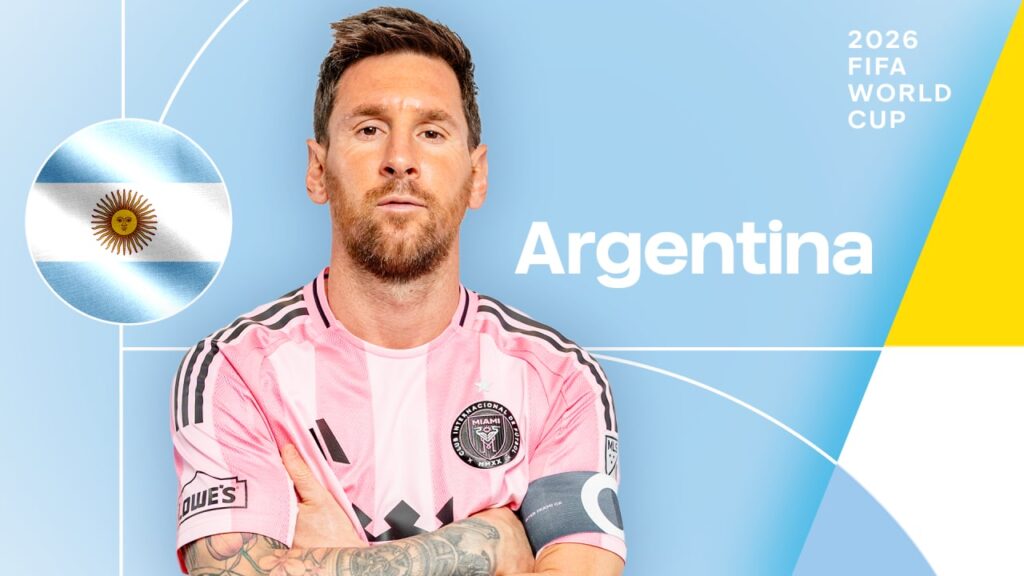
The 2026 FIFA World Cup promises to be one of the most historic tournaments in football history. For Argentina, it represents an unprecedented opportunity: to join an elite group of nations that have successfully defended their World Cup title. Argentina’s Road to Defending the World Cup will be closely followed by fans worldwide, as the Albiceleste enters the tournament as the reigning champions after their dramatic victory in Qatar 2022, and the world watches with bated breath to see if Lionel Scaloni’s side can cement their legacy as one of the greatest international teams of all time.
Argentina’s journey to this point is not merely about maintaining dominance; it represents a test of resilience, adaptation, and the enduring brilliance of a golden generation that has already achieved legendary status. With the tournament expanded to 48 teams and co-hosted by the United States, Mexico, and Canada, the landscape of international football has changed dramatically, yet Argentina’s ambitions remain unchanged—to lift football’s most prestigious trophy once again.
Defending a World Cup title is one of football’s most challenging feats. Since the tournament’s inception in 1930, only five nations have successfully defended their crown: Brazil (1958 and 1962), Germany (1974 and 1990 as West Germany), Italy (1934 and 1938, 1982), Argentina (1978 and 1986), and France (1998 and 2018). This rarity underscores the immense pressure that comes with entering a tournament as the defending champions.
Argentina’s situation is particularly compelling because their 2022 triumph came after decades of near-misses and heartbreak. The 1990 final defeat to Germany, the 2014 heartache in Brazil, and the consecutive final losses in the Copa America—these experiences shaped a squad that eventually learned to embrace pressure rather than buckle under it. Now, as champions, they face an entirely different challenge: maintaining the hunger that brought them success while managing the burden of expectation.
Scaloni has assembled a squad that balances the invaluable experience of veterans with the fresh energy of rising stars. The core of the team remains largely intact from the 2022 triumph, providing continuity that many defending champions lack.
Between the posts, Argentina possesses one of the world’s most reliable shot-stoppers. The goalkeeping department features players who have proven themselves at the highest levels of European football.
Argentina’s defensive unit combines Premier League expertise with Serie A’s tactical nous. The center-back partnership has evolved but remains formidable.
Scaloni’s midfield remains the engine that drives Argentina’s success. The unit combines work rate, creativity, and tactical intelligence.
Argentina’s attacking department is where the true magic happens. With multiple world-class options, Scaloni possesses tactical flexibility that most managers can only dream of.
Lionel Messi remains the heartbeat of this team. Despite being in the latter stages of his career, the eight-time Ballon d’Or winner continues to demonstrate extraordinary quality. His 2022 World Cup campaign, culminating in the magical night of December 18th, proved that he can still deliver on football’s biggest stage. His influence extends beyond statistics—Messi’s ability to drop deep, orchestrate play, and create moments of brilliance makes Argentina’s attack perpetually dangerous.
Lautaro Martínez enters the 2026 tournament as perhaps the most complete striker in world football. His partnership with Messi reached new heights in 2022, and his continued development at Inter Milan has made him one of the most feared center-forwards globally. With over 30 international goals, Lautaro provides the clinical edge that Argentina needs.
Julián Álvarez offers Scaloni a versatile weapon. His energy, pressing, and ability to play across the front line make him invaluable in modern football. His rise since the 2022 World Cup has been remarkable, and he now carries significant expectation.
Argentina’s success cannot be attributed solely to individual brilliance; Scaloni’s tactical nous has been equally crucial. Since taking charge in 2018, the former right-back has transformed Argentina from a team that crumbled under pressure into one that controls games and adapts to various tactical scenarios.
The 4-4-2/4-3-3 hybrid that Argentina employ allows for fluid movement and flexibility. Players are encouraged to interchange positions, creating numerical advantages in midfield while maintaining defensive solidity. This system has proven particularly effective against high-pressing opponents, as Argentina’s technical quality allows them to play through pressure with composure.
Scaloni’s substitutions strategy deserves particular attention. During the 2022 World Cup, his second-half changes often proved decisive—introducing fresh legs while maintaining tactical structure. This ability to manage games while preserving attacking threat will be even more critical in the expanded 2026 format, where squad depth could determine champions.
Argentina’s journey to the 2026 World Cup was characteristically dominant. The Albiceleste secured qualification with impressive authority, maintaining their position at the summit of South American qualifying with minimal drama. This relative comfort allowed Scaloni to experiment with tactical variations while preserving key players for the tournament itself.
The extended timeline between tournaments has presented both opportunities and challenges. Players have had time to recover from accumulated fatigue, while new talents have emerged to strengthen Argentina’s squad. However, maintaining focus across such a long period requires exceptional professional discipline—something this squad has consistently demonstrated.
Argentina stands on the precipice of achieving something remarkable: becoming only the third nation to win three or more World Cups. Currently tied with Uruguay and Germany on two titles, success in 2026 would elevate the Albiceleste into rarefied air, joining Brazil (five titles) as genuine footballing superpowers.
The historical context adds layers of meaning to Argentina’s campaign. The 2026 tournament will be played across three nations—a first in World Cup history. This geographical spread presents unique challenges in terms of travel, climate adaptation, and maintaining consistent performance across different venues. For Argentina, accustomed to South American conditions, adapting to North American geography becomes an additional factor.
Understanding Argentina’s task requires examining those who succeeded before them. Brazil’s 1958-1962 double remains the gold standard. The Selecão entered the 1962 tournament as clear favorites and delivered with a squad featuring emerging talents alongside established stars. Their ability to maintain tactical discipline while managing star player Pelé’s fitness concerns offers lessons for any defending champion.
France’s 2018-2022 journey provides a more recent template. Didier Deschamps’ side entered Qatar with significant pressure and delivered through tactical flexibility, with players willing to sacrifice personal ambition for collective success. Argentina’s squad demonstrates similar characteristics—the famous “selfless Messi” narrative from 2022 exemplifies this collective approach.
The common thread among successful defenders is their ability to evolve. Standing still invites failure; the best champions find ways to improve while maintaining core strengths. Argentina’s tactical evolution under Scaloni suggests they understand this principle.
Despite their obvious quality, Argentina faces several challenges in their quest to defend the title. The physical demands of the expanded tournament, combined with the psychological burden of being champions, create conditions where complacency could prove fatal.
Lionel Messi’s age cannot be ignored. By 2026, he will be approaching 39—a stage at which most professional footballers have long retired. While Messi continues to demonstrate extraordinary quality, managing his fitness and energy across a grueling tournament schedule presents strategic challenges for Scaloni. Argentina must find ways to maximize Messi’s influence while ensuring he remains fresh for crucial moments.
The core of Argentina’s 2022 squad has aged significantly. Players who were at their peak three years ago may have declined. Identifying and integrating replacements while maintaining squad harmony requires exceptional man-management from Scaloni. The balance between loyalty to proven performers and opportunity for emerging talents could influence Argentina’s trajectory.
The 2026 World Cup will feature an expanded format with 48 teams, meaning more potential banana skins in qualification. While Argentina should navigate their group comfortably, the statistical probability of facing early upset increases. Additionally, traditional powerhouses like Brazil, France, Germany, and England arrive with enhanced motivation—facing the reigning champions provides extra motivation for any opponent.
No discussion of Argentina’s 2026 prospects can avoid the Messi narrative. The 2022 triumph already secured his legacy as football’s greatest, but a successful defense would add another extraordinary chapter to his story. What was already considered impossible—winning the World Cup after so many near-misses—would transform into the seemingly impossible: doing it twice.
Messi’s influence extends beyond his on-field contributions. His presence provides psychological reassurance to teammates, his professionalism sets standards for the entire squad, and his creative vision can unlock any defense. For Argentina’s younger players, training alongside Messi offers invaluable education that transcends tactical instruction.
However, Argentina must avoid becoming overly dependent on their icon. The best defending champions distribute responsibility across their squad. Argentina’s remarkable depth in attacking areas means they can threaten opponents regardless of Messi’s specific involvement on any given day.
Argentina’s World Cup history reveals patterns that offer both encouragement and caution for their 2026 prospects. The Albiceleste have reached the final in three of their last five appearances, demonstrating consistent ability to compete at football’s highest level.
Scaloni’s tactical flexibility provides Argentina with multiple approaches depending on opponent quality and tournament circumstances. Against defensive teams, Argentina’s patient possession football with intricate passing combinations can create openings. Against high-pressing opponents, their technical quality allows quick transitions that exploit space behind aggressive defenses.
The 2026 format potentially offers Argentina the chance to experiment in group stages before tightening their approach in knockout rounds. This progression strategy could prove invaluable for integrating any new tactical elements while ensuring key players peak at the right moments.
Argentina enters the 2026 World Cup as defending champions with legitimate hopes of repeating their triumph. The combination of experienced veterans, emerging talents, and exceptional tactical management creates conditions for success. However, the unique challenges of defending a World Cup title—psychological pressure, squad evolution, and the unpredictability of knockout football—remain significant obstacles.
What makes Argentina’s 2026 campaign particularly compelling is the broader context. For Lionel Messi, this could represent a final opportunity to add another chapter to his legendary career. For the nation, it offers the chance to join an exclusive group of World Cup dominions. For football fans worldwide, it presents the prospect of witnessing excellence attempt to sustain itself at the highest level.
The Albiceleste’s journey to this point demonstrates that success in international football requires more than individual brilliance—it demands collective sacrifice, tactical intelligence, and unwavering belief. Argentina possesses these qualities in abundance. Whether they translate into a successful title defense remains to be seen, but one thing is certain: when Argentina takes the field in 2026, the footballing world will watch with exceptional interest, knowing that they are witnessing a unique moment in the sport’s history.
The weight of history rests on Argentina’s shoulders, but this is a squad that has proven repeatedly that they thrive under pressure. As the defending champions begin their quest for glory, the stage is set for potentially one of the most memorable World Cup campaigns in living memory. The Albiceleste carry not just their nation’s hopes but the aspirations of football lovers worldwide who wish to witness greatness continue its remarkable journey.