

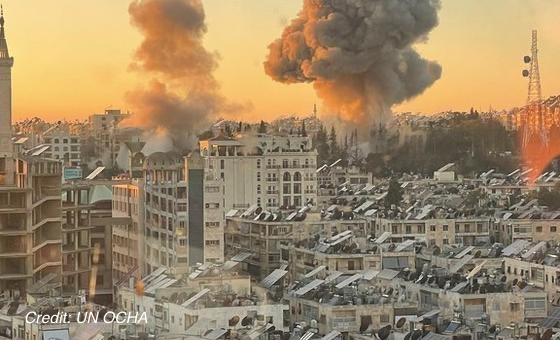
The world is experiencing one of the most turbulent periods of armed conflict since the end of the Second World War, with Armed Conflict Surging to Historic Highs Worldwide. Across multiple continents, wars, insurgencies, civil conflicts, and interstate confrontations are contributing to a dramatic rise in global violence. Researchers and conflict-monitoring organizations have documented a historic increase in the number of active armed conflicts, highlighting a troubling trend that affects millions of people and threatens international stability.
From the ongoing war in Ukraine and conflicts in the Middle East to violence in Sudan, Myanmar, the Democratic Republic of the Congo, and other regions, the global security landscape has become increasingly fragmented. While some conflicts receive extensive international attention, many others continue with limited media coverage despite causing significant humanitarian suffering.
Recent data from the Uppsala Conflict Data Program (UCDP) found that the number of state-based armed conflicts reached a historic high in 2024, with 61 active conflicts involving at least one state—the highest number recorded since modern conflict tracking began in 1946. Eleven of these conflicts met the threshold for full-scale war, the highest number since 2016.
This article examines the factors driving the surge in armed conflict worldwide, explores major conflict zones, analyzes humanitarian and economic consequences, and considers what the future may hold for global peace and security.
For decades after the Cold War, many observers hoped the world was moving toward greater stability. While regional wars and insurgencies persisted, there was optimism that economic globalization, diplomacy, and international institutions would reduce the likelihood of large-scale violence.
However, recent years have challenged those assumptions.
Conflict researchers report that 2024 marked a record year for state-based armed conflicts, surpassing previous peaks observed in recent decades. The increase reflects both the emergence of new conflicts and the persistence of long-running wars.
Several indicators illustrate the worsening situation:
These developments suggest that the international system is facing significant stress as geopolitical rivalries intensify.
Conflict data collected by leading research organizations paints a concerning picture.
These figures demonstrate that armed conflict is not confined to isolated regions but represents a widespread global challenge.
The war in Ukraine remains one of the most significant conflicts shaping the global security environment.
Since Russia’s full-scale invasion in 2022, the conflict has generated extensive military casualties, economic disruption, and geopolitical consequences. The war has influenced energy markets, food supplies, defense spending, and international diplomatic relations.
Researchers continue to identify Ukraine as one of the deadliest conflict zones in the world. Civilian casualties have remained a major concern as missile and drone attacks affect urban areas and infrastructure.
The conflict involving Israel and Hamas has become another major source of global instability.
The war has resulted in extensive casualties, widespread destruction, and significant humanitarian challenges. It has also contributed to broader regional tensions involving neighboring states and non-state armed groups.
Analysts note that the conflict has become one of the deadliest and most politically consequential crises in the Middle East in recent years.
Sudan has emerged as one of the world’s most severe humanitarian emergencies.
Fighting between rival military factions has devastated communities, displaced millions, and disrupted essential services.
The conflict has generated large-scale displacement and food insecurity, while international mediation efforts have struggled to produce lasting solutions.
Since the military takeover in 2021, Myanmar has experienced escalating violence involving government forces, resistance groups, and ethnic armed organizations.
The conflict has expanded geographically and contributed to regional instability, humanitarian suffering, and economic decline.
Myanmar remains among the most active conflict environments in Asia.
Africa has witnessed a significant increase in both state-based and non-state conflicts.
Countries facing serious security challenges include:
Researchers report that Africa now experiences some of the highest levels of conflict activity globally, driven by insurgencies, political instability, extremist violence, and competition over resources.
The surge in armed conflict is the result of multiple interacting factors rather than a single cause.
Competition among major powers has intensified in recent years.
Strategic rivalries increasingly influence regional conflicts through military assistance, diplomatic backing, economic pressure, and proxy relationships.
Such dynamics can prolong conflicts and complicate peace negotiations.
Many modern conflicts emerge in states experiencing governance challenges.
Factors include:
When governments struggle to provide security and services, armed groups may exploit these conditions.
Economic hardship can increase social tensions and contribute to instability.
High unemployment, inflation, inequality, and limited economic opportunities often create environments in which violence becomes more likely.
Economic shocks can further strain already fragile societies.
Environmental challenges increasingly interact with conflict dynamics.
Climate-related pressures can intensify competition over:
While climate change rarely causes conflict by itself, it can act as a threat multiplier that worsens existing tensions.
The rise in armed conflict has devastating consequences for civilian populations.
One of the most visible consequences of conflict is forced displacement.
Recent reports indicate that conflict-driven internal displacement reached record levels, with more than 32 million new internal displacements linked to violence and conflict in 2025. More than 82 million people remained internally displaced worldwide.
Displaced populations often face:
Modern conflicts increasingly affect civilian populations.
Urban warfare, missile strikes, drone attacks, and attacks on infrastructure expose civilians to significant risks.
Conflict researchers have documented increasing violence directed toward civilians in several conflict zones.
Wars frequently damage healthcare systems and educational institutions.
Consequences include:
These effects can persist long after active fighting ends.
Conflict imposes enormous economic burdens on affected countries and the global economy.
Wars often damage:
Rebuilding these assets may require decades and substantial financial resources.
Major conflicts can affect international markets through:
The conflicts in Ukraine and the Middle East have demonstrated how regional wars can produce global economic consequences.
Governments worldwide have responded to growing insecurity by increasing defense expenditures.
Record levels of military spending have been reported in recent years as countries modernize forces and respond to perceived threats.
Technology is transforming the nature of armed conflict.
Unmanned aerial systems have become central tools in many conflicts.
Advantages include:
Both state and non-state actors increasingly employ drone technologies.
You need to know, Cyber capabilities have expanded the battlefield beyond traditional military domains.
Cyber operations may target:
These activities can create disruption even without conventional military engagement.
Efforts to resolve conflicts face numerous obstacles.
Many modern conflicts involve multiple actors, competing interests, and overlapping grievances.
This complexity can make negotiations more difficult than traditional interstate wars.
Foreign support for different parties can sustain conflicts and reduce incentives for compromise.
External involvement often complicates diplomatic solutions.
Years of violence can create deep mistrust between communities and political actors.
Rebuilding confidence requires sustained effort and effective institutions.
One of the defining features of today’s conflict environment is persistence.
Many conflicts no longer follow a clear path from outbreak to resolution. Instead, they evolve into protracted crises characterized by recurring violence, fragile ceasefires, and humanitarian emergencies.
Examples include:
The persistence of these conflicts demonstrates the importance of long-term approaches that address governance, development, security, and reconciliation simultaneously.
Predicting the future trajectory of global conflict remains difficult.
Several trends will likely influence developments:
While some conflicts may move toward negotiated settlements, others could intensify or spread if underlying drivers remain unresolved.
The historic increase in conflicts recorded during 2024 serves as a warning that international peace and security require sustained diplomatic engagement, conflict prevention efforts, and support for vulnerable societies.
The world is currently experiencing one of the highest levels of armed conflict in modern recorded history. From Europe and the Middle East to Africa and Asia, wars and violent confrontations are affecting millions of lives, straining humanitarian systems, and reshaping international politics. Data from leading conflict research institutions show record numbers of active state-based conflicts, increasing attacks on civilians, and unprecedented levels of displacement. These trends underscore the growing complexity and interconnectedness of contemporary security challenges.
Addressing this surge in armed conflict will require coordinated international action, effective diplomacy, investment in conflict prevention, support for humanitarian responses, and efforts to strengthen governance and economic resilience. While the current outlook presents serious challenges, understanding the drivers and consequences of modern conflict is a critical step toward building a more stable and peaceful future.
Multiple factors contribute, including geopolitical rivalries, weak governance, economic instability, climate-related pressures, and the persistence of unresolved regional disputes.
According to recent UCDP data, 61 state-based armed conflicts were active in 2024, the highest number recorded since 1946.
Africa, the Middle East, Eastern Europe, and parts of Asia currently experience some of the highest levels of armed conflict activity.
Major consequences include civilian casualties, forced displacement, food insecurity, healthcare disruptions, educational setbacks, and long-term economic damage.
Diplomacy remains an essential tool for conflict resolution, but success often depends on political will, international cooperation, security guarantees, and addressing underlying causes of violence.