

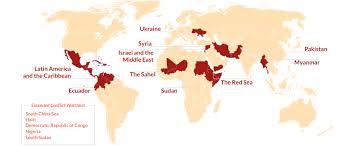
Across the globe, violent conflicts continue to uproot millions of civilians from their homes, creating one of the most pressing humanitarian crises of our time. In fact, Civilians Displaced by Ongoing Violent Conflicts: A Global Crisis describes a situation that has remained unresolved for years. From protracted wars to sudden outbreaks of violence, displacement disrupts lives, destroys communities, and leaves lasting scars on individuals and societies alike. According to recent global estimates, over 110 million people are forcibly displaced worldwide, a number that continues to rise each year due to ongoing instability and emerging conflicts.
This article explores the causes, consequences, and real-world examples of civilian displacement, while also examining international responses and potential solutions to this growing crisis. Above all, Civilians Displaced by Ongoing Violent Conflicts: A Global Crisis has become an issue that cannot be ignored.
Civilian displacement occurs when individuals or groups are forced to flee their homes due to violence, persecution, or conflict. These individuals often leave behind everything they own in search of safety, frequently facing dangerous journeys and uncertain futures. Civilians Displaced by Ongoing Violent Conflicts: A Global Crisis encompasses both internal and cross-border displacement.
Displacement can take two primary forms:
Both groups face significant challenges, though refugees often encounter additional legal and political barriers in host countries.
Violent conflicts are the primary driver of forced displacement. However, the underlying causes are often complex and interconnected.
Wars—whether civil, regional, or international—force civilians to flee due to immediate threats to life and safety. Ongoing conflicts in regions such as Eastern Europe, the Middle East, and parts of Africa have displaced millions.
Minority groups are often targeted during conflicts, leading to mass displacement. Persecution based on ethnicity, religion, or political beliefs has historically driven large refugee movements.
Weak governance, corruption, and political unrest can escalate into violence, forcing civilians to flee. In such environments, law enforcement and protection mechanisms often collapse.
Although not always violent initially, competition over scarce resources like water and land can trigger conflict. Climate change exacerbates these tensions, indirectly contributing to displacement.
Several regions stand out as major sources of displaced populations due to ongoing conflicts:
Conflicts in countries like Syria and Yemen have created some of the largest displacement crises in modern history. Millions have fled their homes, with many living in refugee camps or urban settlements under difficult conditions.
Countries such as South Sudan, the Democratic Republic of Congo, and Somalia experience ongoing violence that continues to displace civilians. Armed groups, political instability, and ethnic tensions contribute to the crisis.
Recent conflicts in Eastern Europe have led to a rapid increase in displacement, with millions seeking refuge in neighboring countries.
In Asia, displacement is often linked to both conflict and persecution, as seen in the Rohingya crisis, where hundreds of thousands fled violence.
The impact of displacement on civilians is profound and multifaceted.
Displaced individuals often lose their homes, jobs, and access to basic services. This economic disruption can last for years, even decades.
Overcrowded camps and limited resources lead to poor health outcomes. Common issues include:
Millions of displaced children are unable to attend school, jeopardizing their future and limiting opportunities for rebuilding their lives.
Exposure to violence, loss, and uncertainty leads to widespread mental health issues, including anxiety, depression, and post-traumatic stress disorder (PTSD). Overall, Civilians Displaced by Ongoing Violent Conflicts: A Global Crisis highlights the scope and severity of these humanitarian consequences.
The Syrian war, which began in 2011, has displaced over 13 million people. Many have sought refuge in neighboring countries such as Turkey, Lebanon, and Jordan, while others have attempted to reach Europe.
Violence and persecution forced over 700,000 Rohingya Muslims to flee Myanmar, most of whom now reside in overcrowded camps in Bangladesh.
Recent conflict in Ukraine has displaced millions, creating one of the fastest-growing refugee crises in recent history, with many seeking shelter across Europe.
The global community has made efforts to address displacement, but challenges remain.
Organizations provide essential support, including food, shelter, and healthcare. However, funding shortages often limit the scale of assistance.
International laws aim to protect refugees, but enforcement varies. Many displaced individuals lack proper documentation and face legal uncertainty.
Countries hosting large refugee populations often face economic and social strain, leading to tensions and restrictive policies.
Addressing displacement requires coordinated global action and long-term strategies.
The displacement of civilians due to ongoing violent conflicts is a complex and deeply human crisis that demands urgent attention. Behind the staggering statistics are real people—families torn apart, children deprived of education, and communities struggling to survive. While humanitarian efforts provide critical support, lasting solutions depend on addressing the root causes of conflict and fostering global cooperation. In summary, Civilians Displaced by Ongoing Violent Conflicts: A Global Crisis must remain a top priority for all stakeholders.
As the number of displaced individuals continues to grow, the international community must act decisively to protect vulnerable populations, promote peace, and create pathways for recovery and resilience. Only through sustained commitment and collective action can we hope to reduce the scale of this crisis and restore dignity to those who have lost so much.