

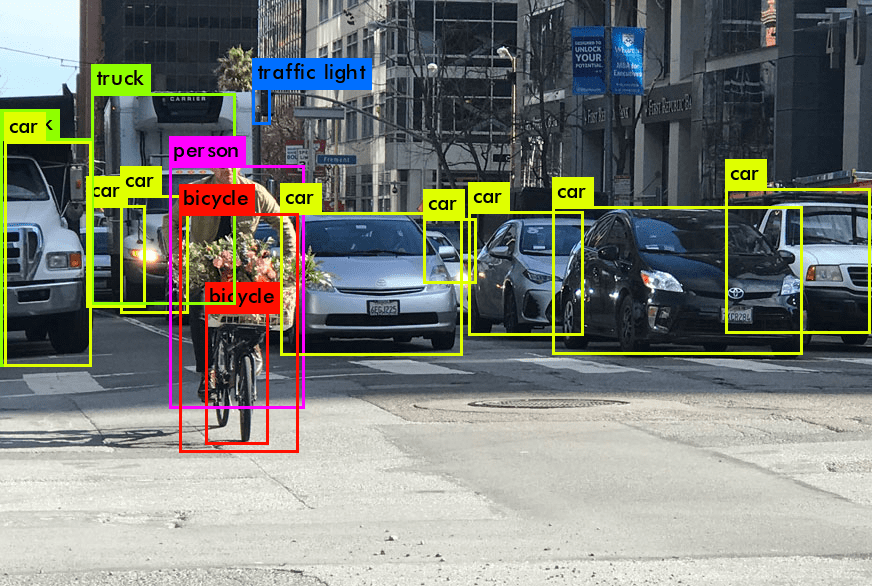
Computer vision object detection has become one of the most transformative technologies in artificial intelligence. In fact, the advancements in Computer Vision Object Detection Real Time Processing are pushing innovation forward in numerous industries. From autonomous vehicles and smart surveillance systems to healthcare diagnostics and retail automation, real-time object detection is powering a new generation of intelligent applications capable of understanding and interacting with the physical world.
Object detection combines computer vision and deep learning to identify and locate objects within images or video streams. Real-time processing takes this capability a step further by enabling systems to analyze visual data instantly or with minimal delay. This is critical for applications where decisions must be made immediately, such as collision avoidance in self-driving cars or identifying suspicious activity in security monitoring systems.
The rapid evolution of graphics processing units (GPUs), neural networks, edge computing, and high-speed cameras has accelerated the adoption of real-time object detection across industries. Businesses are investing heavily in computer vision systems to automate operations, improve safety, reduce costs, and gain actionable insights from visual data.
In this article, we will explore the fundamentals of computer vision object detection, the technologies behind real-time processing, major algorithms, practical applications, challenges, optimization strategies, future trends, and the industries benefiting most from this groundbreaking innovation.
Computer vision object detection is a branch of artificial intelligence that enables machines to identify and locate objects within digital images or video streams.
Unlike image classification, which only determines what exists in an image, object detection identifies:
For example, an image classification system may identify that an image contains a dog. An object detection system, however, identifies where the dog is located by drawing a bounding box around it.
Real-time processing refers to the ability of a system to analyze and respond to incoming data immediately or within milliseconds.
In computer vision, real-time object detection means processing video frames quickly enough to maintain continuous analysis without noticeable lag.
Most real-time systems aim for:
For example, autonomous vehicles require object detection systems capable of processing road conditions, pedestrians, vehicles, traffic signs, and obstacles instantly to ensure passenger safety.
Real-time object detection follows a structured pipeline involving image acquisition, preprocessing, model inference, and output generation.
Cameras, drones, smartphones, or surveillance systems capture visual input continuously.
The input data is resized, normalized, and prepared for neural network analysis.
Common preprocessing techniques include:
Deep learning models analyze patterns such as edges, textures, shapes, and colors to identify visual features.
Neural networks process the image and predict object categories along with their locations.
Techniques such as Non-Maximum Suppression (NMS) eliminate duplicate detections and improve accuracy.
The system displays detection results or triggers automated actions such as alerts, navigation adjustments, or robotic responses.
Object detection has evolved dramatically over the past two decades.
Before deep learning, object detection relied heavily on handcrafted features and classical machine learning methods.
Popular techniques included:
While effective in controlled environments, these approaches struggled with variations in lighting, object orientation, and complex scenes.
The introduction of convolutional neural networks (CNNs) revolutionized object detection.
Deep learning models automatically learned features from large datasets, dramatically improving detection accuracy and adaptability.
Modern object detection systems now outperform traditional methods across most benchmarks.
YOLO is one of the most popular real-time object detection algorithms due to its speed and efficiency.
Unlike traditional approaches that analyze regions separately, YOLO processes the entire image in a single pass.
SSD is another fast object detection framework optimized for real-time performance.
It balances speed and accuracy effectively, making it suitable for mobile and embedded devices.
Faster R-CNN delivers high accuracy but is generally slower than YOLO and SSD.
It is often used in applications where precision is more important than speed.
EfficientDet uses compound scaling techniques to optimize accuracy and computational efficiency.
It is increasingly popular in edge AI applications.
Newer architectures such as CenterNet and Detection Transformer (DETR) aim to improve detection quality while simplifying model design.
Deep learning forms the foundation of modern computer vision systems.
CNNs specialize in image analysis by detecting hierarchical patterns in visual data.
Early layers identify simple features like edges, while deeper layers detect complex structures such as faces or vehicles.
Transfer learning allows developers to use pre-trained models and fine-tune them for specific tasks.
This significantly reduces training time and computational requirements.
Training object detection models typically involves:
Real-time processing requires powerful hardware capable of handling intensive computational workloads.
GPUs are essential for deep learning inference and training because they process thousands of operations simultaneously.
TPUs are specialized accelerators optimized for machine learning workloads.
Edge devices enable local processing without relying entirely on cloud infrastructure.
Self-driving cars rely heavily on real-time object detection to interpret road environments.
Systems continuously identify:
Fast and accurate object detection is essential for collision avoidance and navigation safety.
AI-powered surveillance systems can detect suspicious activities, unauthorized access, or abandoned objects automatically.
Modern surveillance platforms use real-time analytics to reduce reliance on manual monitoring.
Several metropolitan transportation systems now use AI surveillance cameras to monitor crowd density and detect unusual behavior, improving public safety and emergency response times.
Retailers use computer vision systems to analyze customer behavior and optimize store operations.
AI-powered stores can identify products automatically and process purchases without traditional checkout counters.
Object detection helps doctors identify abnormalities in medical scans.
Applications include:
Real-time medical imaging systems improve diagnostic speed and accuracy.
Factories use object detection systems to identify defects, monitor assembly lines, and improve operational efficiency.
AI inspection systems can detect tiny defects invisible to the human eye.
Farmers use computer vision for:
Drones equipped with AI cameras analyze large agricultural fields quickly and accurately.
Sports organizations use object detection to track player movements, analyze performance, and improve broadcasting experiences.
Real-time video analytics extends object detection capabilities to continuous video streams.
Advanced systems can:
Airports use real-time analytics to monitor passenger movement and identify unattended baggage instantly.
Object tracking enables systems to follow detected objects across multiple frames.
Tracking is critical for applications such as autonomous navigation, sports analysis, and surveillance.
Deep learning models require significant processing power, especially for high-resolution video streams.
Even small delays can create safety risks in applications such as autonomous driving.
Lighting changes, shadows, weather conditions, and occlusions affect detection accuracy.
Training data must be diverse and representative to ensure reliable model performance.
Edge devices and mobile systems often have limited battery and processing resources.
Real-time surveillance and facial recognition systems raise important ethical and legal concerns.
Optimization is essential for balancing speed, accuracy, and resource efficiency.
Quantization reduces model size and computational requirements by using lower-precision numerical formats.
Pruning removes unnecessary neural network parameters to improve efficiency.
Frameworks such as TensorRT and ONNX Runtime accelerate deep learning inference.
Using multiple GPUs or distributed computing improves performance significantly.
Some systems process selected frames instead of every frame to reduce computational load.
Edge AI has become increasingly important for real-time computer vision applications.
Instead of sending all data to cloud servers, edge devices process information locally.
Smart traffic systems use edge AI cameras to analyze traffic flow and adjust signal timing dynamically without relying on centralized cloud processing.
Cloud computing also plays a major role in computer vision applications.
Cloud platforms provide:
Many organizations combine edge and cloud processing for hybrid AI architectures.
Autonomous driving companies invest billions in real-time computer vision systems.
Modern self-driving vehicles integrate:
These systems continuously detect and track objects surrounding the vehicle.
Object detection models process hundreds of frames per second to maintain safe navigation.
Although challenges remain, real-time computer vision remains central to autonomous mobility innovation.
The global computer vision market has experienced rapid expansion due to advances in AI and automation.
Industry research estimates that the computer vision market will continue growing significantly over the next decade, driven by increasing adoption in manufacturing, healthcare, automotive, retail, and smart city infrastructure.
Organizations adopting real-time object detection technologies often experience improved operational efficiency and reduced manual labor costs.
Transformer-based architectures are increasingly replacing traditional CNN models in computer vision tasks.
Future systems will combine visual, audio, and textual data for more advanced contextual understanding.
3D detection systems will improve spatial awareness for robotics and autonomous vehicles.
Federated learning enables AI models to train across decentralized devices while preserving privacy.
Real-time object detection will continue advancing robotic automation in warehouses, hospitals, and factories.
Smaller AI models will enable advanced object detection capabilities on low-power embedded devices.
The widespread deployment of real-time object detection systems raises important ethical concerns.
Governments and organizations must establish responsible AI guidelines to ensure ethical implementation.
Determine the application’s objectives, environment, and performance requirements.
Gather diverse training images and label objects accurately.
Select an appropriate algorithm based on speed and accuracy needs.
Use GPU infrastructure and optimization techniques to train the model effectively.
Apply quantization, pruning, and inference acceleration methods.
Deploy the model to cloud servers, edge devices, or embedded systems.
Continuously evaluate performance and retrain models with updated datasets.
Computer vision object detection with real-time processing is reshaping industries and redefining how machines interact with the world. By combining deep learning, high-performance hardware, and intelligent algorithms, modern systems can analyze visual environments instantly and make highly accurate decisions.
From autonomous vehicles and smart surveillance to healthcare diagnostics and industrial automation, real-time object detection enables faster operations, improved safety, enhanced customer experiences, and greater efficiency.
Technologies such as YOLO, SSD, edge AI, and cloud-based analytics continue driving innovation in this rapidly evolving field. At the same time, organizations must address challenges related to computational requirements, ethical concerns, privacy protection, and environmental variability.
As artificial intelligence advances further, real-time computer vision systems will become even more accurate, accessible, and integrated into everyday life. Businesses and professionals who understand and adopt these technologies today will be better positioned to lead in the AI-powered future.