

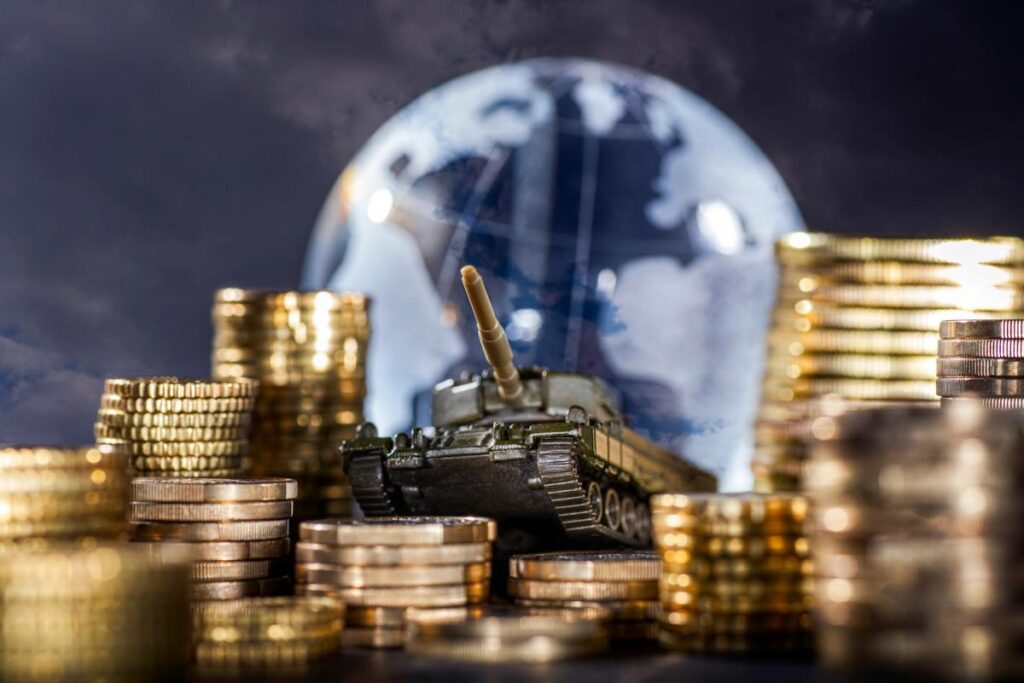
In world politics, war is often seen through the lens of strategy and human loss. However, beneath the surface of every long conflict lies a harsh economic truth. The Economic Consequences of Prolonged Military Conflicts are profound, shaping nations for generations. Military fighting is not just a spender of lives. It is a devourer of wealth, a destroyer of buildings, and a disruptor of global markets.
As we move through 2026, the lessons of the last decade are clear. From the Middle East to Eastern Europe, we see that the price of war is never paid only by those fighting. It is a debt left for future generations. It is felt in high prices, energy shortages, and slow global growth. This article looks at how long wars lead to a “bankruptcy of progress.”
The most immediate impact of a long war is the massive drain on public money. When a nation goes to war, its budget changes completely. Money meant for schools, hospitals, and roads is suddenly sent to “the front.”
Long wars create what experts call “opportunity costs.” Every billion dollars spent on missiles or troop supplies is a billion dollars not spent on new technology or public health. For example, during the twenty-year war in Afghanistan, the U.S. spent about $2.3 trillion. This huge sum created a “war debt” that still affects interest rates today. In 2026, many nations are stuck spending high amounts on their military just to stay safe, which strains their national bank accounts.
War does not just spend money; it physically wipes out the tools used to make money. Long conflicts result in the destruction of “physical assets”—factories, power plants, bridges, and phone lines.
Rebuilding these things after a decade of fighting can cost ten times more than the original price. However, the loss of “human talent” is even worse. Conflict leads to a “brain drain” as the smartest workers flee for safety. Furthermore, when workers are killed or injured, the labor force shrinks. This reduces the country’s ability to produce things for years. Studies show that even after peace arrives, a lack of skilled workers can keep a country poor for thirty to forty years.
Inflation is the constant shadow of war. When supply lines break and factories stop working, the supply of goods drops. At the same time, government spending usually goes up. This leads to the classic problem of “too much money chasing too few goods,” which causes prices to soar.
In 2026, we see this clearly in food and energy markets. Long wars in farming hubs lead to global “food inflation.” For example, when a “breadbasket” region is at war, the price of wheat and fertilizer jumps worldwide. This creates a crisis even in neutral countries. In the mid-2020s, global inflation rates stayed 3-5% higher than usual because of the “security cost” added to shipping and essential items.
There is a common myth that war is “good for the economy” because it creates jobs in weapon factories. This is a mistake. While a small sector makes a profit, the rest of the economy suffers.
Spending on weapons is not “productive.” A tractor helps grow food for years, helping the economy grow. A missile, however, is used once to destroy something else. This is a total loss of global wealth. In 2026, experts point to the “crowding out” effect: when the government buys all the steel and fuel for the military, private businesses find those materials too expensive to buy for making normal products.
Long wars act like a “reverse gear” for global trade. Modern trade is built on stability and open oceans. War introduces “risk” that makes moving goods too expensive.
Shipping insurance rates can triple overnight if a path goes through a war zone. In 2025 and 2026, we saw the “breakup of trade.” Nations began trading only with “friendly” partners rather than the most efficient ones. This makes everything more expensive. Experts say that splitting the world into two competing trade groups could reduce global wealth by up to 7% every year.
Long wars always force people to leave their homes. This creates a quick economic challenge for nearby countries. While refugees can eventually help their new countries, the short-term costs for housing, health, and schools are massive.
In 2026, the cost of supporting these populations has become a huge part of the budget for several nations. If the war lasts too long, these people often cannot go back home. For their home country, this “loss of talent” means there is no one left to run schools or businesses. The economic “scars” from a refugee crisis last much longer than the actual fighting.
A rarely discussed cost of war is the damage to nature. Modern war is dirty and toxic. “Scorched earth” tactics can ruin farmland for generations.
Unexploded bombs and landmines turn fertile fields into “dead zones” where farming is impossible. In 2026, recovery agencies are spending billions just to clear mines from wars that started years ago. This isn’t just a tragedy for nature; it is an economic disaster. it makes countries dependent on expensive food imports. Also, the massive carbon footprint of the military speeds up climate change, leading to more expensive natural disasters worldwide.
Money is “scared”—it runs away at the first sign of trouble. When a war lasts a long time, foreign investment vanishes. No company wants to build a factory in a place that might be bombed tomorrow.
This “investment drought” leaves the war zone behind. While the rest of the world moves forward with AI and green energy, the war-torn area stays stuck in the past. In 2026, we see a growing gap between stable countries and those in permanent war. Recovering from a decade of no investment is nearly impossible. It takes decades of peace just to catch up to where the country should have been.
The economic costs of long wars are deep and lasting.
In 2026, the message is clear: nobody truly “wins” an economy during a long war. Peace is the only environment where real wealth can grow. As we look ahead, we must realize that economic safety depends on ending armed conflict.