

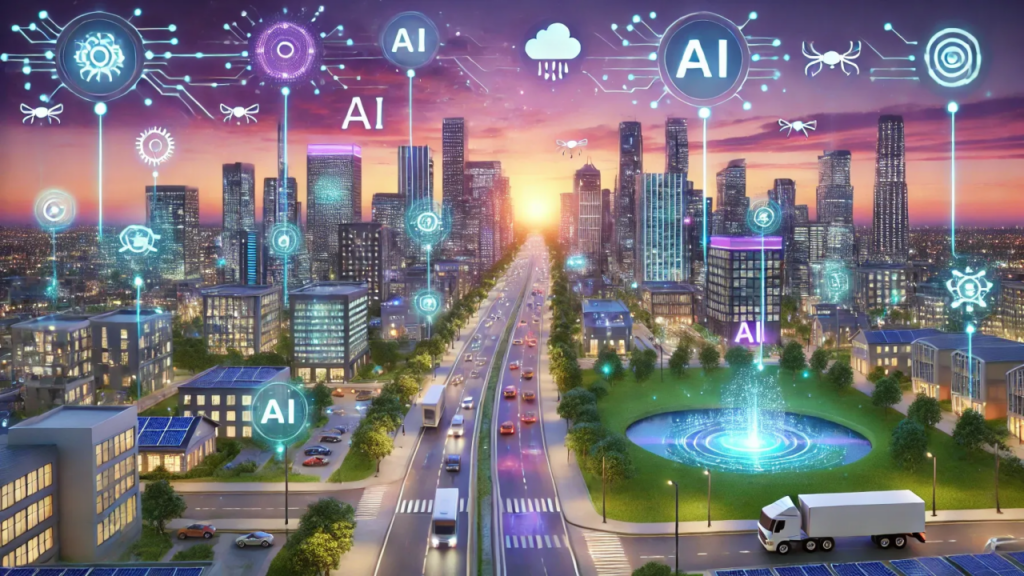
Urbanization is accelerating at an unprecedented pace. By 2050, nearly 70% of the global population is expected to live in cities, placing enormous pressure on infrastructure, transportation systems, energy grids, healthcare services, and public safety networks. As cities seek solutions to these challenges, the Role of Artificial Intelligence in Smart City Development has become increasingly important. Traditional urban planning models are struggling to keep up with this rapid growth.
Artificial intelligence has emerged as a transformative force in addressing these challenges. By enabling cities to process vast amounts of real-time data, predict patterns, automate services, and optimize resources, AI is becoming the backbone of modern smart city development.
Smart cities powered by AI are not just more efficient—they are more responsive, adaptive, and sustainable. From traffic management systems that reduce congestion to predictive policing tools that improve safety, AI is reshaping how cities function at every level.
This article explores the role of artificial intelligence in smart city development, examining key applications, real-world examples, economic and social impacts, and the challenges that must be addressed for sustainable implementation.
A smart city uses digital technology and data-driven systems to improve urban services and quality of life. Artificial intelligence acts as the intelligence layer that processes data from sensors, devices, and infrastructure to enable automated decision-making.
Modern smart cities rely on interconnected systems such as:
AI transforms these components into an intelligent ecosystem capable of self-regulation and continuous improvement.
One of the most visible applications of AI in smart cities is transportation management. Traffic congestion is a major issue in urban areas, costing billions of dollars annually in lost productivity and fuel consumption.
AI-powered traffic systems analyze real-time traffic flow using cameras and sensors. These systems adjust traffic light timing dynamically to reduce congestion and improve vehicle flow.
Cities using adaptive systems have reported significant improvements in traffic efficiency, with some reducing travel times by up to 25% in high-density areas.
AI is used to optimize bus and train schedules based on demand patterns. Machine learning models analyze passenger data to adjust routes and reduce waiting times.
For example, predictive analytics helps transit authorities deploy more vehicles during peak hours and reduce unnecessary trips during low-demand periods.
AI-driven parking systems guide drivers to available parking spots using real-time data. This reduces time spent searching for parking, which in many cities accounts for a significant portion of urban traffic congestion.
Energy efficiency is a critical component of smart city development. AI enables cities to optimize electricity distribution and reduce waste through intelligent grid management.
AI systems analyze consumption patterns to balance energy supply and demand in real time. This helps prevent blackouts and reduces energy loss during transmission.
Renewable energy sources such as solar and wind are variable by nature. AI helps predict energy output based on weather patterns and adjusts grid distribution accordingly.
Machine learning models predict peak energy demand, allowing utilities to adjust production schedules and avoid overloading the system.
Smart grids powered by AI have been shown to reduce energy waste by up to 15–20% in some urban deployments.
Public safety is a key priority for smart cities, and AI plays a major role in enhancing security infrastructure.
AI systems analyze historical crime data to identify patterns and predict potential hotspots. This allows law enforcement agencies to allocate resources more effectively.
Computer vision systems powered by AI can detect unusual behavior in public spaces, helping authorities respond more quickly to incidents.
These systems are also used for crowd management during large public events.
AI improves emergency response times by analyzing real-time data from traffic systems and emergency calls to determine the fastest routes for ambulances and fire services.
In some smart city implementations, response times have improved by 10–20% due to AI-assisted routing.
Healthcare is another critical area where AI significantly enhances urban living standards.
AI models analyze patient data to predict disease outbreaks and identify high-risk populations. This helps healthcare systems prepare in advance for increased demand.
Hospitals integrated with AI systems use predictive scheduling, automated diagnostics, and resource optimization to improve efficiency.
AI-powered telemedicine platforms enable remote diagnosis and treatment, reducing the burden on physical healthcare facilities.
During global health crises, AI systems have been used to track disease spread and allocate medical resources efficiently.
Sustainability is a core goal of smart city development, and AI plays a crucial role in reducing environmental impact.
AI-powered waste management systems use sensors to monitor waste levels in bins and optimize collection routes.
This reduces fuel consumption and operational costs while improving cleanliness in urban areas.
Machine learning algorithms help sort recyclable materials more efficiently, improving recycling rates and reducing landfill usage.
AI systems analyze air quality, water quality, and noise pollution in real time. This allows city planners to implement targeted environmental policies.
Some cities have reduced air pollution levels by up to 15% using AI-driven environmental interventions.
Singapore is widely recognized as one of the most advanced smart cities in the world. The city-state has integrated AI across multiple sectors to enhance urban efficiency and livability.
Key initiatives include:
The government’s Smart Nation initiative demonstrates how AI can be integrated at a national scale to improve urban life quality and economic competitiveness.
Barcelona has implemented AI and IoT technologies to improve urban services and sustainability.
Key applications include:
These initiatives have significantly reduced operational costs while improving environmental sustainability.
AI-driven smart city development generates significant economic benefits through efficiency improvements and cost savings.
Key economic impacts include:
According to industry estimates, smart city technologies could generate trillions of dollars in economic value globally over the next decade.
Despite its benefits, AI-driven smart city development faces several challenges that must be addressed.
Smart cities rely heavily on data collection, raising concerns about privacy and cybersecurity risks.
Building AI-powered infrastructure requires significant investment in technology, sensors, and connectivity systems.
Integrating different systems and technologies across city departments can be complex and costly.
AI systems used in surveillance and policing raise ethical questions about bias, transparency, and accountability.
The future of smart cities will be defined by deeper AI integration and increased autonomy in urban systems.
Emerging trends include:
As AI technology continues to evolve, cities will become more adaptive, efficient, and sustainable.
Artificial intelligence is playing a transformative role in the development of smart cities worldwide. By enabling real-time data analysis, predictive decision-making, and automated systems, AI is helping cities become more efficient, sustainable, and responsive to citizens’ needs.
From transportation and energy management to healthcare and public safety, AI is deeply integrated into the foundation of modern urban systems. Real-world examples such as Singapore and Barcelona demonstrate how AI can significantly improve quality of life while reducing operational costs.
However, challenges such as data privacy, ethical concerns, and high implementation costs must be carefully managed to ensure equitable and sustainable development.
Ultimately, the integration of artificial intelligence into smart city infrastructure represents a major step toward the future of urban living. As technology continues to advance, cities will become more intelligent, interconnected, and capable of adapting to the evolving needs of their populations, shaping a more efficient and sustainable global urban future.