

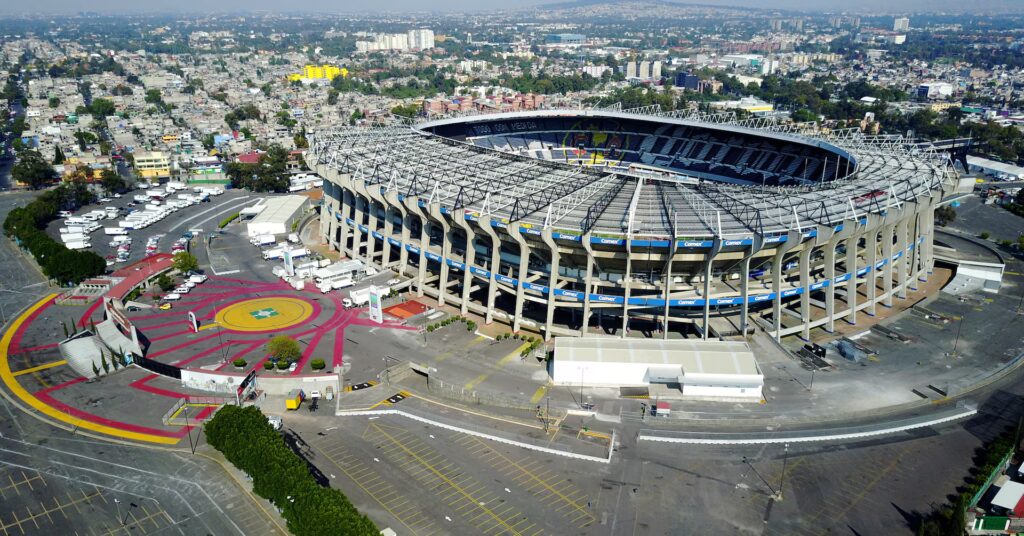
The 2026 World Cup opening game at Estadio Azteca ? The FIFA World Cup 2026 will open with one of the most symbolic matches in football history at the legendary Estadio Azteca in Mexico City. On June 11, 2026, the stadium will host the tournament’s opening game featuring Mexico against South Africa, marking a historic moment not only for the competition but also for global football culture.
This match is more than a sporting event—it is a celebration of heritage, legacy, and the evolution of the world’s most popular sport. Estadio Azteca becomes the first stadium in history to host three World Cup opening matches, reinforcing its status as a cathedral of football.
Located in the southern part of Mexico City, Estadio Azteca is one of the most iconic football stadiums ever built. Opened in 1966, it has witnessed some of the greatest moments in football history, including two World Cup finals in 1970 and 1986.
With the 2026 World Cup, it enters a new chapter as the only stadium in the world to host matches across three different World Cups. This achievement cements its legacy as a global football landmark.
The stadium is deeply embedded in Mexican football culture, serving as the home ground for the Mexico national team and Club América.
The opening game of the 2026 FIFA World Cup will feature host nation Mexico against South Africa. This match carries symbolic weight, as it brings together two nations with strong football identities and rich sporting histories.
According to FIFA’s official schedule, the match will take place on June 11, 2026, officially kicking off the largest World Cup ever held, featuring 48 teams and 104 matches across three countries.
Estadio Azteca is unique in football history. It is the only stadium that has hosted two FIFA World Cup finals—Brazil’s victory in 1970 and Argentina’s triumph in 1986. These matches featured legends like Pelé and Diego Maradona, who created unforgettable moments on its pitch.
In 2026, the stadium adds another historic milestone by hosting the opening match of the tournament, making it the first venue ever to host three World Cup opening ceremonies.
To prepare for the 2026 tournament, Estadio Azteca underwent extensive renovations. The upgrades aim to modernize the stadium while preserving its historic identity.
The renovation project began in 2024 and includes structural, technological, and aesthetic improvements designed to meet FIFA’s modern standards.
According to construction reports, the renovations represent one of the most ambitious stadium modernization projects in Latin America.
The opening ceremony at Estadio Azteca will be a global spectacle combining sport, culture, and entertainment. Millions of fans will tune in worldwide, while thousands will experience it live inside the stadium.
The ceremony is expected to highlight Mexico’s cultural heritage through music, dance, and visual storytelling, showcasing the country’s identity on a global stage.
Hosting the opening match brings significant economic benefits to Mexico City. Tourism, hospitality, transportation, and retail sectors are expected to experience a major boost.
Estimates suggest that the 2026 World Cup could generate billions in economic activity across Mexico, with Mexico City being one of the primary beneficiaries.
Additionally, large-scale fan festivals across the city will allow millions of residents and visitors to participate in World Cup celebrations, including free public viewing events in major squares like Zócalo.
To accommodate the influx of fans, Mexico City has invested heavily in transportation and infrastructure upgrades around Estadio Azteca.
The stadium is already well-connected via metro and light rail systems, but enhancements are being made to improve crowd management and accessibility.
These improvements are designed to ensure a smooth and safe experience for tens of thousands of matchday visitors.
Despite its iconic status, the renovation project has faced challenges, including construction delays and logistical complexity. Managing an aging structure while upgrading it to modern standards has proven difficult.
Some reports have even raised concerns about whether all renovations will be fully completed before the tournament begins, though officials remain confident in meeting minimum requirements.
The opening match at Estadio Azteca is expected to be one of the most-watched sporting events in history. With billions of viewers worldwide, it will set the tone for the entire tournament.
Modern broadcasting technology will allow fans to experience the match through ultra-high-definition coverage, multi-angle views, and immersive digital platforms.
Few stadiums in the world have had as much global impact as Estadio Azteca. Its legacy is built on decades of historic matches and cultural significance.
The stadium’s ability to adapt and remain relevant over time demonstrates its importance not only in Mexican football but in the global sports landscape.
After the World Cup, Estadio Azteca will continue to serve as a major football venue and cultural landmark. The renovations are designed to ensure long-term usability and sustainability.
Its legacy will extend far beyond 2026, influencing future generations of players and fans.
The 2026 World Cup opening game at Estadio Azteca is more than just a football match—it is a historic global event that bridges generations of football history. As the only stadium to host three World Cup opening matches, Azteca stands as a symbol of tradition, evolution, and excellence.
From its legendary past featuring Pelé and Maradona to its modern transformation ahead of 2026, the stadium embodies the spirit of football itself. The match between Mexico and South Africa will not only launch the tournament but also reaffirm Mexico City’s place at the heart of world football.
As fans around the globe tune in, the opening whistle at Estadio Azteca will mark the beginning of a new chapter in World Cup history—one defined by scale, diversity, and unforgettable moments.