

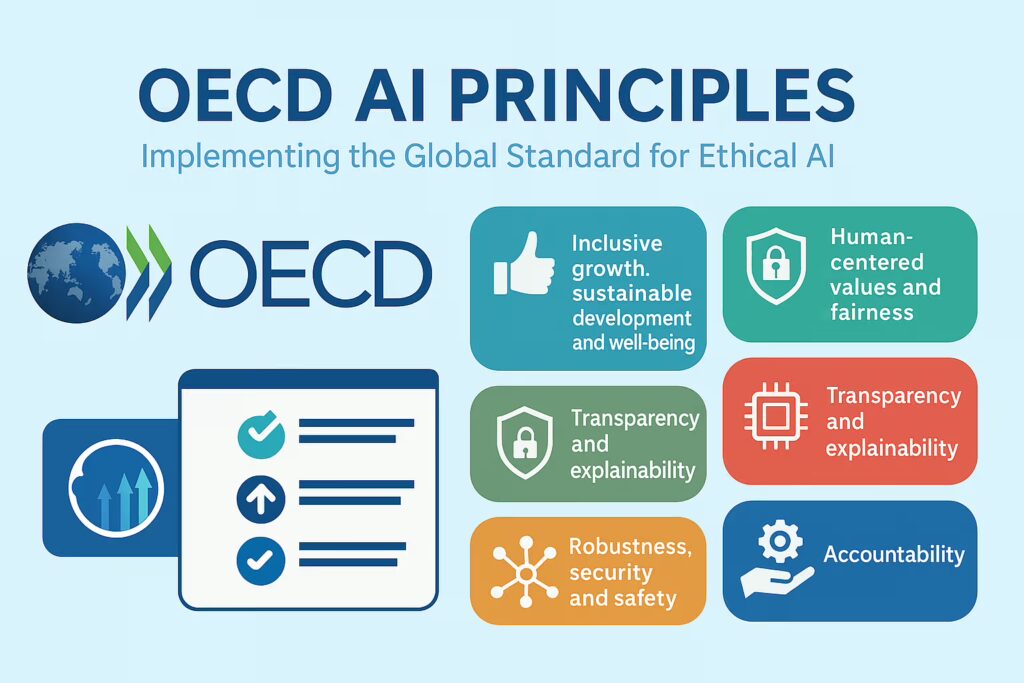
Artificial intelligence is rapidly transforming every aspect of modern life—from healthcare and transportation to agriculture, education, and energy systems. However, as AI capabilities expand, so do concerns about its environmental impact, ethical implications, and long-term sustainability. Addressing these concerns requires a focus on Ethical AI Development for Global Sustainability.
Ethical AI development for global sustainability is emerging as a critical framework to ensure that artificial intelligence systems are designed, deployed, and governed in ways that benefit humanity while protecting the planet. It seeks to align technological innovation with environmental responsibility, social equity, and long-term ecological balance.
This article provides a comprehensive exploration of how ethical AI can support global sustainability goals, the risks associated with unchecked AI development, real-world applications, and the policies and frameworks shaping the future of responsible AI systems.
Ethical AI refers to the design and deployment of artificial intelligence systems that adhere to moral principles such as fairness, transparency, accountability, and human-centeredness. Global sustainability, on the other hand, focuses on meeting present needs without compromising the ability of future generations to meet theirs.
When combined, ethical AI for sustainability aims to ensure that AI systems contribute positively to environmental protection, economic stability, and social well-being.
While AI is often seen as a solution to environmental challenges, it also has a significant ecological footprint. Training large-scale AI models requires enormous computational power, which consumes large amounts of energy.
For example, training advanced machine learning models can generate carbon emissions equivalent to multiple transatlantic flights. Data centers that support AI systems are responsible for a growing share of global electricity consumption.
According to estimates from global energy studies, data centers and AI workloads together account for nearly 1–2% of global electricity use, and this figure is expected to rise as AI adoption accelerates.
Despite its environmental footprint, AI also offers powerful tools for advancing sustainability across multiple sectors. When designed responsibly, AI can help solve some of the world’s most pressing environmental challenges.
AI can analyze large-scale climate data to improve forecasting and reduce emissions.
AI-powered systems are transforming agriculture by improving efficiency and reducing resource waste.
AI helps optimize energy consumption across industries and households.
AI systems can track deforestation, pollution, and biodiversity loss in real time.
One of the most impactful applications of AI for sustainability is in climate modeling. Organizations like NASA and the European Space Agency are using AI to improve the accuracy of climate predictions.
AI models can process vast datasets from satellites, weather stations, and ocean sensors to simulate climate patterns more effectively than traditional models.
This demonstrates how ethical AI can directly contribute to global climate resilience.
While AI offers significant benefits, it also introduces ethical risks that must be carefully managed to ensure sustainability and fairness.
AI systems can inherit biases from training data, leading to unfair outcomes in areas such as hiring, lending, and law enforcement.
AI systems often rely on large datasets, raising concerns about personal privacy and data misuse.
Large-scale AI models require significant computational resources, contributing to environmental degradation if not optimized.
Many AI systems operate as “black boxes,” making it difficult to understand how decisions are made.
To address these challenges, researchers and policymakers are developing frameworks for sustainable AI design.
Developing smaller, optimized models can significantly reduce energy consumption.
Data centers are increasingly powered by renewable energy sources such as solar and wind.
Governments and organizations are introducing policies to regulate AI development responsibly.
Google has implemented AI systems to improve energy efficiency across its data centers and products.
This case demonstrates how large-scale AI systems can be used to reduce environmental impact when properly designed.
Global sustainability requires coordinated action from governments, corporations, and international bodies.
Organizations such as the United Nations and OECD are actively developing frameworks for responsible AI governance aligned with sustainability goals.
AI has the potential to accelerate progress toward the UN’s 17 Sustainable Development Goals.
However, these benefits depend on ethical implementation and equitable access to AI technologies.
Despite growing awareness, several challenges remain in scaling ethical AI practices worldwide.
The future of AI development is expected to focus more heavily on sustainability and ethical design principles.
These innovations suggest a future where AI not only minimizes harm but actively contributes to environmental regeneration.
Ethical AI development for global sustainability represents a critical intersection of technology, ethics, and environmental stewardship. While artificial intelligence has the potential to significantly advance climate action, agriculture, energy efficiency, and global development, it also poses risks related to energy consumption, bias, and inequality.
The challenge for governments, corporations, and researchers is to ensure that AI systems are designed and deployed responsibly, with sustainability at their core. This requires transparent governance, energy-efficient design, ethical frameworks, and global cooperation.
If implemented thoughtfully, ethical AI can become one of the most powerful tools in addressing global sustainability challenges, helping humanity build a more equitable, resilient, and environmentally balanced future.