

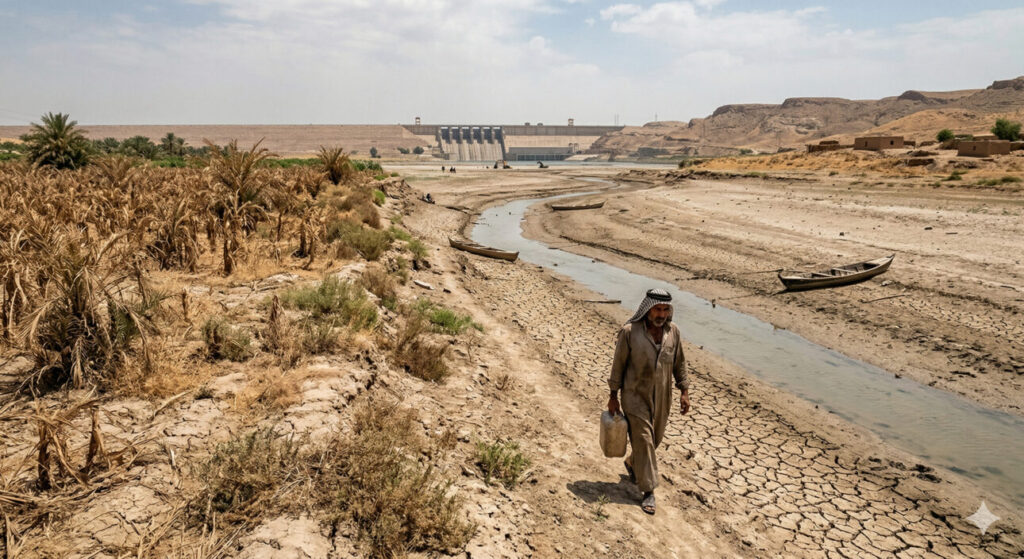
Water is one of the most essential resources for human survival, economic development, and environmental sustainability. Yet in the 21st century, it is increasingly becoming a source of geopolitical tension. As climate change intensifies droughts, populations grow, and demand rises, Global Water Scarcity Becoming a Geopolitical Weapon is an emerging reality as water scarcity is no longer just an environmental issue—it is a strategic and political one.
Across the globe, nations are beginning to view water not only as a necessity but also as a tool of influence and power. From river disputes to dam construction and control over shared resources, water is emerging as a potential geopolitical weapon. This article explores how global water scarcity is reshaping international relations, highlighting key conflicts, risks, and solutions.
Water scarcity occurs when the demand for freshwater exceeds available supply. According to global estimates, more than 2 billion people live in countries experiencing high water stress, and this number is expected to rise significantly by 2050.
Water scarcity can be categorized into two main types:
Both forms contribute to instability, particularly in regions already facing political or economic challenges.
Climate change is one of the primary drivers of water scarcity. Rising global temperatures alter precipitation patterns, reduce snowpack, and increase evaporation rates.
These changes lead to more frequent and severe droughts, particularly in vulnerable regions such as the Middle East, North Africa, and parts of South Asia.
These environmental changes amplify competition for limited water resources, creating fertile ground for geopolitical tensions.
Historically, water has been a shared resource managed through cooperation. However, as scarcity increases, nations are beginning to treat water as a strategic asset.
Control over water sources—such as rivers, lakes, and aquifers—can provide significant political and economic leverage.
In regions where water crosses borders, upstream countries can exert influence over downstream nations, sometimes leading to conflict.
Several regions around the world are already experiencing tensions related to water scarcity. These conflicts highlight how water can be used as a geopolitical weapon.
The Nile River, one of the longest rivers in the world, is a lifeline for multiple countries, particularly Egypt, Sudan, and Ethiopia.
Ethiopia’s construction of the Grand Ethiopian Renaissance Dam (GERD) has sparked tensions with Egypt, which relies heavily on the Nile for its water supply.
This dispute demonstrates how infrastructure projects can shift regional power dynamics.
India and Pakistan share the Indus River system, governed by the Indus Waters Treaty. Despite this agreement, tensions remain high.
The Middle East is one of the most water-scarce regions in the world. Countries such as Jordan, Israel, and Syria face severe shortages.
Dams are powerful tools in water management but can also become instruments of geopolitical control. By regulating water flow, upstream countries can influence downstream nations.
However, dams can also increase tensions if not managed cooperatively.
Water scarcity directly impacts agriculture, which consumes approximately 70% of global freshwater resources.
Reduced water availability leads to lower crop yields, increased food prices, and heightened risk of famine.
Countries may use water access to influence food production, further increasing geopolitical tensions.
Rapid urbanization is placing additional pressure on water resources. By 2050, nearly 70% of the global population is expected to live in cities.
This shift increases demand for water in urban areas while straining existing infrastructure.
Urban water shortages can lead to social unrest and political instability.
Technology plays a critical role in addressing water scarcity. Innovations in water management can help mitigate risks and reduce conflicts.
While these solutions offer hope, they require significant investment and international cooperation.
Despite rising tensions, water can also serve as a catalyst for cooperation. Shared water resources often require collaborative management.
Effective water diplomacy can transform potential conflicts into opportunities for collaboration.
In 2018, Cape Town, South Africa, faced a severe water crisis that brought the city close to “Day Zero,” when taps would run dry.
Through aggressive conservation measures and public awareness campaigns, the city managed to avoid disaster.
This case demonstrates how proactive management can mitigate the impacts of water scarcity.
While full-scale “water wars” remain rare, the risk of conflict is increasing. Water scarcity can exacerbate existing political tensions and contribute to instability.
Experts warn that without effective management, water could become a major driver of future conflicts.
Addressing water scarcity requires coordinated efforts at local, national, and international levels.
By adopting these strategies, governments can reduce the risk of water-related conflicts and ensure long-term sustainability.
Global water scarcity is rapidly evolving into one of the most critical geopolitical challenges of the 21st century. As demand for water continues to rise and supply becomes increasingly uncertain, nations are beginning to view water as both a vital resource and a strategic asset.
From the Nile River dispute to tensions in South Asia and the Middle East, water is already influencing global power dynamics. While the risk of conflict is real, so too is the opportunity for cooperation and innovation.
The future of water security will depend on the ability of nations to collaborate, invest in sustainable solutions, and prioritize equitable access. By addressing the root causes of scarcity and embracing a cooperative approach, the world can transform water from a source of conflict into a foundation for peace and stability.