

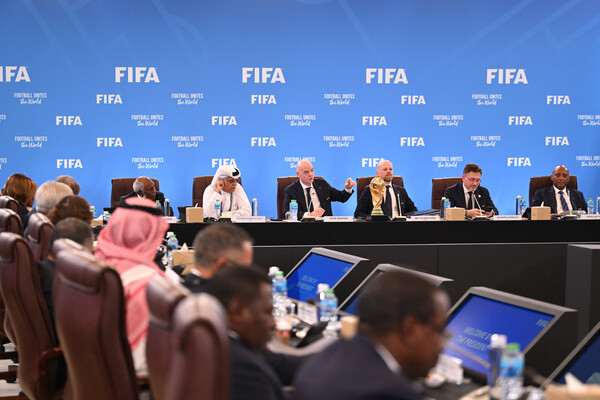
The FIFA World Cup has always been the pinnacle of international football, bringing together the world’s best national teams in a celebration of sport, culture, and global unity. However, the 2026 FIFA World Cup represents one of the most significant transformations in the tournament’s history. A series of major decisions taken by the FIFA Council, known as the FIFA Council World Cup 2026 Decisions, have reshaped the structure, format, scale, and commercial future of the competition.
From expanding the tournament to 48 teams and introducing a new group-stage format to selecting host nations across three countries and revising international match calendars, the FIFA Council’s decisions have generated excitement, debate, and controversy across the football world.
The 2026 tournament, hosted jointly by the United States, Canada, and Mexico, will be the largest World Cup ever staged. It will feature more teams, more matches, more cities, and greater commercial opportunities than any previous edition. These changes are expected to have lasting consequences for global football development, player welfare, broadcasting, sponsorship, and competitive balance.
This article provides a comprehensive analysis of the FIFA Council’s key decisions regarding the 2026 FIFA World Cup, examining their rationale, implications, benefits, criticisms, and long-term impact on the global game.
The FIFA Council serves as the principal decision-making body of FIFA between FIFA Congress meetings. It is responsible for strategic governance, tournament regulations, competition structures, and major policy decisions affecting world football.
The Council includes representatives from FIFA’s six continental confederations:
Over the past decade, the FIFA Council has pursued reforms designed to expand football’s global reach. The 2026 World Cup became the centerpiece of these ambitions.
One of the most important FIFA Council decisions came in January 2017 when members unanimously approved the expansion of the FIFA World Cup from 32 teams to 48 teams beginning with the 2026 tournament. This decision marked the biggest structural change in World Cup history.
The expansion aimed to increase participation opportunities for countries that historically struggled to qualify for the tournament.
FIFA leadership argued that many talented national teams were being excluded under the 32-team format. The expanded structure would allow more nations to participate while encouraging football investment in developing regions.
Although FIFA initially approved a format featuring 16 groups of three teams, concerns soon emerged regarding competitive integrity.
Critics warned that three-team groups could increase the risk of collusion, manipulated results, and unfair scheduling advantages. Following extensive analysis and consultation, the FIFA Council unanimously approved a revised format consisting of 12 groups of four teams.
This structure increases the total number of knockout-stage participants while preserving the familiar four-team group format that fans have known for decades.
The new tournament format dramatically increases the number of games.
Previous World Cups featured 64 matches. The 2026 edition will feature 104 matches, making it the largest football tournament ever organized.
For FIFA and commercial partners, the expanded match schedule significantly increases the tournament’s economic value.
Another landmark FIFA Council decision involved awarding hosting rights jointly to the United States, Canada, and Mexico.
This was the first time in World Cup history that three countries would co-host the tournament.
The bid defeated Morocco during the FIFA voting process and introduced an entirely new model for tournament organization.
The decision leveraged existing stadium infrastructure while spreading economic benefits across North America. The three nations offer extensive transportation networks, commercial markets, and world-class sporting venues.
FIFA approved a network of 16 host cities across North America.
These cities were selected based on stadium quality, transportation systems, accommodation capacity, security planning, and commercial potential.
The wide geographic spread reflects FIFA’s ambition to maximize audience reach and regional participation.
Major cities include New York/New Jersey, Los Angeles, Dallas, Atlanta, Toronto, Vancouver, Guadalajara, Monterrey, and Mexico City.
The FIFA Council also confirmed automatic qualification for all three host nations.
This decision ensured that:
These automatic places are allocated from the CONCACAF region’s qualification slots.
The move was considered necessary to guarantee strong local engagement and simplify tournament planning.
Expanding the World Cup required FIFA to redistribute qualification places among continental confederations.
The Council approved a new allocation system designed to provide broader representation.
This represented a major increase for Africa, Asia, and Oceania, regions that had long sought greater representation at the World Cup.
One of FIFA’s central objectives was to make the World Cup more inclusive.
Historically, many strong national teams narrowly missed qualification because of limited regional allocations.
The expanded tournament offers opportunities for nations that previously faced difficult qualification pathways.
Countries across Africa, Asia, and the Caribbean particularly welcomed the reforms.
The 2026 World Cup is expected to generate record-breaking revenues.
With more teams, matches, sponsors, and broadcasting rights, FIFA projects unprecedented commercial success.
In 2026, FIFA approved a 15% increase in financial distribution to participating nations, raising total distribution to approximately $871 million.
The expansion has created one of the most financially valuable sporting events in history.
Many smaller football nations stand to benefit significantly from FIFA Council reforms.
Countries that previously struggled to qualify now have realistic opportunities to participate on football’s biggest stage.
The possibility of qualification can drive investment in coaching, youth development, infrastructure, and grassroots programs.
Despite widespread support for expansion, critics have raised concerns about player workload.
The larger tournament means more matches and longer competition schedules.
To address these concerns, the FIFA Council approved revisions to the international match calendar and established initiatives focused on player welfare.
Player unions and domestic leagues have repeatedly called for stronger safeguards.
The FIFA Council introduced several calendar reforms linked to the 2026 World Cup.
The final was scheduled for July 19, 2026, while player release periods were adjusted to accommodate the expanded tournament.
These changes aimed to balance tournament demands with club football obligations.
The decision to move away from 16 groups of three teams serves as one of the most revealing examples of FIFA’s evolving decision-making process.
Football analysts highlighted several risks:
After reviewing sporting integrity concerns, FIFA opted for the more traditional four-team group model. Many observers considered this one of the Council’s most practical decisions.
Hosting the tournament across three nations presents unique logistical challenges.
FIFA believes North America’s transportation networks and infrastructure make it capable of handling these complexities.
However, coordination among multiple governments remains one of the largest organizational challenges in World Cup history.
The FIFA Council has emphasized technological innovation as a major feature of the 2026 World Cup.
Several advancements are expected to play key roles:
These technologies are designed to improve officiating accuracy and enhance the viewing experience for billions of fans worldwide.
The tournament is expected to generate billions of dollars in economic activity.
Host cities anticipate major benefits through:
Past World Cups have demonstrated that global sporting events can significantly boost local economies, although actual long-term benefits often vary by city.
Not all stakeholders support FIFA’s reforms.
Critics argue that expansion prioritizes revenue growth over sporting quality.
Some football experts fear that adding more teams may create mismatches during the group stage.
Others argue that the increased opportunities outweigh these concerns and contribute to football’s global growth.
The 2026 World Cup may become a blueprint for future international tournaments.
The decisions taken by the FIFA Council reveal a clear strategic vision:
If successful, these reforms could influence future World Cups, continental championships, and other major sporting competitions.
The FIFA Council’s decisions regarding the 2026 World Cup represent one of the most ambitious transformations in football history. By expanding the tournament to 48 teams, introducing a new competition structure, selecting three host nations, increasing qualification opportunities, and embracing technological innovation, FIFA has fundamentally reshaped the future of international football.
Supporters view these reforms as a bold step toward inclusivity, global development, and commercial growth. Critics remain concerned about player welfare, competitive balance, and excessive commercialization. Nevertheless, the decisions collectively signal FIFA’s determination to make football more global than ever before.
As the tournament approaches, the success or failure of these reforms will likely influence football governance for decades. The 2026 World Cup is not merely another edition of the sport’s greatest tournament—it is a test case for the future direction of global football.