

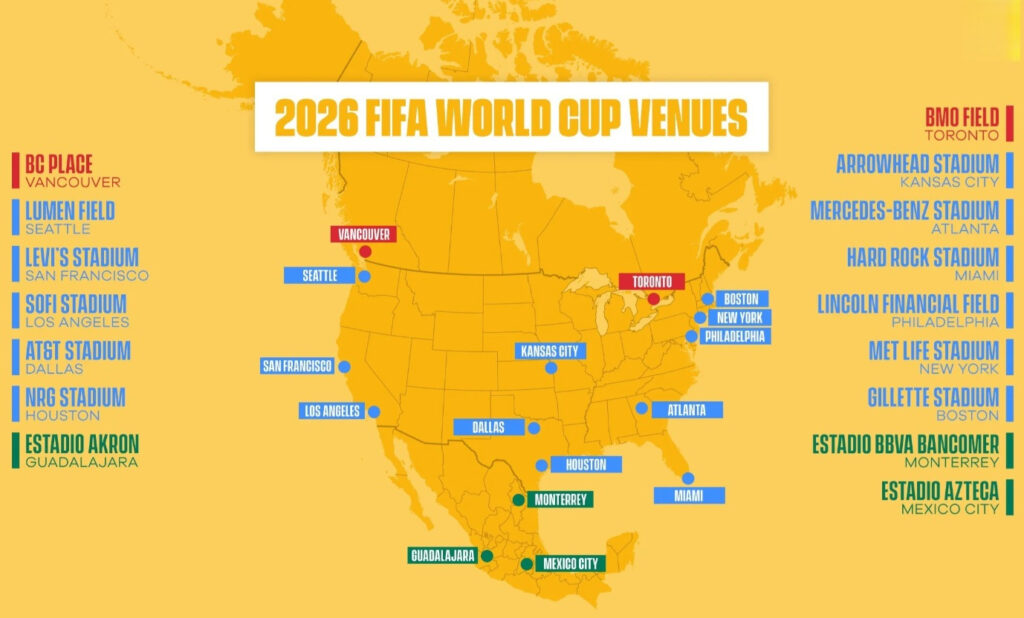
The FIFA World Cup 2026 is set to be one of the most ambitious and groundbreaking sporting events ever organized. FIFA World Cup 2026 Stadiums and Venue Information are highly anticipated, as this will be the first time in history the tournament is jointly hosted by three nations—the United States, Canada, and Mexico. The competition will also feature an expanded format with 48 national teams, making it the largest FIFA World Cup ever held.
To accommodate the increased number of matches and fans, FIFA selected 16 world-class stadiums across 16 host cities. These venues represent some of the most iconic sports facilities in North America, ranging from modern NFL stadiums to legendary football grounds with rich sporting histories.
The 2026 World Cup is expected to attract millions of spectators, generate billions of dollars in economic activity, and showcase the diverse cultures and landscapes of North America. Understanding the stadiums and host cities is essential for fans planning to attend the tournament, as each venue offers unique experiences, capacities, and local attractions.
This comprehensive guide explores every FIFA World Cup 2026 stadium, examines the host cities, analyzes venue features, and explains why these locations were chosen to stage football’s biggest event.
The 2026 edition marks several historic milestones in FIFA World Cup history.
These changes required an extensive network of stadiums capable of hosting large crowds, international media, security operations, and world-class sporting events.
The tournament will be shared among three North American nations.
The United States will host the majority of matches and venues. With extensive sports infrastructure and numerous high-capacity stadiums, the country provides the backbone of the tournament.
Canada will host matches in two cities, showcasing the country’s growing football culture and modern sporting facilities.
Mexico will make history as the first nation to host matches in three different FIFA World Cups, having previously hosted tournaments in 1970 and 1986.
FIFA selected 16 venues across North America.
Located in East Rutherford, New Jersey, MetLife Stadium is one of the most recognizable sports venues in North America.
Key facts:
The venue’s proximity to New York City makes it one of the most attractive destinations for international visitors.
AT&T Stadium is among the largest and most technologically advanced stadiums in the world.
The venue is expected to host several high-profile matches during the tournament.
SoFi Stadium represents the future of modern sports architecture.
The Los Angeles metropolitan area offers excellent transportation links and international accessibility.
Known for its innovative retractable roof design, Mercedes-Benz Stadium is one of the premier sports venues in the United States.
Atlanta’s status as a major transportation hub makes it a strategic World Cup location.
Houston’s NRG Stadium offers significant event-hosting experience and a large seating capacity.
Houston’s global business connections and multicultural population make it an ideal host city.
Known for its passionate sports fans and electric atmosphere, Arrowhead Stadium is expected to deliver memorable World Cup experiences.
Kansas City has become an increasingly important football market in North America.
Philadelphia’s stadium combines modern amenities with a location steeped in American history.
The city’s historical attractions provide additional appeal for international visitors.
Miami offers a vibrant international atmosphere and year-round tourism appeal.
Miami is expected to attract large numbers of international fans due to its global connectivity.
Seattle has established itself as one of North America’s most passionate football markets.
The city’s football culture played a major role in its selection as a host venue.
Located in Santa Clara, Levi’s Stadium serves the broader San Francisco Bay Area.
The venue reflects the region’s emphasis on innovation and modern infrastructure.
Representing the Boston metropolitan region, Gillette Stadium brings a rich sporting heritage to the tournament.
Boston’s historical significance adds another dimension to the fan experience.
BC Place is one of Canada’s premier sporting venues.
Vancouver’s scenic setting and multicultural character make it a highly attractive destination.
Toronto represents Canada’s largest city and financial center.
Toronto’s diverse population contributes to its vibrant football atmosphere.
Estadio Azteca is arguably the most famous football stadium in North America.
The stadium will become the first venue to host matches in three separate FIFA World Cups.
Often regarded as one of Latin America’s most beautiful football stadiums, Estadio BBVA combines modern architecture with passionate local support.
Monterrey’s reputation as a football city makes it a natural World Cup destination.
Guadalajara’s Estadio Akron completes Mexico’s trio of host venues.
The city is known for its cultural heritage and passionate football supporters.
FIFA evaluated numerous factors when choosing host stadiums.
Each selected venue demonstrated the ability to support large-scale international sporting events.
The FIFA World Cup is expected to generate substantial economic benefits.
Potential impacts include:
Previous World Cups have demonstrated how hosting matches can stimulate local economies and boost global visibility.
One of the strengths of the 2026 World Cup is its extensive transportation network.
Host cities benefit from:
These factors will help accommodate millions of traveling fans.
The tournament offers an opportunity for supporters to experience a wide range of cultures and destinations.
Fans can explore:
This diversity makes the 2026 World Cup unique among international sporting events.
Many selected venues incorporate sustainability initiatives.
These efforts align with broader goals to reduce the environmental impact of major sporting events.
While the opportunities are substantial, host cities must also address several challenges.
Extensive planning is underway to ensure successful tournament operations.
Beyond the matches themselves, the tournament is expected to leave a lasting legacy.
Potential long-term benefits include:
The event may significantly influence the future growth of football across North America.
The FIFA World Cup 2026 promises to be the largest and most ambitious tournament in football history. Featuring 16 world-class stadiums across the United States, Canada, and Mexico, the event will showcase an extraordinary combination of sporting excellence, cultural diversity, and modern infrastructure. From the historic Estadio Azteca in Mexico City to the state-of-the-art MetLife Stadium hosting the final, each venue brings unique characteristics that contribute to the tournament’s global appeal.
The selected host cities offer exceptional transportation networks, accommodation options, and entertainment opportunities, ensuring that fans from around the world can enjoy a memorable experience both inside and outside the stadiums. The economic impact, tourism benefits, and long-term development opportunities associated with the tournament further highlight its significance.
As football supporters prepare for this historic competition, the 2026 World Cup stadiums stand ready to welcome millions of visitors and provide the stage for unforgettable moments in sporting history. Together, these venues represent not only the future of football in North America but also the continued growth and globalization of the world’s most popular sport.