

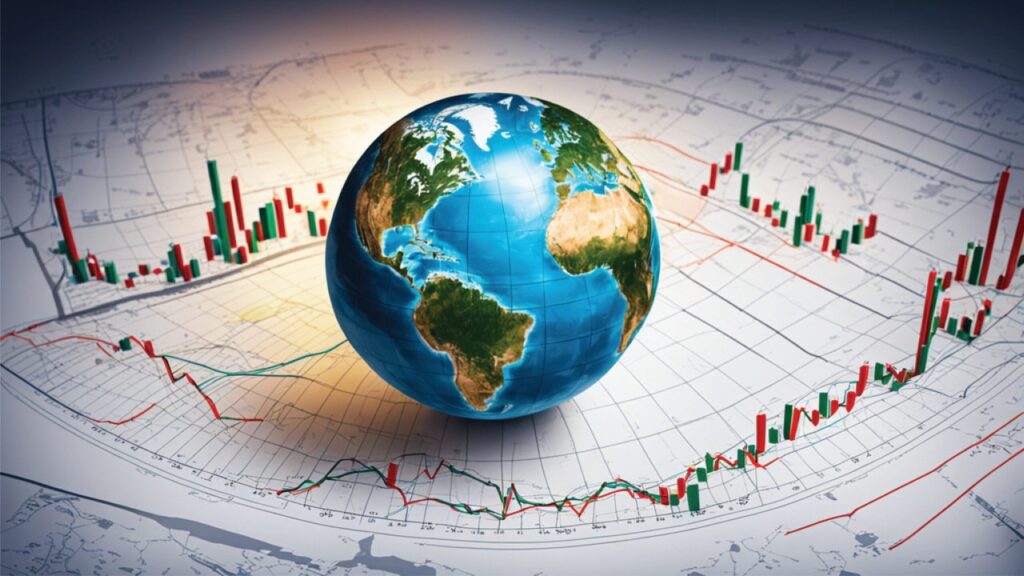
The global economy is undergoing a period of significant transformation driven by shifting monetary policies, geopolitical tensions, technological innovation, evolving trade relationships, and changing consumer behavior. Global Economic Developments Affecting International Markets are now at the center of this transformation, as international markets are increasingly interconnected, meaning that developments in one region can quickly influence economies and financial markets across the world. Investors, policymakers, businesses, and consumers must navigate a complex landscape characterized by both opportunities and uncertainties.
As economies recover from previous disruptions while adapting to new challenges, global economic trends continue to shape investment decisions, trade flows, currency valuations, and corporate strategies. Understanding these developments is essential for anyone seeking to comprehend the forces driving international markets today.
The global economy has demonstrated resilience despite numerous headwinds. Economic growth remains uneven across regions, with some countries experiencing robust expansion while others face slower growth due to inflationary pressures, debt concerns, and geopolitical instability.
Major economies such as the United States, China, the European Union, India, and Japan continue to play critical roles in shaping global market dynamics. Their monetary policies, fiscal decisions, and trade relationships significantly influence investor sentiment and international capital flows.
Several key themes dominate the current economic environment:
These factors collectively contribute to both opportunities and risks across international markets.
One of the most influential drivers of international markets is monetary policy. Central banks worldwide have spent recent years balancing inflation control with economic growth objectives.
Interest rates affect nearly every aspect of financial markets, including borrowing costs, investment activity, currency valuations, and consumer spending. When central banks raise rates, borrowing becomes more expensive, potentially slowing economic activity. Conversely, lower rates can stimulate spending and investment.
The United States Federal Reserve remains one of the most influential institutions in global finance. Because the U.S. dollar serves as the world’s primary reserve currency, Federal Reserve decisions often have far-reaching consequences.
For example, when the Federal Reserve maintains higher interest rates, global investors may shift capital toward U.S. assets seeking stronger returns. This can strengthen the dollar while creating capital outflows from emerging markets.
Emerging economies often face increased pressure during periods of higher U.S. interest rates because:
Countries with substantial external debt are particularly vulnerable to these dynamics.
The European Central Bank also plays a significant role in international financial markets. Economic conditions within the Eurozone influence global trade, investment flows, and currency markets.
Policy adjustments by the ECB can affect:
Investors closely monitor ECB communications for signals regarding future economic conditions and inflation expectations.
Inflation remains a major concern for policymakers and investors worldwide. Although inflation rates have moderated in several regions compared to previous peaks, price pressures continue to affect households and businesses.
Inflation influences markets in multiple ways:
Companies often respond to inflation by adjusting pricing strategies, improving operational efficiency, or restructuring supply chains.
Global consumer goods companies have faced rising input costs for raw materials, transportation, labor, and energy. Many firms have implemented selective price increases while investing in automation and supply chain optimization to maintain profitability.
Some businesses successfully passed higher costs to consumers, while others experienced declining demand due to reduced consumer spending power. This illustrates how inflation affects industries differently depending on market conditions and consumer sensitivity to price changes.
China remains a central pillar of the global economy. As the world’s second-largest economy and a major manufacturing hub, China’s economic performance significantly impacts international markets.
The country is currently undergoing structural changes as policymakers seek to transition from investment-driven growth toward greater domestic consumption and technological innovation.
China continues to dominate numerous manufacturing sectors, including electronics, machinery, renewable energy components, and consumer goods.
Changes in Chinese production levels affect:
Many multinational corporations remain heavily dependent on Chinese manufacturing capabilities despite ongoing diversification efforts.
China’s property sector has experienced significant difficulties in recent years. Since real estate has historically contributed substantially to economic growth, weakness in this sector has implications for both domestic and international markets.
Reduced construction activity can lower demand for commodities such as:
Commodity-exporting nations closely monitor developments within China’s construction and infrastructure sectors.
Geopolitical developments increasingly influence international economic outcomes. Trade disputes, regional conflicts, sanctions, and strategic competition among major powers contribute to market volatility and uncertainty.
Businesses are increasingly adopting strategies to reduce geopolitical risks by diversifying production locations and suppliers.
Popular approaches include:
These changes are reshaping global trade patterns and creating new investment opportunities in emerging manufacturing destinations.
Geopolitical tensions often affect energy markets. Oil and natural gas prices can experience significant fluctuations when supply disruptions occur or when major producers adjust output levels.
Energy price volatility influences:
Countries that rely heavily on energy imports remain particularly sensitive to these developments.
Technological innovation has become one of the most powerful forces shaping global economic development. Artificial intelligence, cloud computing, automation, and digital infrastructure investments are transforming industries and creating new growth opportunities.
Artificial intelligence has emerged as a major driver of investment activity. Companies across multiple sectors are increasing spending on AI technologies to improve efficiency, productivity, and decision-making.
Industries experiencing significant AI adoption include:
The rapid expansion of AI infrastructure has also increased demand for semiconductors, data centers, and advanced computing equipment.
The global semiconductor industry has experienced substantial growth due to rising demand for AI applications, electric vehicles, cloud computing, and advanced consumer electronics.
Governments worldwide have introduced policies supporting domestic semiconductor production, recognizing the strategic importance of chip manufacturing. This has led to significant investments in fabrication facilities across North America, Europe, and Asia.
As a result, semiconductor companies have become key beneficiaries of global technological transformation.
Commodity markets remain highly sensitive to economic growth expectations, geopolitical developments, and environmental policies.
Major commodity categories include:
The global transition toward renewable energy is reshaping commodity demand patterns. Electric vehicles, battery storage systems, and renewable energy infrastructure require substantial quantities of critical minerals.
Growing demand exists for:
Countries possessing significant reserves of these resources are becoming increasingly important participants in global markets.
Periods of economic uncertainty often increase investor interest in gold. The precious metal continues to serve as a store of value and portfolio diversification tool.
Factors supporting gold demand include:
Gold’s performance often reflects broader investor sentiment regarding economic stability.
Emerging markets continue to offer attractive growth opportunities despite facing various challenges. Many developing economies benefit from favorable demographics, urbanization trends, and expanding middle-class populations.
India has emerged as one of the fastest-growing major economies. Strong domestic demand, digital transformation initiatives, infrastructure investment, and manufacturing expansion have contributed to its economic momentum.
Several sectors are attracting significant investment:
India’s growing economic importance is reshaping regional and global investment strategies.
Southeast Asian economies are benefiting from supply chain diversification trends. Countries such as Vietnam, Indonesia, Malaysia, and Thailand have attracted increasing foreign direct investment as companies seek alternatives to concentrated manufacturing locations.
Key advantages include:
These factors position the region as an increasingly important component of global economic growth.
Currency markets play a crucial role in international commerce and investment. Exchange rate fluctuations influence trade competitiveness, corporate earnings, inflation, and capital flows.
Major drivers of currency movements include:
Multinational corporations often employ currency hedging strategies to manage exchange rate risks and protect profitability.
Environmental, Social, and Governance (ESG) considerations have become increasingly important in global financial markets. Investors are paying closer attention to sustainability-related risks and opportunities.
Governments, corporations, and financial institutions are allocating substantial resources toward climate-related initiatives.
Major investment areas include:
The expansion of climate finance is creating new industries while transforming existing business models.
Many companies now integrate sustainability objectives into their long-term planning. Businesses increasingly recognize that environmental performance can affect operational efficiency, regulatory compliance, investor relations, and brand reputation.
Organizations that successfully adapt to sustainability expectations may gain competitive advantages in evolving global markets.
Despite numerous opportunities, several risks continue to challenge international markets.
Important risks include:
Investors and businesses must continuously assess these risks while developing strategies to maintain resilience and adaptability.
The future trajectory of international markets will depend on how governments, central banks, businesses, and consumers respond to evolving economic conditions. Technological innovation, demographic shifts, sustainability initiatives, and changing geopolitical relationships will likely remain dominant influences.
Several long-term trends appear particularly significant:
While short-term volatility may persist, these structural trends are expected to shape economic development and investment opportunities for years to come.
Global economic developments are exerting a profound influence on international markets. Central bank policies, inflation trends, technological innovation, geopolitical tensions, supply chain transformations, and sustainability initiatives are collectively redefining the global economic landscape. Major economies such as the United States, China, the European Union, and India continue to play pivotal roles in shaping market outcomes, while emerging markets increasingly contribute to global growth and investment opportunities.
Businesses and investors must remain agile in response to evolving economic conditions. Understanding the interconnected nature of modern markets is essential for identifying opportunities, managing risks, and making informed decisions. As the world economy continues to adapt to new challenges and innovations, those who successfully navigate these changes will be best positioned to thrive in an increasingly complex and dynamic global marketplace.