

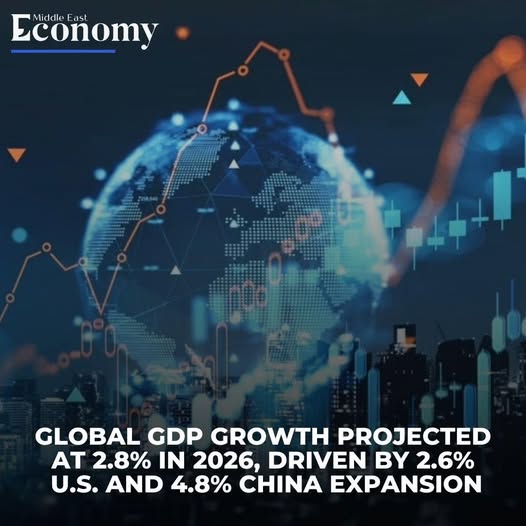
The global economy is entering a period of heightened uncertainty as economists, international organizations, and policymakers increasingly warn that worldwide economic growth is projected to slow significantly in the coming years. After years of recovering from the disruptions caused by the COVID-19 pandemic, many countries now face a combination of persistent inflationary pressures, geopolitical tensions, high interest rates, supply chain vulnerabilities, and slowing productivity growth.
Economic growth has long been a key indicator of prosperity, influencing employment, income levels, investment opportunities, and government revenues. When global growth slows, the effects extend beyond financial markets and corporate balance sheets, impacting households, businesses, and governments across the world. A prolonged slowdown can reduce living standards, increase unemployment, strain public finances, and create broader social and political challenges.
This article examines why global growth is expected to decelerate, explores the major factors driving this trend, analyzes its implications for developed and developing economies, and discusses strategies that policymakers and businesses can adopt to navigate an increasingly complex economic landscape.
Global economic growth refers to the increase in the total value of goods and services produced worldwide over a given period. Economists commonly measure growth using Gross Domestic Product (GDP), which represents the total economic output of a country or region.
Strong economic growth generally leads to:
Conversely, slower growth can constrain economic opportunities and make it more difficult for governments and businesses to address social and financial challenges.
International financial institutions have repeatedly revised growth forecasts downward in recent years. While the world economy continues to expand, the pace of expansion is considerably weaker than historical averages.
Many economists note that global growth rates that once exceeded 4% annually are increasingly difficult to sustain. Forecasts suggest that growth in several major economies is expected to remain below long-term trends due to structural and cyclical pressures.
Several key concerns dominate current projections:
These factors collectively contribute to a more cautious outlook for the global economy.
One of the most significant contributors to slower global growth is the period of elevated interest rates implemented by central banks to combat inflation.
Following the pandemic, inflation surged in many countries due to supply chain disruptions, strong consumer demand, labor shortages, and rising energy prices. In response, central banks increased interest rates aggressively.
Higher interest rates affect economic activity in several ways:
While these measures help control inflation, they can also slow economic expansion by reducing overall demand.
Although inflation has moderated in many economies, it remains a concern for policymakers and consumers alike.
Inflation reduces purchasing power by increasing the cost of goods and services. Households facing higher expenses often cut discretionary spending, which can reduce business revenues and slow economic activity.
Particularly affected sectors include:
Even when inflation begins to decline, its lingering effects can continue to influence consumer behavior and economic performance for extended periods.
Geopolitical developments have become increasingly important drivers of economic outcomes.
Conflicts, diplomatic disputes, sanctions, and trade restrictions can disrupt international commerce and create uncertainty for investors. Businesses often delay major investments when future market conditions become difficult to predict.
Examples of geopolitical factors affecting growth include:
These developments increase costs and reduce confidence, both of which contribute to slower economic growth.
The COVID-19 pandemic exposed vulnerabilities within global supply chains. Although many disruptions have eased, businesses continue to face challenges related to sourcing materials, transportation costs, and inventory management.
Companies have increasingly sought to diversify suppliers and relocate production closer to end markets. While these strategies can improve resilience, they often require substantial investment and may increase operational expenses.
Key supply chain concerns include:
Such challenges reduce efficiency and can hinder economic expansion.
China has been one of the primary engines of global economic growth for more than two decades. However, the country’s economy has recently experienced slower growth compared to previous periods.
Several factors contribute to this moderation:
Given China’s central role in global manufacturing and trade, slower growth in the country affects commodity exporters, multinational corporations, and neighboring economies.
Countries that rely heavily on Chinese demand for raw materials often experience reduced export revenues when China’s economy slows.
Europe has faced unique economic pressures stemming from energy market disruptions and geopolitical tensions.
Higher energy prices have increased production costs for manufacturers and raised household expenses. Several industries, particularly energy-intensive sectors, have struggled to remain competitive amid rising operating costs.
The European experience highlights how external shocks can influence economic growth through multiple channels, including inflation, industrial output, and consumer spending.
Population trends are becoming increasingly important determinants of economic growth.
Many advanced economies face aging populations and declining birth rates, which can reduce labor force growth and place additional pressure on public finances.
Challenges associated with demographic shifts include:
Without productivity improvements or immigration-driven workforce expansion, demographic trends may continue to limit economic growth potential.
Productivity—the efficiency with which labor and capital are used—is a critical driver of long-term economic growth.
Historically, major technological innovations have fueled productivity gains and economic expansion. However, productivity growth has slowed in many countries over the past decade.
Several factors contribute to this trend:
Improving productivity remains one of the most effective ways to support sustainable growth in the long run.
Developing countries are often disproportionately affected by global economic slowdowns.
Many emerging markets depend on exports, foreign investment, tourism, and commodity revenues to drive growth. When global demand weakens, these sources of income can decline significantly.
Potential consequences include:
Countries with limited fiscal resources may find it particularly challenging to respond to economic headwinds.
Slower economic growth often translates into weaker labor market conditions.
Businesses facing reduced demand may postpone hiring, limit wage increases, or reduce workforce levels. This can affect both skilled and unskilled workers across various sectors.
Industries commonly affected during growth slowdowns include:
Although unemployment may not rise immediately, prolonged periods of weak growth can gradually erode labor market strength.
Investors closely monitor economic growth forecasts because they influence corporate earnings, interest rates, and market valuations.
Slower growth expectations can contribute to:
Financial markets often react quickly to revised economic projections, amplifying uncertainty across the broader economy.
Despite concerns about slowing growth, emerging technologies offer potential opportunities for economic expansion.
Artificial intelligence, automation, biotechnology, and renewable energy innovations could help improve productivity and create new industries.
Potential benefits include:
However, realizing these benefits requires investment, education, infrastructure, and supportive policy frameworks.
Governments and central banks possess several tools to support economic activity during periods of weaker growth.
Common policy measures include:
Effective policy responses can help mitigate the effects of economic slowdowns while promoting long-term resilience.
In an increasingly uncertain world, resilience has become a key objective for businesses and governments alike.
Strategies to strengthen resilience include:
These measures can help economies adapt to future shocks and maintain growth momentum despite external challenges.
Although current forecasts point to slower growth, long-term economic outcomes remain uncertain. History demonstrates that economies can adapt and recover from significant challenges through innovation, policy reforms, and entrepreneurial activity.
Future growth prospects will depend on several factors:
While the path forward may be complex, opportunities for sustainable growth remain available to countries willing to invest in long-term competitiveness.
The projection that global growth will slow significantly reflects a combination of economic, geopolitical, demographic, and structural challenges affecting countries around the world. High interest rates, persistent inflation pressures, supply chain vulnerabilities, geopolitical tensions, weak productivity growth, and demographic shifts are collectively shaping a more cautious economic outlook.
The consequences of slower growth extend beyond economic statistics. Employment opportunities, business investment, consumer confidence, government revenues, and living standards can all be affected by prolonged periods of weak economic expansion. Developing economies may face particular challenges due to their reliance on exports, investment flows, and external demand.
Nevertheless, slower growth does not necessarily imply stagnation. Innovation, technological advancement, strategic policymaking, and international cooperation continue to offer pathways toward renewed prosperity. By investing in productivity, infrastructure, education, and resilience, countries can position themselves to overcome current challenges and build stronger foundations for future economic success.
Ultimately, the ability of governments, businesses, and societies to adapt to changing conditions will determine whether the current slowdown becomes a temporary adjustment or a longer-lasting transformation of the global economic landscape.