

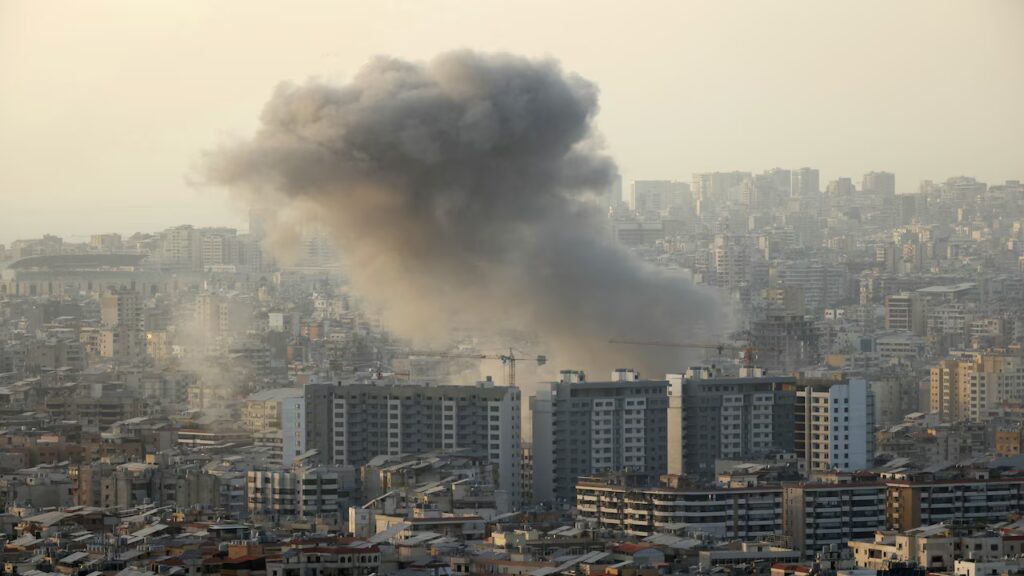
Global inflation has always been sensitive to geopolitical shocks, but few regions carry as much influence over global price stability as the Middle East. For example, Iran War Drives Global Inflation to New Highs, as any major conflict involving Iran has the potential to send shockwaves through global energy markets, disrupt supply chains, and accelerate inflation across both developed and developing economies.
Oil, natural gas, shipping routes, and investor sentiment are all deeply interconnected with stability in and around Iran. Because Iran sits near the Strait of Hormuz—through which a significant share of the world’s oil exports flow—any escalation in conflict can quickly translate into higher energy prices and broader inflationary pressure.
This article explores how a hypothetical or escalating Iran-related war scenario can drive global inflation to new highs, examining transmission channels, historical parallels, economic consequences, and policy responses. It also analyzes how modern economies—far more interconnected than in past decades—become increasingly vulnerable to geopolitical instability.
Inflation occurs when the general price level of goods and services rises over time. While inflation can be driven by monetary policy, demand surges, or supply chain constraints, geopolitical conflict often creates a sudden supply shock that pushes prices upward rapidly.
War involving a major energy-producing region such as Iran introduces multiple inflationary pressures simultaneously:
These factors combine to create what economists often call a “cost-push inflation shock,” where rising input costs force prices upward across the economy.
Iran plays a strategically significant role in global energy markets due to both its production capacity and its geographic position.
Although sanctions have limited Iran’s oil exports at various times, the country remains one of the key energy players in the Middle East. More importantly, Iran borders the Strait of Hormuz, one of the most critical maritime chokepoints in the world.
Because of this concentration, even limited conflict escalation can significantly impact global energy pricing.
Oil remains one of the most important drivers of global inflation. When oil prices rise, they affect almost every sector of the economy.
The transmission mechanism works through several stages:
Higher crude oil prices immediately increase gasoline, diesel, and heating fuel costs.
Oil is a key input in plastics, chemicals, fertilizers, and industrial production.
When consumers and businesses expect higher future prices, they adjust behavior accordingly.
A military escalation involving Iran does not need to completely shut down oil production to affect markets. The risk premium alone can significantly increase prices.
Markets typically react to:
Even uncertainty leads traders to price in supply risk, often resulting in immediate spikes in crude oil prices.
During past geopolitical crises in the Middle East, oil prices have often surged between 10% and 40% within short periods due to perceived supply risks rather than actual shortages.
Beyond oil prices, conflict involving Iran would significantly affect global shipping routes.
The Strait of Hormuz is one of the world’s most heavily monitored maritime corridors. Any instability increases shipping risks, which directly affects global trade.
Shipping cost increases quickly cascade into consumer prices, particularly for imported goods, electronics, and manufacturing inputs.
To understand how an Iran-related war could impact inflation, it is useful to examine past oil shocks.
Following the Arab oil embargo, global oil prices quadrupled.
The Iranian Revolution caused a major disruption in oil exports, contributing to a global energy shock.
Iraq’s invasion of Kuwait disrupted oil markets again.
While not involving Iran, this conflict demonstrates modern inflation dynamics from geopolitical shocks.
These historical cases show that geopolitical conflicts involving energy producers consistently lead to inflationary pressure.
Although energy is the primary transmission channel, an Iran conflict would also affect inflation through broader economic mechanisms.
Food inflation is highly sensitive to energy and fertilizer costs.
Industries relying on petrochemicals and plastics would face rising costs.
Conflict-related uncertainty often triggers capital flight into safe-haven assets.
Central banks face a difficult challenge during geopolitical inflation shocks.
They must balance:
Typical responses include:
However, raising interest rates during a supply-driven inflation shock can risk slowing economic growth further, creating policy dilemmas.
Emerging economies are often the most vulnerable to oil-driven inflation shocks.
Countries heavily dependent on imported fuel or food may experience sharper inflation spikes than developed economies.
Economists often model geopolitical risk scenarios to estimate inflation impacts.
Governments maintain strategic petroleum reserves (SPR) to cushion against supply shocks.
In a conflict scenario involving Iran, countries may:
However, these measures are typically temporary and cannot fully offset prolonged supply disruptions.
One long-term mitigating factor is the global transition toward renewable energy.
Renewables help reduce exposure to oil shocks by:
However, oil and gas still dominate global energy consumption, meaning geopolitical risks remain highly relevant today.
A war involving Iran or a major escalation of tensions in the region would likely have profound effects on global inflation. Due to Iran’s strategic position near the Strait of Hormuz and its role in regional geopolitics, even indirect disruptions can rapidly transmit into global energy markets.
Historical evidence from past oil crises shows that geopolitical instability consistently leads to higher inflation, slower economic growth, and increased financial volatility. In today’s highly interconnected global economy, these effects are amplified through complex supply chains, financial markets, and energy dependencies.
While central banks and governments have tools to mitigate short-term shocks, sustained geopolitical conflict can overwhelm policy responses and push inflation to multi-year or even multi-decade highs.
Ultimately, the relationship between geopolitical conflict and inflation underscores a critical reality of the modern world: energy security is economic security. Any major disruption in a key region like Iran does not remain local—it becomes a global economic event with consequences for prices, growth, and stability worldwide.