

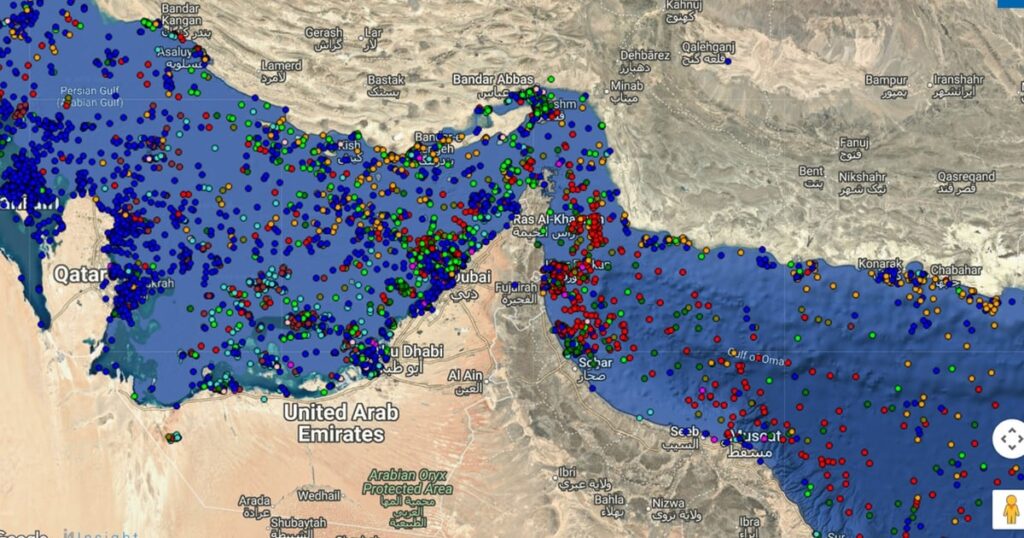
The Strait of Hormuz is one of the most strategically sensitive maritime chokepoints in the world. Recent years have witnessed a Naval Presence Escalation in the Strait of Hormuz Area, reflecting heightened tensions among regional and global powers. It connects the Persian Gulf with the Gulf of Oman and ultimately the Arabian Sea. Despite its narrow geography—only about 33 kilometers wide at its narrowest point—the strait carries an outsized share of global energy trade and has become a focal point of sustained naval competition.
In recent years, naval presence in and around the Strait of Hormuz has intensified significantly. Warships, patrol aircraft, surveillance drones, and multinational maritime coalitions operate in overlapping layers of security activity. While these deployments are often justified as necessary to protect commercial shipping and ensure freedom of navigation, they also reflect deeper geopolitical rivalries and carry persistent risks of escalation.
This article explores the drivers, history, key actors, real-world incidents, and global consequences of increasing naval militarization in the Strait of Hormuz region.
The Strait of Hormuz is widely recognized as one of the world’s most critical energy corridors. According to widely cited maritime energy assessments, roughly one-fifth of global petroleum liquids consumption passes through the strait daily. This includes crude oil, condensates, and refined petroleum products exported primarily from Gulf states.
The surrounding region includes major producers such as, Kuwait, Iraq, and Qatar. These countries depend heavily on uninterrupted maritime access for revenue and economic stability.
Key strategic functions of the Strait of Hormuz include:
Because there are no realistic alternative routes for many Gulf exports, any disruption in the strait immediately reverberates through global supply chains and financial markets.
The militarization of the Strait of Hormuz did not happen overnight. Its roots stretch back several decades, particularly to the Iran-Iraq War in the 1980s. During this period, a phase of maritime conflict known as the “Tanker War” saw both sides attacking oil tankers and merchant shipping in an attempt to pressure each other economically.
In response, external powers increased naval involvement to protect commercial vessels and ensure oil exports continued. The United States, in particular, expanded its naval footprint in the Gulf, setting a precedent for long-term military presence.
One of the most consequential historical incidents occurred in 1988, when the USS Vincennes mistakenly shot down Iran Air Flight 655 over the Persian Gulf, killing 290 civilians. Although not directly in the Strait of Hormuz, the event underscored the dangers of operating advanced military systems in congested and tense maritime environments.
Since then, naval activity in the region has steadily increased, punctuated by recurring crises, sanctions-related tensions, and maritime confrontations.
The Strait of Hormuz sits at the intersection of regional and global power competition. The rivalry between and Western powers—particularly the has been a central factor in naval buildup. Each side views maritime presence as a tool of deterrence and strategic signaling.
For Iran, naval operations in the strait are part of a broader doctrine of asymmetric warfare, designed to offset conventional military disadvantages. For the United States and allies, naval deployments aim to ensure open sea lanes and deter disruption of global energy flows.
Global dependence on Gulf energy exports is a major driver of naval presence. Even minor disruptions in the Strait of Hormuz can cause immediate spikes in oil prices and shipping insurance premiums.
For example, during periods of heightened tension such as in 2019, Brent crude prices experienced short-term volatility following tanker incidents and reported attacks in the region. While supply was not permanently disrupted, market sensitivity to risk was clearly demonstrated.
Naval escalation is frequently triggered by specific maritime incidents. These may include:
One notable case occurred in 2019 when several oil tankers were damaged in the Gulf of Oman, just outside the Strait of Hormuz. The incident led to increased U.S. naval deployments and the formation of multinational maritime security initiatives.
Modern naval escalation is no longer limited to traditional warships. The introduction of drones, satellite surveillance, electronic warfare systems, and unmanned surface vessels has significantly increased operational complexity in the region.
These technologies enhance situational awareness but also create new risks of misinterpretation and cyber interference, increasing the chances of unintended escalation.
Iran maintains one of the most strategically complex naval postures in the region. Its forces include both conventional naval units and the Islamic Revolutionary Guard Corps Navy, which specializes in asymmetric tactics.
Key capabilities include:
Iran’s strategy is based on deterrence through the credible threat of disrupting maritime traffic, rather than direct large-scale naval confrontation.
The United States maintains one of the most powerful naval presences in the region through its Fifth Fleet, headquartered in Bahrain. Its operations are supported by carrier strike groups, destroyers, surveillance aircraft, and allied coordination mechanisms.
The core objectives of U.S. naval operations include:
U.S. naval deployments often surge during crises, reinforcing deterrence but also increasing operational proximity with Iranian forces.
Countries such as Saudi Arabia, UAE, Bahrain, and Oman play important roles in maritime security. Oman, in particular, occupies a critical geographic position near the Strait of Hormuz and often acts as a diplomatic intermediary.
These states have invested heavily in modern naval and coast guard capabilities, including patrol vessels, surveillance systems, and integrated maritime command structures.
International coalitions such as the Combined Maritime Forces (CMF) coordinate naval operations involving multiple countries. These coalitions focus on:
Participation from European and Asian states reflects the global stakes of maintaining open shipping lanes through the Strait of Hormuz.
One of the clearest examples of naval escalation occurred during the 2019–2020 tanker crisis. Multiple commercial vessels were attacked, damaged, or seized in and around the Strait of Hormuz and the Gulf of Oman.
In response, the United States increased naval deployments and encouraged the formation of a multinational maritime security initiative known as the International Maritime Security Construct.
Key outcomes included:
This crisis demonstrated how quickly localized maritime incidents can escalate into broader geopolitical confrontations with global economic implications.
Because a large share of global oil supply passes through the Strait of Hormuz, even minor disruptions or threats can significantly influence global energy markets. Prices often respond not only to actual supply interruptions but also to perceived risks.
Historically, Brent crude prices have shown sharp short-term increases during periods of heightened tension, even when no sustained blockade occurred.
Commercial shipping companies operating in the region face increased insurance premiums during periods of instability. These costs are passed along supply chains, affecting consumer prices globally.
Since energy costs influence transportation and manufacturing, naval escalation in the Strait of Hormuz can indirectly affect global inflation and economic growth patterns.
With multiple navies operating in close proximity, the risk of accidental encounters is significant. Miscommunication, radar misidentification, or navigation errors can escalate quickly in tense environments.
Military signaling intended to deter adversaries can sometimes be interpreted as provocation, leading to reciprocal deployments and increasing the risk of confrontation.
Modern naval operations rely heavily on digital systems, making them vulnerable to cyber interference. Disruption of navigation or communication systems could have serious consequences in a congested maritime environment.
Despite military tensions, diplomatic channels remain active. Oman often plays a mediating role, while international organizations encourage dialogue and confidence-building measures.
Common de-escalation tools include:
These mechanisms aim to reduce the likelihood of miscalculation and maintain stability in the region.
The Strait of Hormuz is likely to remain a heavily militarized and strategically contested maritime zone. Several trends will shape its future:
While full-scale conflict is not inevitable, the structural conditions for recurring tension remain firmly in place due to the region’s economic and strategic significance.
The escalation of naval presence in the Strait of Hormuz reflects the intersection of global energy dependence, regional rivalries, and evolving military technologies. As one of the most critical maritime chokepoints in the world, the strait attracts continuous attention from regional states, global powers, and multinational coalitions.
While naval deployments play an important role in securing shipping lanes and deterring threats, they also contribute to a delicate security environment where miscalculation or isolated incidents can escalate rapidly. The 2019–2020 tanker crisis and earlier historical events illustrate how fragile this balance can be.
Ultimately, the future stability of the Strait of Hormuz will depend on the ability of involved actors to balance deterrence with diplomacy, military readiness with restraint, and strategic competition with shared economic interests. As global energy systems and maritime technologies evolve, this narrow waterway will remain a central arena for geopolitical interaction and risk management.