

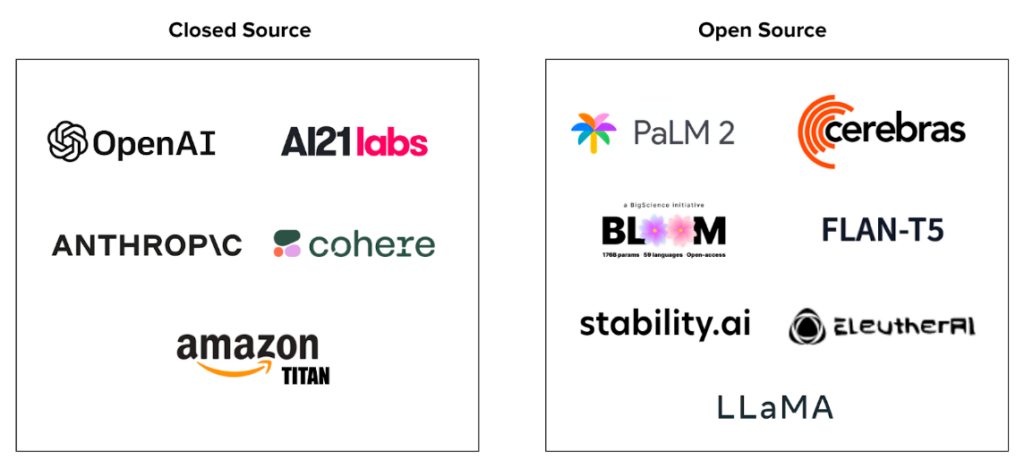
Open Source AI Models Competing With Commercial Platforms… Artificial intelligence has entered a new era where access, innovation, and competition are no longer controlled exclusively by large technology companies. While commercial AI platforms have dominated headlines with powerful proprietary models, open-source AI models are rapidly gaining attention as serious competitors. These publicly available models are enabling researchers, businesses, developers, and organizations to build customized artificial intelligence systems without relying entirely on closed platforms.
The rise of open-source AI represents a major shift in the technology landscape. Instead of limiting advanced AI capabilities to organizations with massive computing resources and expensive subscriptions, open models are expanding access to machine learning technologies. Companies can modify models, run them on their own infrastructure, improve performance for specific industries, and maintain greater control over data and privacy.
This article explores how open-source AI models are competing with commercial platforms, the technologies driving this competition, real-world examples, advantages and challenges, and what the future may look like for the global AI ecosystem.
Open-source software has played a critical role in technology development for decades. Operating systems, programming tools, databases, and web technologies have benefited from communities of developers collaborating to improve software openly.
Open-source AI follows a similar philosophy by making elements of artificial intelligence systems available for public use. Depending on the project, openness may include access to:
This approach allows developers and organizations to experiment, customize, and improve AI systems without waiting for permission from a single provider.
Commercial AI platforms have played a major role in popularizing generative AI. These systems are typically developed by companies with significant investments in computing infrastructure, research teams, and specialized hardware.
Commercial AI providers offer several advantages:
For many businesses, commercial platforms provide a convenient way to access advanced AI capabilities without building internal expertise.
However, closed AI systems also introduce limitations, including restricted customization, dependence on external providers, and concerns about data control.
Open-source AI models have improved significantly in recent years. Advances in model architecture, training methods, hardware availability, and global research collaboration have allowed open models to close the performance gap with proprietary systems.
Several factors are accelerating open-source AI development:
Many organizations now view open-source AI as a strategic alternative rather than simply an experimental technology.
One of the most influential open AI initiatives is the Llama model family developed by Meta. These models have been widely adopted by researchers, startups, and enterprises because they provide powerful language capabilities while allowing developers greater flexibility.
Llama-based systems are used for:
The popularity of Llama demonstrated that open models could become serious competitors in the large language model market.
Mistral AI has gained attention for developing efficient language models that deliver strong performance with relatively smaller architectures.
The company’s approach focuses on:
Smaller but capable models are particularly attractive for organizations that want to deploy AI locally or reduce computing costs.
Beyond text-based AI, open-source communities are also developing models capable of processing images, audio, video, and other data types.
Multimodal AI enables applications such as:
The competition between open and commercial AI platforms involves more than model performance. Organizations evaluate factors such as cost, flexibility, security, and control.
Open-source models allow organizations to modify and fine-tune systems for specific needs.
Examples include:
Commercial platforms often provide customization options, but users usually have less control over the underlying model.
Open-source AI can reduce licensing costs because organizations can download and operate models independently. However, businesses must consider infrastructure, maintenance, and technical expertise requirements.
Commercial platforms typically provide predictable subscription or usage-based pricing, which can simplify budgeting.
Many organizations prefer open-source AI because they can run models on private infrastructure, reducing the need to send sensitive information to external services.
This is especially important in industries such as:
Many companies are experimenting with open-source AI to create internal productivity tools. Instead of relying only on external AI services, organizations are deploying customized models trained on their own information.
Common enterprise applications include:
These deployments demonstrate that open-source AI can provide practical business value when combined with appropriate infrastructure and expertise.
The performance of AI models depends heavily on computing resources. Advanced chips, cloud infrastructure, and optimized software frameworks have made it easier for organizations to experiment with powerful AI systems.
Important hardware developments include:
As hardware becomes more accessible, the ability to run sophisticated AI models outside major technology companies continues to increase.
Open-source AI encourages experimentation and collaboration across industries and research communities.
Major benefits include:
Open communities often identify improvements, security issues, and new applications faster because thousands of developers can contribute simultaneously.
Despite rapid progress, open-source AI models face important challenges.
Training advanced AI models requires enormous computational resources. Although using existing open models is easier than training from scratch, large-scale development remains expensive.
Greater accessibility can also create challenges related to misuse.
Potential concerns include:
Not all open-source models provide the same level of accuracy, safety, or reliability. Organizations must carefully evaluate models before using them in critical applications.
Commercial platforms often provide dedicated customer support, while open-source solutions may require organizations to develop internal technical expertise.
Healthcare organizations are exploring open AI models for medical research, documentation assistance, and diagnostic support.
Potential applications include:
Open AI models can support personalized learning systems, tutoring applications, and educational research.
Manufacturers are using customized AI models for predictive maintenance, quality control, and process optimization.
Developers are using open AI models to assist with:
The future of artificial intelligence is unlikely to be dominated exclusively by either open-source or commercial platforms. Instead, both ecosystems are likely to continue developing alongside each other.
Commercial AI providers may continue leading in:
Open-source AI may continue leading in:
The competition between these approaches may ultimately benefit users by encouraging faster innovation and more diverse AI solutions.
Organizations considering AI adoption should evaluate models based on their specific requirements rather than choosing solely based on popularity.
Important evaluation factors include:
A hybrid approach combining commercial AI services with open-source models may provide the best balance for many businesses.
Open-source AI models are rapidly changing the artificial intelligence landscape by challenging the dominance of commercial platforms and expanding access to advanced technology. Improvements in model performance, customization options, and developer collaboration have allowed open AI systems to become practical solutions for businesses, researchers, and organizations worldwide.
While commercial AI platforms continue to offer advantages in infrastructure, support, and convenience, open-source models provide flexibility, transparency, and greater control. The future of AI will likely involve a diverse ecosystem where both approaches contribute to innovation.
As artificial intelligence continues evolving, organizations that understand the strengths and limitations of both open-source and commercial AI solutions will be better positioned to use these technologies effectively. The competition between these platforms is not only shaping the future of AI development but also accelerating the creation of smarter, more accessible, and more innovative digital solutions.