

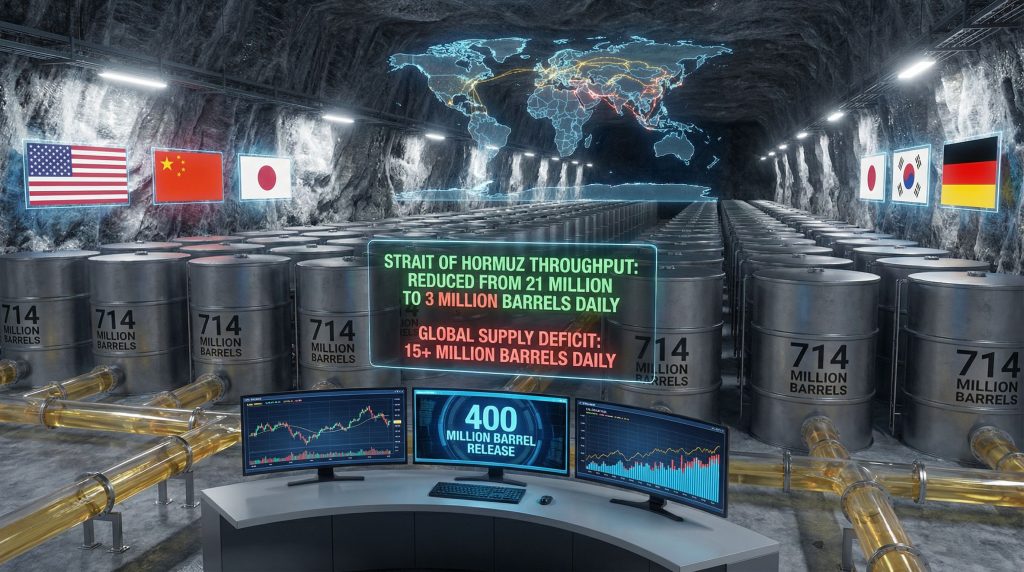
In modern war, energy is just as vital as bullets. History shows that a nation’s ability to fight and keep its economy moving depends on its access to oil. Strategic Petroleum Reserves (SPR) are like an insurance policy against the chaos of conflict. Strategic Oil Reserves Usage During Wartime Supply Shortages has become a critical subject as we face the tensions of 2026, making managing and filling these reserves a top priority for national security.
An SPR is a massive stockpile of oil kept by governments to limit the damage of sudden supply cuts. While these reserves help during natural disasters, their most critical role is during wartime. In a war, shipping routes might be blocked and refineries attacked. The SPR acts as a “buffer.” it buys time for leaders to find diplomatic solutions or move to other energy sources. This article looks at why these reserves matter and the challenges of managing them during global fighting.
The main job of an oil reserve during war is to prevent “energy paralysis.” When a nation goes to war, its fuel needs change fast. Tanks, jets, and ships need huge amounts of high-quality fuel. At the same time, enemy action often cuts off regular oil imports.
Without an SPR, a nation faces a grim choice. It must either take fuel away from citizens—leading to food shortages and social unrest—or limit its military power. Strategic reserves allow a government to keep both the army and the economy running for a while. Also, just having a large reserve can stop an enemy from attacking. If an adversary knows a country has six months of oil stored safely underground, a blockade becomes much less effective. Energy security is a mental weapon as much as a physical one.
Storing millions of barrels of oil for years takes more than just basic tanks. The best method involves deep, underground salt caverns. These are created by pumping water into salt domes to melt the salt and create massive, hollow spaces.
Salt caverns are perfect for wartime. First, they are located thousands of feet below the surface. This makes them safe from bombs or sabotage. Second, the heavy pressure of the salt keeps the oil from leaking. The salt also keeps the oil from spoiling over many years. In the United States, the SPR is kept in 60 of these caverns along the Gulf Coast. In a war, these sites are high-priority assets that need expert teams to run them under pressure.
The modern rules for oil reserves started during the 1973 Arab-Israeli War. When Arab oil-exporting countries stopped shipping oil to nations that supported Israel, the world economy crashed. Gas prices jumped by 400%. Western nations realized they had no defense against oil being used as a weapon.
In response, the International Energy Agency (IEA) was formed in 1974. IEA members must keep enough oil to last at least 90 days. This event changed how the world looks at oil. It was no longer just something to buy and sell; it became a strategic asset. The 1973 crisis taught the world that during war, controlling how oil is moved is just as important as owning the wells. Since then, IEA members have released oil together to stabilize the world during several major crises.
Oil in the ground is useless if you cannot move it. During a wartime shortage, getting the oil out is a race against time. Workers pump salty water into the caverns to push the oil up and into pipelines or onto ships.
However, doing this during a war is hard. Enemies might use cyber-attacks to shut down pipeline computers. If refineries are damaged, crude oil cannot be turned into the jet fuel or diesel the military needs. In 2026, planners are looking at “mobile refining.” These are small units that can be moved to safe spots. This ensures the SPR can be turned into fuel even if big industrial hubs are hit. Keeping these pumps running while under attack is a major goal for defense teams.
In a large war, one country’s oil might not be enough. The IEA has a plan to release oil from many nations at the same time. This stops people from panicking and ensures that allies do not fight each other for the same oil.
The biggest shared release happened in 2022 after the invasion of Ukraine. IEA members released over 180 million barrels. In a full-scale war, this teamwork would be even tighter. It requires trust and shared technical rules. Numbers show that a shared release can lower oil prices by 10% to 15% within a few weeks. This has a “cooling” effect on the economy. However, this only works if all member nations have actually kept their tanks full.
A big problem for leaders is knowing when to stop using the reserve. If a war lasts six months but the oil runs out in three, the nation becomes helpless. This is a major strategic risk.
In 2023 and 2024, many nations used their reserves to lower high prices. This left several countries with their lowest oil levels in 40 years as they started 2026. Refilling these tanks is hard during a war because buying oil for storage makes prices go up even more. Leaders must use math models to decide exactly how much oil to release each day. They must balance the need for cheap gas today against the fear of a long war tomorrow.
While underground caverns are hard to hit, the stuff on the surface is an easy target. Pumps, valves, and power lines can be hit by small teams or drone swarms. In modern war, an enemy can stop the oil flow without destroying the caverns.
A single drone strike on a pump station could stop a million barrels of oil from moving. Hacking is an even bigger threat. If an enemy hacks the computers that run the SPR, they could stop the pumps or cause a dangerous surge in pressure. In 2026, SPR security includes “digital domes.” These are anti-drone systems and special networks that keep the “oil shield” safe from hackers in remote places.
A new trend is storing “refined products” like gas and jet fuel instead of just crude oil. Crude oil is useless until it is processed. Refineries are easy to see and easy to hit in a war.
Countries like Japan and South Korea lead the way in storing ready-to-use fuel. In a war, having 10 million barrels of diesel is better than having 20 million barrels of crude that you can’t process. This is vital for the military. NATO jets, for example, need a specific fuel called JP-8. If the refineries making it are destroyed, a crude oil reserve won’t keep the jets flying. The best strategy for 2026 is to store both raw oil and finished fuel.
Not all emergency oil is owned by the government. In many countries, law requires private oil companies to keep a certain amount of oil at all times.
This has pros and cons. The “pro” is that the oil is already spread out across the country, making it faster to reach people. The “con” is that during a war, the government must take control of private property to decide where the oil goes. In 2026, the link between the state and private companies is stronger. New agreements allow the state to move private oil stocks and pay the companies back later. This ensures that every drop of oil in the country is part of the national defense plan.
As the world moves to green energy, some think oil reserves won’t matter. This is a mistake. Even as citizens buy electric cars, military machines still need oil.
Tanks, ships, and bombers cannot run on batteries yet. In fact, as the global supply of oil shrinks, the oil that is left becomes more important. By 2030, we may see “Mineral Reserves” for battery parts, but the SPR will remain the main defense against war shortages for a long time. The move to green energy actually creates a “gap” where a nation isn’t fully powered by oil or electricity yet. This makes managing the SPR even more important.
Strategic oil reserves are more than just economic tools; they are part of national defense.
In 2026, the Strategic Petroleum Reserve is a silent guard. It is the bridge that carries a nation from the start of a crisis to the day peace returns. In the math of war, oil is a huge variable. The SPR is the only way to make sure that equation works for a nation’s safety.