

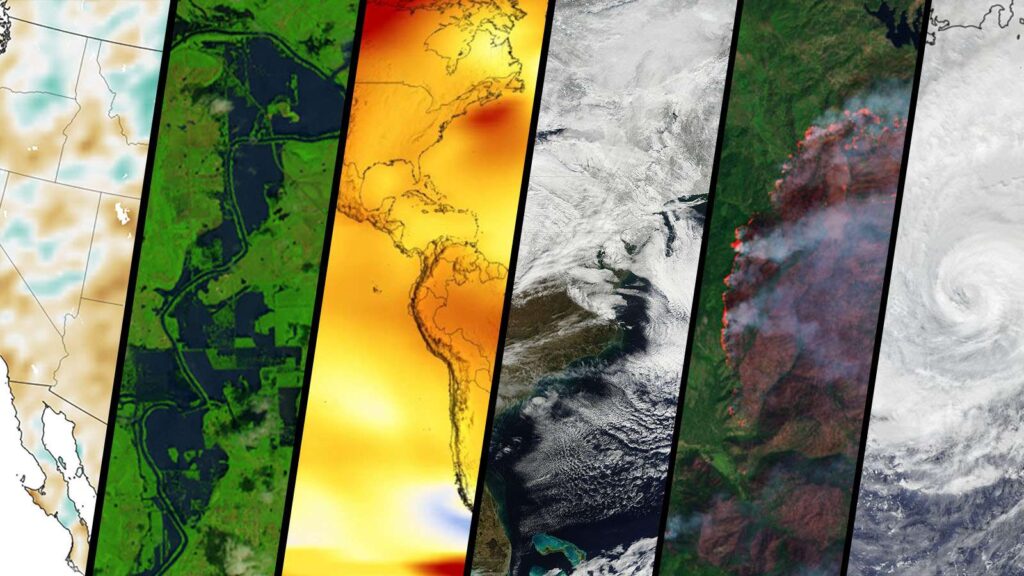
In April 2026, the world is no longer just talking about the future of climate change. We are living in it. The most obvious sign of this new era is the sudden jump in how often we see extreme weather. Unpacking the Surging Frequency of Extreme Weather Events has become essential, as events once called “once-in-a-century” floods or droughts are now happening almost every year.
Scientists have moved past simple guesses. We are now seeing a clear crisis in our air and water systems. This article explains why extreme weather is getting worse. It looks at the science of heat and water and shows how these changes hurt people and the economy in our new, less stable world.
The big change over the last five years is Attribution Science. In the past, scientists were slow to link one storm or heatwave to global warming. By 2026, new computer models can quickly study an event—like a flood in Germany. They can tell us exactly how much more likely it was because of human-caused warming.
The facts are clear. Groups like World Weather Attribution (WWA) say that almost every major heatwave lately was made much worse by the 1.2°C of warming we already have. We aren’t just breaking records anymore. We have entered a new climate where “normal” weather is much more dangerous than it used to be.
Heatwaves are the “silent killers” of the weather world. They kill more people each year than hurricanes or floods. In 2026, we are seeing heatwaves that don’t just last a few days, but several weeks. These are often caused by “Heat Domes,” where high pressure traps hot air over a region like a lid on a pot.
This trend is easy to see in the data. A 2025 study found that the number of “dangerously hot” days in the U.S., Europe, and India has tripled since 1980. This creates a bad cycle. High heat dries out plants, which leads to wildfires. These fires release more carbon, which makes the world even hotter. This feedback loop is speeding up the climate crisis.
Climate change has broken the natural water cycle. Scientists often say: “Wet places get wetter, and dry places get drier.” Warmer air can hold more water—about 7% more for every 1°C of warming. This leads to “Atmospheric Rivers”—thick bands of moisture that dump a month’s worth of rain in just two days.
At the same time, dry areas get worse. High heat makes water evaporate faster from the soil and lakes. This makes droughts deeper, even if it rains a little. In 2026, we see this everywhere. The Western U.S. is in a “mega-drought,” while places like Southeast Asia face huge “flash floods” that destroy roads and buildings.
The summer of 2024 showed us how fast weather can turn deadly. The whole Mediterranean region—from Spain to Turkey—faced many disasters at once. A massive heatwave lasted four weeks. At the same time, the region had its driest winter ever recorded.
The results were a warning for our future. Harvests for olives and grapes fell by 40%. Large cities had to ration water because lakes were nearly empty. Most famously, wildfires broke out in six countries at once. This forced the largest move of people in European history. This case shows that no nation is safe from these growing risks.
The total number of storms might not be rising, but their power is growing fast. Hurricanes and cyclones get their energy from warm ocean water. Since ocean temperatures in 2026 are at record highs, these storms have plenty of “fuel” to grow.
The real danger today is how fast they grow. Meteorologists are worried about storms that jump from weak to very strong in less than 24 hours. This gives people very little time to leave. Also, because the air is wetter, these storms cause more rain. Recent hurricanes have brought 20% more rain than storms did thirty years ago, causing total flooding.
Our food system depends on steady weather. Wheat, corn, and rice are sensitive to heat and water levels. The fact that many “breadbaskets” (farming regions) are failing at the same time is now a major security worry for many countries.
In 2025, for the first time, huge droughts hit farms in the U.S. Midwest, Central Asia, and Australia all at once. This caused food prices to skyrocket. It pushed 150 million more people into hunger. We are learning that expensive food is not just a temporary problem. It is a permanent part of our changing world.
One of the saddest parts of extreme weather is that it forces people to leave their homes. In 2026, “Climate Refugees” are common. People don’t want to move, but they have to when floods destroy their houses or heat makes it impossible to work outside.
The numbers are shocking. In 2025 alone, over 30 million people had to move because of weather disasters. This is three times more than the number of people moving because of war. Most move into already crowded cities. This creates a new crisis as cities struggle to provide water and jobs for so many new residents.
Extreme weather is breaking the global insurance system. For a long time, insurance helped people rebuild after a storm. In 2026, insurance is disappearing in high-risk zones. This is happening in wildfire areas in California and flood zones in the United Kingdom.
When insurance companies can’t predict the risk, they stop offering coverage. This means the cost of rebuilding falls on the government and the people. By 2025, climate disasters were costing the world $350 billion a year. This massive cost slows down the economy, as money is spent on repairs instead of new ideas.
Heatwaves are even worse in cities. Asphalt and concrete soak up heat during the day and release it at night. In 2026, cities like Delhi and Phoenix stay very hot even after the sun goes down. Temperatures may not drop below 32°C (90°F) all night.
This is dangerous because the human body needs to cool down at night to stay healthy. Without that break, more people get heatstroke. Also, everyone turns on their air conditioning at once. This can break the power grid. To survive, cities are now racing to plant trees and use “cool” building materials to lower the heat.
The jump in extreme weather in 2026 is no longer just a theory. It is the new reality of our lives. We have moved past slow changes into a time of sudden shocks.
The path forward is clear. We must adapt to this “new normal” to stay safe. But more importantly, we must change how we use energy. Our survival depends on our courage to change the systems that cause these disasters in the first place.