

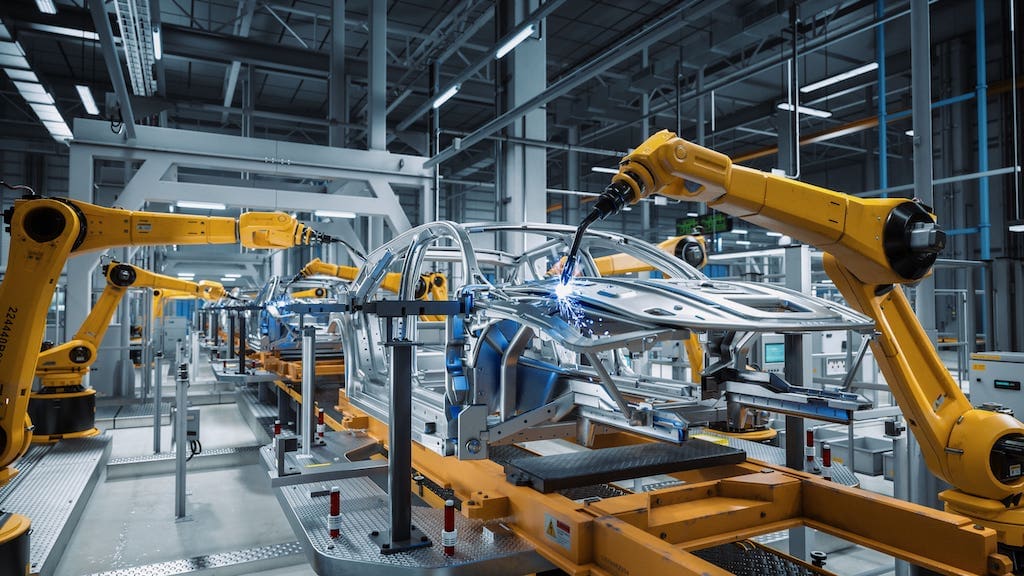
Future Robotics Technology Changing Manufacturing and Logistics… Robotics technology is entering a new era that is transforming how products are designed, manufactured, stored, and delivered. In the past, industrial robots were primarily used for repetitive tasks in controlled environments. Today, advances in artificial intelligence, machine learning, sensors, computer vision, cloud computing, and autonomous systems are creating a new generation of intelligent robots capable of performing complex activities with greater flexibility and efficiency.
Manufacturing and logistics industries are among the biggest beneficiaries of this robotics revolution. Companies are adopting advanced robotic systems to improve productivity, reduce operational costs, increase workplace safety, and respond to growing customer expectations for faster and more personalized services. Future robotics technologies will not simply replace traditional machinery; they will create collaborative environments where humans and intelligent machines work together.
This article explores how future robotics technology is changing manufacturing and logistics, examining major innovations, real-world applications, industry examples, benefits, challenges, and the long-term impact of intelligent automation.
Industrial robotics has developed significantly since the introduction of early automated machines. Traditional industrial robots were designed mainly for repetitive tasks such as welding, painting, and assembly. These machines improved production speed but often required highly structured environments and extensive programming.
Modern robotics systems are becoming more intelligent and adaptable because of advances in several technologies:
These developments allow robots to understand their surroundings, learn from experience, and perform tasks that previously required human judgment.
Manufacturers worldwide face increasing pressure to improve efficiency while maintaining quality and controlling costs. Global competition, labor shortages, supply chain challenges, and rising customer expectations have accelerated interest in robotic automation.
Robotics helps manufacturers achieve:
Unlike earlier automation systems, future robotic platforms will provide manufacturers with greater adaptability, allowing production lines to change quickly according to market demand.
Artificial intelligence is one of the most important technologies driving the next generation of robotics. AI enables robots to process information, recognize patterns, and make decisions based on changing conditions.
AI-powered robots can perform tasks such as:
For example, a robot equipped with computer vision can identify defective products on a production line and adjust its operations automatically. This reduces waste and improves manufacturing accuracy.
Collaborative robots, often called cobots, represent one of the fastest-growing areas of industrial robotics. Unlike traditional industrial robots that typically operate separately from humans, cobots are designed to work safely alongside employees.
Cobots are changing workplaces by assisting with:
The flexibility of cobots makes them especially valuable for small and medium-sized manufacturers that may not have the resources for large-scale automation systems.
The concept of smart manufacturing combines robotics, artificial intelligence, data analytics, and connected systems to create highly efficient production environments.
Smart factories use robotics to:
In these environments, robots become part of a connected digital ecosystem rather than isolated machines.
Future assembly robots will become increasingly capable of handling complex products that require precision and adaptability. Industries such as electronics, automotive manufacturing, and aerospace are investing heavily in advanced robotic assembly systems.
Benefits include:
Quality inspection is becoming increasingly automated through robotics combined with artificial intelligence. Advanced robots can analyze products using cameras and sensors to identify defects faster than traditional inspection methods.
Applications include:
Future factories may operate with highly autonomous production systems where robots coordinate activities with minimal human intervention.
These systems could include:
The logistics industry is experiencing rapid transformation due to the growth of e-commerce and increasing consumer expectations for faster delivery. Warehouses must process larger volumes of orders while maintaining accuracy and efficiency.
Robotics technology is helping logistics companies improve operations through:
Modern warehouses are becoming highly automated environments where robots and software systems coordinate product movement from storage to shipment.
Autonomous mobile robots (AMRs) are among the most important innovations in logistics automation. These robots can navigate warehouse environments independently using sensors, cameras, and artificial intelligence.
AMRs are used for:
Unlike older automated guided vehicles that follow fixed paths, AMRs can adapt to changing environments and choose efficient routes.
Picking items from warehouses is one of the most challenging tasks for automation because products vary in size, shape, and texture. Advances in robotic vision and artificial intelligence are improving the ability of robots to handle diverse products.
Future robotic picking systems will offer:
This technology is especially valuable for e-commerce companies managing millions of products and customer orders.
Amazon has become one of the most recognized examples of robotics adoption in logistics. The company uses robotic systems in fulfillment centers to move inventory, organize products, and support warehouse employees.
The use of robotics helps Amazon:
This demonstrates how robotics can support large-scale logistics operations where speed and accuracy are essential.
Future robotics systems will play an important role beyond factories and warehouses. They will become integrated throughout the entire supply chain.
Potential applications include:
By connecting robotics with analytics and artificial intelligence, companies can create more responsive and resilient supply chains.
Future robots will rely heavily on data connectivity. Cloud robotics allows machines to share information, access advanced computing resources, and continuously improve performance.
Cloud-based robotics enables:
This approach allows organizations to manage large fleets of robots more effectively.
The continued development of robotics will provide significant advantages for businesses and workers.
Despite the benefits, companies must address several challenges when implementing robotics technology.
Advanced robotics systems require significant investment in equipment, software, training, and infrastructure.
As robots become more common, employees need new skills related to robotics management, programming, and maintenance.
Connected robots may become targets for cyber threats, making security an essential consideration.
Businesses must ensure that robotic systems work effectively with existing processes and technologies.
The future of robotics will be defined by greater intelligence, flexibility, and collaboration. Robots will become more capable of learning, adapting, and working alongside humans in dynamic environments.
Future trends include:
Future robotics technology will fundamentally transform manufacturing and logistics by creating smarter, faster, and more adaptable operations. Artificial intelligence, autonomous systems, advanced sensors, and connected platforms are turning robots into intelligent partners capable of handling increasingly complex tasks.
Manufacturers will benefit from improved efficiency, better quality control, and more flexible production systems, while logistics companies will use robotics to meet growing demands for faster and more accurate delivery. Although challenges such as investment costs, workforce changes, and cybersecurity must be addressed, the long-term advantages of robotics innovation are significant.
The future workplace will not be defined simply by humans or machines working separately. Instead, successful organizations will combine human creativity with robotic precision to build more productive, resilient, and innovative industries.