

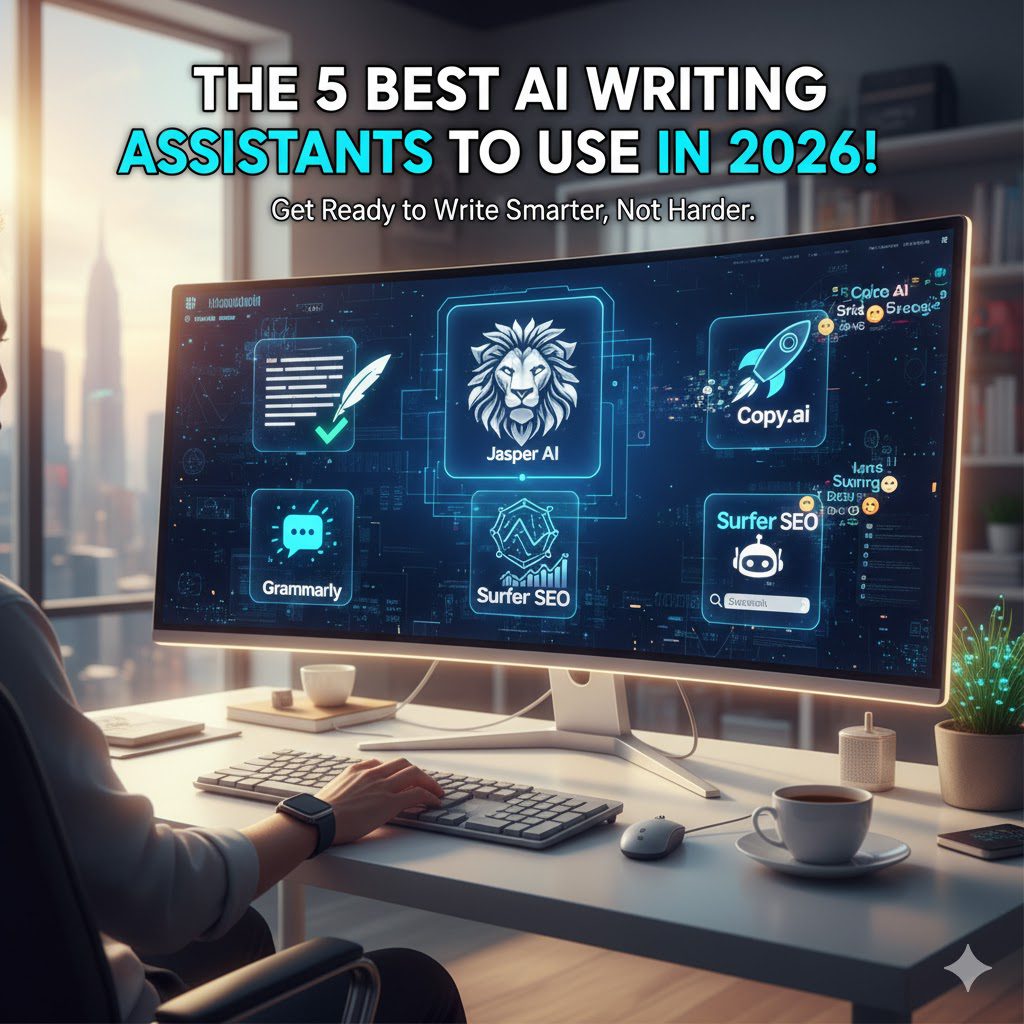
In the fast-paced digital world of 2026, the demand for high-quality, engaging content has reached an all-time high. Content creators—ranging from bloggers and social media influencers to corporate copywriters—face the constant challenge of producing original material at an unsustainable speed. Therefore, leveraging Free AI Writing Assistants in 2026 is becoming a game-changer for addressing this pressure. This pressure often leads to “writer’s block,” burnout, and a decline in creative quality. Enter the AI writing assistant: a technological marvel that has shifted from a luxury tool to an essential companion for creators worldwide.
The rise of Large Language Models (LLMs) has democratized professional-grade writing support. While premium versions offer advanced features, the landscape of free AI writing assistants has expanded significantly. These free assistants now offer robust capabilities that were once behind paywalls. These tools do not just check grammar; they brainstorm ideas, structure long-form articles, and optimize content for search engines. This article explores the best free AI writing tools available today. Additionally, it covers how to use them effectively and the ethical considerations that come with automated creativity.
The journey of AI in writing began with simple spell checkers in the 1980s. By the 2010s, we saw the rise of predictive text and basic grammar assistants like Grammarly. However, the true breakthrough occurred with the advent of generative AI. Unlike their predecessors, modern AI writing assistants understand context, tone, and intent. They are capable of generating entire paragraphs that mimic human emotion and logic.
By 2026, the barrier between “human-written” and “AI-assisted” has blurred. Statistics show that nearly 75% of online content now involves some level of AI intervention. Furthermore, free AI writing assistants have become the “entry point” for millions of new creators. This allows someone with a great idea but poor writing skills to compete with seasoned professionals. As a result, this shift has moved the focus from the act of typing to the art of curation and prompting.
Choosing the right tool depends on the specific needs of the creator. In 2026, the market is saturated, but a few “powerhouses” stand out for offering high value without a subscription fee. These tools have refined their free tiers to ensure that even users on the basic plan can produce professional-grade work.
The “Free Tier Strategy” used by major tech companies has become highly competitive. To win users, companies now offer their most advanced models—like Gemini 3 Flash or GPT-4o—with limited daily usage quotas. This allows creators to access top-tier intelligence for their most important tasks while utilizing more basic, unlimited models for routine editing and brainstorming.
The most difficult part of content creation is often the blank page. In response, free AI assistants have become the ultimate brainstorming partners. Instead of staring at a cursor, creators can input a single keyword and receive ten unique angles for an article or video.
In 2026, the concept of “Recursive Prompting” has become a vital skill. For example, a creator might ask an AI to “List five controversial trends in sustainable fashion.” Once the list is generated, they can ask the AI to “Provide three counter-arguments for trend number three.” This back-and-forth dialogue allows the creator to explore ideas they might have never considered. It effectively acts as a digital focus group. As a result, this collaborative process ensures that the final content is deep, nuanced, and original.
For a content creator, writing is only half the battle; the other half is being found. Search Engine Optimization (SEO) used to require expensive tools and deep technical knowledge. Today, free AI writing assistants include built-in SEO modules that analyze “Search Intent” and “Keyword Density” in real-time.
By 2026, AI tools have moved beyond “keyword stuffing.” They now understand Semantic Search—the meaning behind the words. Consequently, a free AI assistant can suggest related topics (LSI keywords) that help search engines like Google understand the authority of an article. For example, if you are writing about “Vegan Diet,” the AI will suggest including sections on “B12 deficiency,” “Plant-based proteins,” and “Ethical sourcing.” This ensures your content covers the topic comprehensively enough to rank on the first page.
Consider the case of a solo travel blogger who, in 2025, struggled to maintain a weekly posting schedule while managing a full-time job. By integrating a free AI writing assistant into her workflow, she transformed her production process without spending a dollar on software.
Previously, it took her eight hours to research, draft, and edit a single destination guide. With AI, she used the tool to transcribe her voice notes from her trips. She also summarized local historical data and generated SEO-friendly titles. As a result, her production time dropped to two hours per post. Over six months, her traffic increased by 300% because she was able to post three times a week instead of once. Most importantly, her “Engagement Rate” remained high. This was because she used the AI to handle the “drudge work,” allowing her to spend more time on her unique storytelling and photography.
A common criticism of AI writing is that it sounds “generic.” However, in 2026, even free models allow for sophisticated “Style Transfer.” Creators can now upload a sample of their previous work and ask the AI to “Analyze my tone and write the following paragraph in this style.”
This allows for a level of consistency that was previously impossible for creators juggling multiple platforms. For instance, you might want a “Professional and Authoritative” tone for a LinkedIn article. However, you may prefer a “Witty and Energetic” tone for your Instagram captions. Free AI assistants can flip between these personas instantly. The key to success here is the “Edit-First” mindset. In this process, creators use the AI to generate the “clay,” but they must still “sculpt” the final product to ensure that their personal brand voice remains authentic and distinct.
As AI becomes more prevalent, so do the ethical concerns. In 2026, the question of “Originality” is at the forefront of the digital economy. Consequently, most free AI assistants now include built-in plagiarism checkers. These ensure that the generated text hasn’t been scraped directly from another source.
Furthermore, major platforms like YouTube and Google have begun implementing “Content Credentials.” These are invisible digital watermarks that indicate if a piece of content was AI-generated. For content creators, transparency has become a currency. Therefore, many creators now include a “Disclosure Statement” in their footers, stating: “This article was researched and structured with the help of AI, then edited and finalized by a human.” This builds trust with an audience that is increasingly wary of “soulless” bot-generated spam.
Social media creators face the shortest “content life cycle,” meaning they must produce new ideas every single day. As a result, free AI writing assistants are particularly powerful in this high-frequency environment. They can analyze trending hashtags and generate “Hooks”—the first three seconds of a video or the first line of a caption—designed to stop the scroll.
In 2026, AI tools can also help with Content Re-purposing. A creator can take a long-form YouTube script and ask a free AI tool to “Turn this into five Twitter threads, three LinkedIn posts, and ten Instagram caption ideas.” This allows a single piece of “Hero Content” to feed a creator’s entire ecosystem for a week, maximizing the return on investment for their creative energy. This efficiency is what allows solo creators to compete with large media agencies.
While these tools are free, the “cost” is the time spent learning how to talk to them. This is known as Prompt Engineering. In 2026, a creator’s value is often measured by their ability to “prompt” an AI to get the best possible output.
The difference between a bad output and a great one is the level of detail provided to the assistant. For instance, a beginner might prompt: “Write a blog about coffee.” In contrast, an expert creator will prompt: “Act as a professional barista and travel writer. Write a 500-word engaging blog post about the hidden coffee culture in Hanoi, Vietnam. Use a sensory and adventurous tone. Focus on ‘Egg Coffee.’ Do not use cliches like ‘hidden gem’ or ‘a cup of joe.'” The latter prompt will produce a result that requires almost no editing. This saves the creator hours of work.
As we look toward 2027 and beyond, free AI writing assistants are becoming “Multi-Modal.” This means they won’t just write your text; they will generate the accompanying image, suggest background music for your video, and even create a voiceover for your blog post.
This integration will lead to the rise of the “Omni-Creator”—a single individual who can produce high-quality multimedia campaigns that previously required a team of ten people. The free versions of these tools will continue to be the “on-ramp” for this new era of creativity. However, the most successful creators will be those who remember that AI is a tool for augmentation, not replacement. The “Human Spark”—that unique, unpredictable element of personality and lived experience—is something that even the most advanced AI in 2026 cannot truly replicate.
The landscape for content creators in 2026 is defined by the strategic use of free AI writing assistants. These tools have leveled the playing field, allowing anyone with a story to tell to do so with professional polish.
The message for 2026 is clear: don’t fear the AI; learn to lead it. By mastering prompt engineering and utilizing the best free tools, you can transform your creative output from a struggle into a streamlined, high-growth engine.