

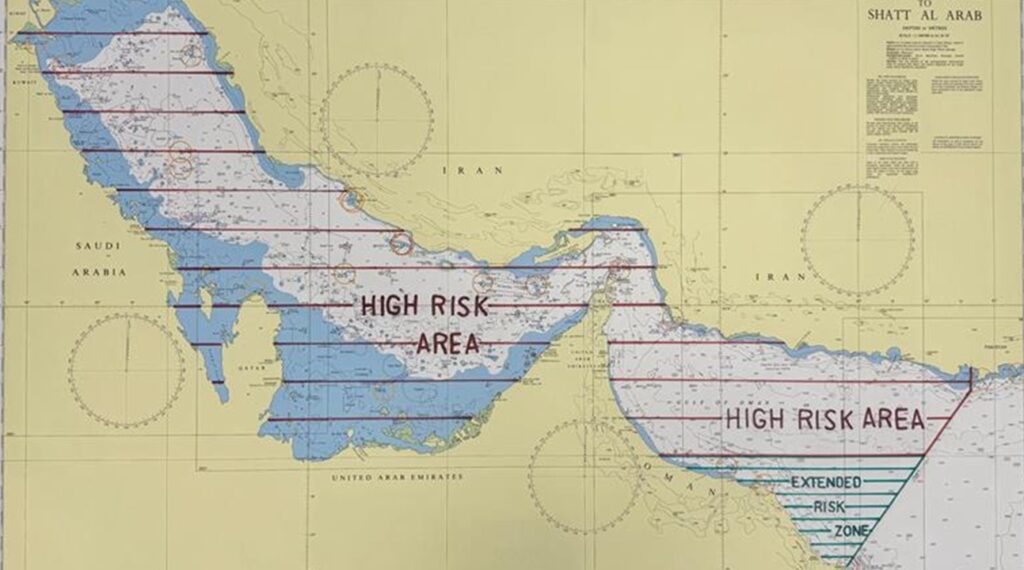
The Strait of Hormuz is likely the most important shipping lane in the world. Security threats in the Strait of Hormuz shipping routes have a significant impact on global trade and stability. It connects the Persian Gulf to the open ocean. This narrow stretch of water acts as the main path for the world’s oil trade. At its tightest point, the strait is only 21 miles wide. The actual shipping lanes are even smaller—just two miles wide in each direction.
As we move through 2026, keeping this path safe is vital for the world economy. About 20% to 30% of the world’s oil passes through these waters every day. If this path is blocked, it doesn’t just hurt local countries. It causes an immediate jump in energy prices everywhere. This affects everything from factory work in Asia to heating bills in Europe. This article looks at the modern threats in the Strait, from political tension to high-tech warfare.
The biggest security issue in the Strait is the long-standing friction between Iran and the West. Because of its location, Iran has a lot of power over the water. It often uses the threat of closing the Strait as a way to negotiate with other countries.
For decades, Iran has claimed it has the right to police these waters. When global tensions rise, a “shadow war” often breaks out at sea. Iran’s Revolutionary Guard uses small, fast boats to harass large ships and Western warships. These tactics show that even without a giant navy, Iran can use its “home-field advantage” to stop the flow of oil at any moment.
One of the most common threats in the Strait is the use of “swarm tactics.” Instead of using one big ship to fight, local forces use dozens of tiny, fast speedboats. These boats are armed with machine guns and rocket launchers.
For a giant, slow-moving oil tanker, these swarms are hard to stop. The goal of a swarm is to overwhelm the target’s defenses with sheer numbers. In narrow waters, a tanker has no room to move. These small boats can move in quickly, making it nearly impossible for security teams to track every single one. This approach uses cheap equipment to cause massive problems.
By 2026, the technology used in sea battles has shifted toward drones. “Kamikaze drones” that fly through the air or drive on the water’s surface have become a major threat in the Strait.
These drones are cheap to build and hard to spot on radar. They can be launched from hidden spots on the coast or even from normal cargo ships. A single drone hit on a tanker’s bridge or engine can disable the ship. This could lead to a massive oil spill that blocks the entire path. There are also underwater drones that can secretly attach bombs to the bottom of a ship.
Perhaps the most feared threat is the sea mine. Unlike a missile, a mine stays in the water long after it is placed. Iran is thought to have thousands of these. Some are old-fashioned, but others are “smart” mines that can sense the specific sound of a passing oil tanker.
If a single ship hits a mine, the impact is huge. All shipping stops immediately so that specialty mine-clearing ships can search the area. This is a very slow and dangerous process. If the Strait is “closed” for even a few weeks, the global oil supply would drop sharply. This would cause an unprecedented spike in gas prices worldwide.
Security in the Strait isn’t just about physical fighting anymore; it’s also about hacking. In recent years, there have been many reports of “GPS spoofing.” This is when someone sends a fake signal to a ship’s navigation screen to make the crew think they are somewhere else.
By faking a GPS signal, a hacker can trick a tanker into sailing into dangerous waters without the crew knowing. This gives local forces a reason to seize the ship. Hackers can also target a ship’s internal systems to shut down the engines or steering. In 2026, digital security is just as important as having a navy escort.
Iran has built a strong defense along its rocky coast. They use mobile missile launchers that can be hidden in caves or underground bunkers. These missiles can reach across the entire width of the Strait.
Because these launchers can move around, they are very hard to find and destroy. Their presence creates a “danger zone” for any ship that isn’t protected. This forces international navies to stay on high alert at all times. The result is a highly militarized environment in one of the world’s busiest commercial paths.
To fight these threats, many countries have teamed up to form patrol groups. These international navies focus on “freedom of navigation.” Their job is to watch the traffic and help any ship that is being harassed.
These missions act as a deterrent. They use large “sentinel” ships to watch from a distance and smaller “sentry” ships to escort tankers through the tightest spots. While these patrols help keep the water safe, having so many warships in one small area also increases the risk of an accident. A simple mistake could start a much larger war that no one wants.
The goal of many threats in the Strait is to cause economic pressure. Even if no one is actually attacked, the fear of an attack changes the market. Ship owners have to pay a “risk premium” to insurance companies just to enter the area.
In 2026, these insurance costs make up a big part of the price of oil. When tensions are high, some shipping companies avoid the area entirely, which causes delays. If the Strait were ever closed for a long time, the global economy could lose trillions of dollars. For countries like China and Japan, this waterway is a weak point that they must watch carefully.
A major event happened in 2019 when Iranian forces took control of a British tanker called the Stena Impero. This was a move to get back at the UK for seizing an Iranian ship earlier that month.
The seizure showed how vulnerable ships can be. Iranian commandos used helicopters to land on the ship in broad daylight. This event proved that even a ship from a powerful nation can be taken if it is alone. Since then, more shipping companies have asked for naval protection when they pass through the Strait.
Knowing the risks, countries like Saudi Arabia and the UAE have built huge pipelines. These pipes carry oil across land to the Red Sea or other coasts, skipping the Strait of Hormuz entirely.
However, these pipes can only handle a small amount of the total oil needed. By 2026, we are using more green energy, but the world still relies on the Strait for natural gas and crude oil. The future of safety in the area will likely involve more AI surveillance and drones to find threats before they can reach the shipping lanes.
The Strait of Hormuz is the most dangerous and important water passage on Earth. The threats are everywhere:
In 2026, the world’s economy is still tied to these narrow, crowded waters. Keeping this path open requires a mix of new technology, international law, and careful talking.