

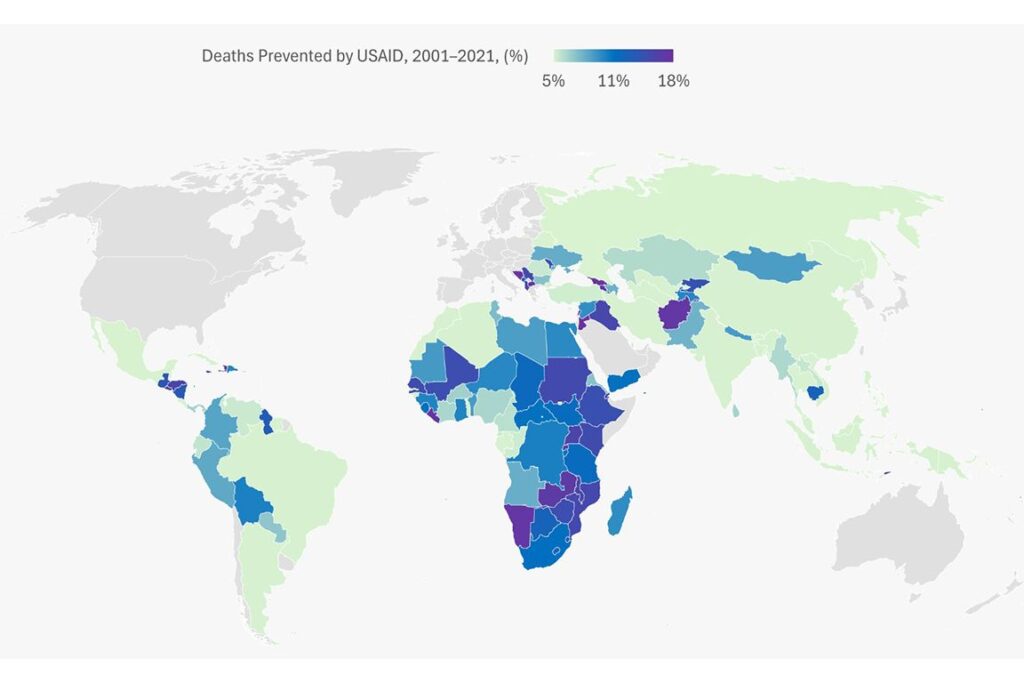
The reduction of humanitarian funding through the United States Agency for International Development (USAID) has emerged as one of the most significant global aid developments in recent years. In this article, we will explore USAID Humanitarian Funding Cuts And Their Global Impact. As one of the world’s largest providers of humanitarian assistance, USAID has historically supported emergency food programs, healthcare systems, refugee assistance, disaster response operations, education initiatives, and development projects across dozens of countries. When funding levels decline sharply, the consequences extend far beyond government budgets, affecting vulnerable populations that depend on humanitarian support for survival.
Millions of people living in conflict zones, regions affected by natural disasters, and countries facing extreme poverty have already experienced disruptions in essential services. Humanitarian organizations, health providers, and international development agencies have warned that these funding reductions could reverse decades of progress in public health, food security, and poverty reduction.
This article examines the causes of the funding reductions, their impact on vulnerable populations, the sectors most affected, and the broader implications for global humanitarian efforts.
Since its establishment in 1961, USAID has played a central role in international humanitarian and development assistance. The agency has provided support to countries facing war, famine, disease outbreaks, economic instability, and natural disasters.
USAID funding has traditionally been directed toward:
For decades, the agency has served as a critical component of the global humanitarian response system. Many international organizations, including non-governmental organizations (NGOs), local charities, and United Nations agencies, have relied on USAID funding to sustain operations.
Recent policy changes resulted in a significant reduction of USAID-funded programs and humanitarian initiatives. Reports indicate that thousands of aid contracts and grants were reviewed, suspended, reduced, or terminated during a broader reassessment of foreign assistance priorities. Humanitarian organizations reported widespread disruptions as programs faced uncertainty regarding future funding.
Analyses of fiscal year spending indicate major declines in humanitarian assistance obligations and expenditures. Humanitarian support categories experienced some of the largest reductions, affecting countries already facing severe humanitarian crises. These changes have created funding gaps that many aid organizations have struggled to fill.
The scale of the reductions has attracted international attention because the United States has historically been the largest single contributor to global humanitarian assistance.
The most immediate concern surrounding humanitarian funding cuts is their impact on people who rely on aid for basic survival.
In many low-income and conflict-affected countries, aid-funded programs provide:
When funding is reduced, humanitarian organizations often have no choice but to scale back services, reduce staffing levels, close facilities, or suspend operations entirely. The result is that vulnerable communities lose access to critical support systems.
Health experts, aid agencies, and researchers have repeatedly warned that the interruption of these services places millions of people at heightened risk.
One of the sectors most vulnerable to funding reductions is public health. USAID has long supported programs addressing HIV/AIDS, particularly in Sub-Saharan Africa.
These programs provide:
Interruptions in funding can lead to treatment disruptions that increase transmission rates and worsen health outcomes. Even short-term interruptions may have long-lasting consequences for affected communities.
Malaria remains a major public health challenge in many developing nations. USAID-supported initiatives have helped distribute insecticide-treated bed nets, improve diagnosis capabilities, and strengthen treatment systems.
Funding reductions may weaken prevention efforts, increasing the likelihood of disease resurgence in vulnerable regions.
Programs supporting prenatal care, childbirth services, infant nutrition, and child immunizations have historically benefited from humanitarian funding.
Healthcare providers warn that reduced support could contribute to increases in maternal mortality, infant mortality, and preventable childhood illnesses.
Food assistance programs represent another major area affected by humanitarian funding cuts.
Many communities facing food insecurity depend on aid-funded programs that provide:
In regions experiencing drought, conflict, or economic instability, these interventions often prevent widespread hunger and malnutrition.
Humanitarian agencies have reported concerns that reductions in funding could lead to increased rates of acute malnutrition, particularly among children under five years old. This demographic remains especially vulnerable because nutritional deficiencies during early childhood can have lifelong consequences.
Afghanistan provides one of the clearest examples of how funding reductions can rapidly affect healthcare systems.
Many healthcare facilities in the country have relied heavily on international assistance to remain operational. Following funding disruptions, numerous clinics and health centers faced closure or severe reductions in services.
The consequences included:
For populations already facing economic hardship, conflict-related challenges, and infrastructure limitations, the loss of healthcare services can significantly worsen humanitarian conditions.
Refugees and internally displaced persons are among the groups most vulnerable to aid reductions.
Humanitarian organizations serving displaced populations often rely on external funding to provide:
Funding shortfalls force organizations to prioritize only the most urgent needs, leaving many essential services underfunded.
In regions affected by prolonged conflict, such as parts of Africa and the Middle East, displaced populations may have few alternatives when humanitarian support decreases.
Although the immediate focus is often on humanitarian outcomes, funding reductions also produce significant economic effects.
Many aid-supported programs contribute to local economies by:
When aid-funded projects close, communities may experience secondary economic impacts, including job losses and reduced economic activity.
In fragile states, these effects can compound existing challenges and increase the risk of instability.
Humanitarian organizations have responded to funding reductions through a variety of strategies.
These include:
Despite these efforts, many organizations report that alternative funding sources are insufficient to replace lost resources at the necessary scale.
As a result, numerous humanitarian programs continue to face uncertainty regarding their future operations.
The long-term implications of humanitarian funding reductions extend beyond immediate service disruptions.
Researchers and public health experts have identified several areas of concern:
Some studies suggest that sustained reductions in global humanitarian assistance could contribute to millions of preventable deaths over the coming years if replacement funding is not secured.
These projections underscore the interconnected nature of humanitarian systems and the importance of consistent support for vulnerable populations.
The reduction of humanitarian funding also raises concerns about progress toward broader international development objectives.
Global initiatives aimed at reducing poverty, improving health outcomes, expanding education, and promoting sustainable development often depend on long-term investments.
When major funding streams decline, progress can slow significantly. Programs that took years to establish may struggle to maintain gains achieved through sustained intervention.
This is particularly important in sectors where continuity is essential, such as healthcare, education, and food security.
The funding reductions have sparked widespread debate regarding the role of foreign assistance in national policy.
Supporters of aid reductions often argue that governments should prioritize domestic spending and ensure greater accountability in foreign assistance programs.
Others contend that humanitarian assistance serves important strategic, economic, and moral objectives by:
The discussion continues among policymakers, researchers, humanitarian organizations, and international partners.
Addressing the humanitarian challenges created by funding reductions will require coordinated action from governments, international institutions, philanthropic organizations, and private-sector stakeholders.
Potential approaches include:
Building more resilient humanitarian systems may help reduce dependence on any single funding source while ensuring continued support for vulnerable populations.
The reduction of USAID humanitarian funding represents a pivotal moment for global humanitarian assistance. Millions of people depend on aid-funded programs for healthcare, nutrition, education, clean water, and emergency relief. When funding declines, the effects are felt immediately in some of the world’s most vulnerable communities.
From healthcare facility closures and interrupted disease-control programs to rising food insecurity and reduced refugee support, the consequences extend across multiple sectors. The challenges are particularly acute in conflict-affected regions and countries already struggling with poverty, displacement, and weak infrastructure.
While humanitarian organizations continue working to adapt and secure alternative resources, the scale of the funding gap presents significant obstacles. The coming years will likely determine whether the international community can develop sustainable solutions that protect vulnerable populations and preserve decades of humanitarian progress.