

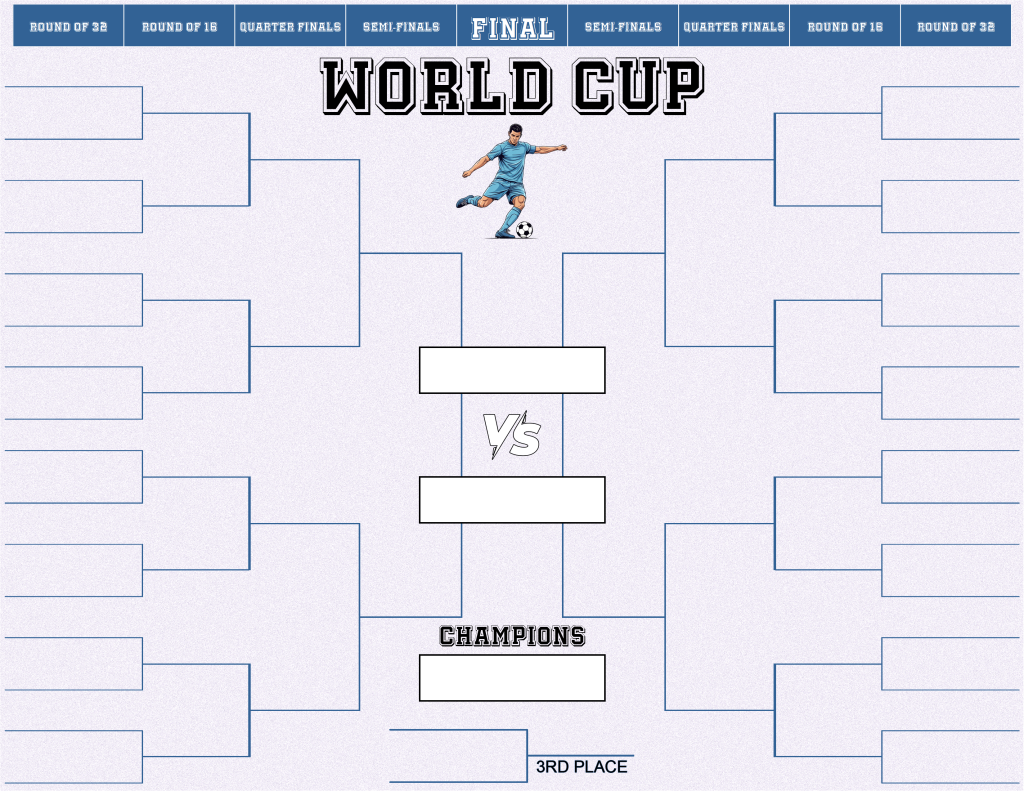
The 2026 FIFA World Cup marks a historic transformation in international football, introducing an expanded format that includes 48 teams and, for the first time, a Round of 32 knockout stage. One of the most anticipated aspects for fans is seeing how the 2026 World Cup Round of 32 Bracket will play out. Hosted jointly by the United States, Canada, and Mexico, this tournament represents a bold step forward in inclusivity, competitiveness, and global representation.
One of the most significant changes is the restructuring of the tournament format, which directly impacts how teams qualify, compete, and progress. The Round of 32 bracket is at the heart of this evolution, offering more nations the opportunity to participate in high-stakes knockout football while increasing excitement for fans worldwide.
Since its inception in 1930, the FIFA World Cup has undergone several format changes. The tournament expanded from 13 teams to 16, then to 24, and eventually to 32 teams in 1998. The 2026 edition introduces the largest expansion yet, with 48 teams competing for the title.
This expansion was designed to enhance global representation, allowing more countries from Asia, Africa, and North America to participate. As a result, the structure of the knockout stages has also evolved, leading to the introduction of the Round of 32.
The Round of 32 is the first knockout stage of the tournament, featuring 32 teams that have advanced from the group stage. This stage is crucial, as it marks the transition from group play to single-elimination matches.
In this format, each match is a do-or-die scenario. Teams must perform at their highest level, as a single loss results in elimination from the tournament.
The group stage plays a critical role in shaping the Round of 32 bracket. With 12 groups, competition is fierce, and even third-placed teams have a chance to advance.
This system increases unpredictability and ensures that teams remain competitive throughout the group stage.
The expanded format and Round of 32 bracket introduce new strategic considerations for teams. Coaches must balance performance, squad rotation, and risk management.
Teams may adopt different approaches depending on their group standings and potential opponents in the knockout stage.
The Round of 32 bracket creates exciting possibilities for matchups between traditional powerhouses and emerging teams. The inclusion of more nations increases the likelihood of surprises and upsets.
For example, a top European team could face a rising African or Asian side, leading to unpredictable and thrilling encounters.
The introduction of the Round of 32 has significant implications for global football development. More teams gain exposure to high-level competition, which can accelerate growth and investment in the sport.
This inclusivity fosters talent development and strengthens football infrastructure in emerging nations.
Analyzing past World Cup data provides insights into how the Round of 32 might unfold. Historically, top-ranked teams dominate knockout stages, but upsets are not uncommon.
With more teams involved, statistical variance is expected to increase, leading to a more dynamic tournament.
While the expanded format offers many benefits, it also presents challenges. Organizing a larger tournament requires careful planning and resource management.
Concerns have been raised about player fatigue, scheduling, and maintaining the quality of matches.
The Round of 32 enhances the fan experience by providing more knockout matches and opportunities for dramatic moments. Fans can expect a higher number of high-stakes games and emotional narratives.
The tournament’s multi-country hosting also allows fans from different regions to participate and engage more closely.
Previous expansions of the World Cup provide valuable lessons for the 2026 format. The move from 24 to 32 teams in 1998 was initially met with skepticism but ultimately proved successful.
Similarly, the introduction of the Round of 16 created more opportunities for dramatic knockout matches, setting the stage for the Round of 32.
Advancing past the Round of 32 is just the beginning of the knockout journey. Teams must continue to perform at a high level to progress through the Round of 16, quarterfinals, semifinals, and ultimately the final.
The increased number of matches adds to the challenge, requiring depth, resilience, and tactical excellence.
The introduction of the Round of 32 bracket in the 2026 FIFA World Cup represents a transformative moment in the history of football. By expanding the tournament to 48 teams, FIFA has created a more inclusive and dynamic competition that reflects the global nature of the sport.
This new format not only increases opportunities for nations to participate but also enhances the excitement and unpredictability of the tournament. From strategic implications to fan engagement, the Round of 32 adds a new layer of complexity and intrigue.
As the world prepares for this historic event, the 2026 World Cup promises to deliver unforgettable moments, showcase emerging talent, and redefine the landscape of international football. The Round of 32 will serve as a crucial stage where dreams are realized, and legends are born.