

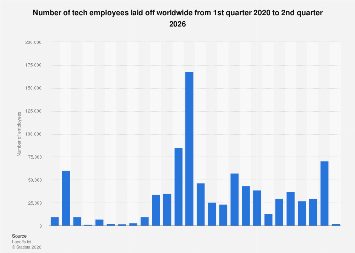
The technology industry is undergoing one of the most dramatic workforce transformations in modern history. In 2026, artificial intelligence and automation have become central forces behind widespread restructuring efforts across the global tech sector. According to multiple industry reports, more than 78,000 technology workers were laid off during the first quarter of 2026 alone, with nearly half of those reductions directly linked to AI-driven automation and organizational restructuring. AI Automation Drives Over 78.000 Tech Layoffs in 2026 is a headline that reflects this sudden and significant change in the industry.
Major corporations including Amazon, Microsoft, Meta, Oracle, Cisco, Intel, and Dell have reduced headcounts while simultaneously increasing investments in generative AI systems, autonomous agents, cloud infrastructure, and automation platforms. What makes this wave of layoffs different from previous downturns is that many of these companies remain profitable and continue reporting strong revenue growth while cutting jobs.
The shift has sparked widespread debate about the future of work, the true impact of artificial intelligence on employment, and whether automation is replacing workers faster than new opportunities can emerge. While AI is creating demand for specialized roles in machine learning, infrastructure, and data science, many traditional positions in software engineering, customer support, quality assurance, content production, and administration are being reduced or redefined.
This article explores the causes behind the 2026 tech layoffs, examines how AI automation is reshaping employment, analyzes the roles most at risk, highlights emerging opportunities, and evaluates the broader economic and social implications of the AI revolution.
The numbers emerging from the first half of 2026 paint a stark picture of the technology labor market.
Reports from industry analysts indicate that approximately 78,557 tech workers were laid off between January and April 2026. Nearly 47.9% of those job cuts were explicitly attributed to artificial intelligence adoption and workflow automation.
Other reports suggest the total number of layoffs across the broader technology ecosystem exceeded 92,000 by May 2026 and may have crossed 100,000 globally as restructuring accelerated.
Several factors contributed to the surge:
Unlike earlier tech layoffs tied primarily to economic downturns or declining demand, the 2026 layoffs reflect a structural transformation in how companies operate.
Artificial intelligence systems have become significantly more capable in recent years. Modern large language models can now generate code, write documentation, summarize meetings, answer customer inquiries, analyze data, and automate many administrative functions.
As AI systems improve, companies increasingly view automation as a way to maintain or even increase productivity while reducing labor costs.
Industry analysts noted that many firms are replacing larger teams with smaller AI-assisted teams capable of delivering similar output levels.
Tasks most vulnerable to automation include:
The result is a growing shift toward AI-augmented workflows where fewer employees oversee automated systems rather than performing tasks manually.
One of the most disruptive developments in 2026 is the rise of autonomous AI agents. These systems can execute multi-step tasks independently, including:
Research indicates that firms are increasingly restructuring operations around autonomous AI capabilities.
This transition reduces the need for many operational and support roles that previously required large human teams.
Amazon emerged as one of the most aggressive adopters of AI-driven restructuring in 2026. Reports suggest the company eliminated approximately 16,000 roles while increasing investments in AI systems and internal automation.
CEO Andy Jassy has repeatedly emphasized operational efficiency and flattening management layers. AI systems now handle many functions previously managed by administrative and operational teams.
Meta also reduced thousands of positions while prioritizing AI infrastructure and generative AI development. Reports indicate the company cut roughly 8,000 jobs as part of broader efficiency initiatives.
The company continues to invest billions into AI research and automation technologies.
Cisco announced plans to eliminate approximately 4,000 positions in 2026 while redirecting investments toward AI chips, optics, fiber networking, and cybersecurity.
Interestingly, Cisco reported strong AI-related revenue growth at the same time layoffs were announced, highlighting how profitable firms are still restructuring around automation priorities.
Oracle reportedly initiated one of the largest workforce reductions of the year, with plans affecting tens of thousands of employees.
The company is aggressively expanding cloud and AI capabilities while reducing traditional operational overhead.
Even outside pure technology firms, AI automation is driving layoffs. Walmart reduced technology and product team roles while expanding AI-powered operational systems and automated fulfillment technologies.
Not all tech roles face equal risk from automation. Research suggests the layoffs are concentrated in specific categories where AI systems can replicate repetitive digital tasks effectively.
AI chatbots and conversational assistants have become highly effective at handling routine customer inquiries.
Many organizations now deploy AI systems capable of:
This has reduced demand for large customer support teams.
AI coding assistants have become powerful productivity tools. They can generate boilerplate code, debug software, and automate repetitive development tasks.
While senior engineers remain essential for architecture and strategic decisions, junior and mid-level coding roles are increasingly vulnerable to automation.
Industry discussions suggest companies now require fewer developers to complete the same amount of work.
Automated testing frameworks powered by AI are reducing the need for manual QA teams.
AI systems can:
As a result, many QA positions have been reduced.
Generative AI tools can now produce:
This has impacted roles focused on repetitive writing and content production.
AI systems are increasingly handling scheduling, reporting, analytics, and coordination tasks traditionally managed by administrative staff and middle managers.
Companies pursuing lean organizational structures are reducing management layers while relying more heavily on automated workflow systems.
Not everyone agrees that AI alone is responsible for the layoffs.
Some analysts argue companies are using AI as a convenient explanation for broader restructuring efforts and post-pandemic corrections.
Several contributing factors complicate the picture:
Critics argue many companies would have downsized regardless of AI adoption.
However, even skeptics acknowledge that AI is accelerating productivity gains and enabling firms to operate with fewer employees.
One Reddit commenter summarized the situation by stating that AI is not always directly replacing workers but is allowing remaining employees to manage significantly larger workloads.
Another major trend driving layoffs is the massive reallocation of corporate budgets toward AI infrastructure.
Technology firms are spending billions on:
Some analysts note that companies are redirecting headcount budgets toward AI capital expenditures rather than directly replacing workers with AI systems.
This shift changes corporate priorities dramatically. Instead of expanding workforces, companies increasingly focus on scaling AI capabilities.
The rapid pace of layoffs has created widespread anxiety across the technology industry.
Workers increasingly worry about:
Many employees fear that traditional career paths in software engineering, support, marketing, and operations may become less stable.
Entry-level technology workers appear especially vulnerable.
AI systems excel at many beginner-level tasks, including:
As a result, junior roles are shrinking while expectations for specialized expertise continue rising.
Online discussions among software engineers reveal growing frustration with a difficult hiring market and unrealistic experience requirements.
In many organizations, layoffs have increased workloads for remaining employees.
Workers are often expected to:
This dynamic has contributed to concerns about burnout and declining workplace morale.
Despite the layoffs, AI is also creating new categories of jobs and opportunities.
Demand is growing for specialists in:
However, the number of new AI-focused jobs currently appears smaller than the number of displaced workers.
Many future jobs may focus less on competing with AI and more on supervising, guiding, and integrating AI systems into business operations.
Emerging roles include:
Experts increasingly emphasize that the safest careers involve uniquely human capabilities such as:
Reports on AI-resistant engineering roles highlight the importance of contextual understanding and human judgment.
One of the central debates surrounding AI automation involves whether productivity gains will ultimately create more jobs or destroy them.
Historically, technological revolutions have often displaced workers temporarily before generating entirely new industries and opportunities.
However, some economists warn that AI may automate cognitive tasks faster than labor markets can adapt.
Research on AI labor displacement suggests competitive pressures may push firms into aggressive automation strategies that reduce overall employment beyond socially optimal levels.
AI-driven restructuring could widen income inequality.
Potential consequences include:
This raises difficult questions about taxation, labor protections, universal income models, and workforce retraining.
The effects of AI automation are already spreading beyond technology companies.
Industries increasingly adopting AI include:
The long-term impact could reshape employment patterns across the global economy.
Understanding how AI systems work is becoming essential across many professions.
Workers who learn to collaborate effectively with AI tools may gain significant advantages.
Generic skills are increasingly vulnerable to automation.
Professionals should develop:
The pace of technological change means career development can no longer remain static.
Workers must continually update skills and adapt to new technologies.
Skills requiring empathy, negotiation, creativity, and interpersonal communication remain difficult for AI to replicate fully.
The 2026 wave of tech layoffs may represent only the beginning of a much larger transformation.
Research into AI capabilities suggests automation performance continues improving rapidly across a broad range of tasks.
Future developments may include:
At the same time, entirely new industries and career paths may emerge around AI governance, ethics, infrastructure, and human-AI collaboration.
The 2026 wave of AI-driven tech layoffs marks a pivotal moment in the evolution of the global workforce. With more than 78,000 technology jobs eliminated in the early months of the year and many firms aggressively restructuring around artificial intelligence, the labor market is entering a period of profound transformation.
Unlike previous economic downturns, this shift is not simply about declining demand or temporary financial pressure. Instead, it reflects a deeper structural change driven by automation, generative AI, autonomous agents, and evolving corporate priorities.
While AI is undoubtedly creating exciting new opportunities and driving productivity gains, it is also disrupting traditional career paths and redefining the value of human labor in the digital economy. Workers, businesses, educators, and policymakers must now confront difficult questions about workforce adaptation, economic inequality, and the future relationship between humans and intelligent machines.
The organizations and individuals that succeed in this new era will likely be those who learn to collaborate with AI rather than compete directly against it. Adaptability, continuous learning, strategic thinking, and human-centered skills will become increasingly valuable as automation reshapes industries worldwide.
The AI revolution is no longer a future possibility — it is actively transforming the workforce today.