

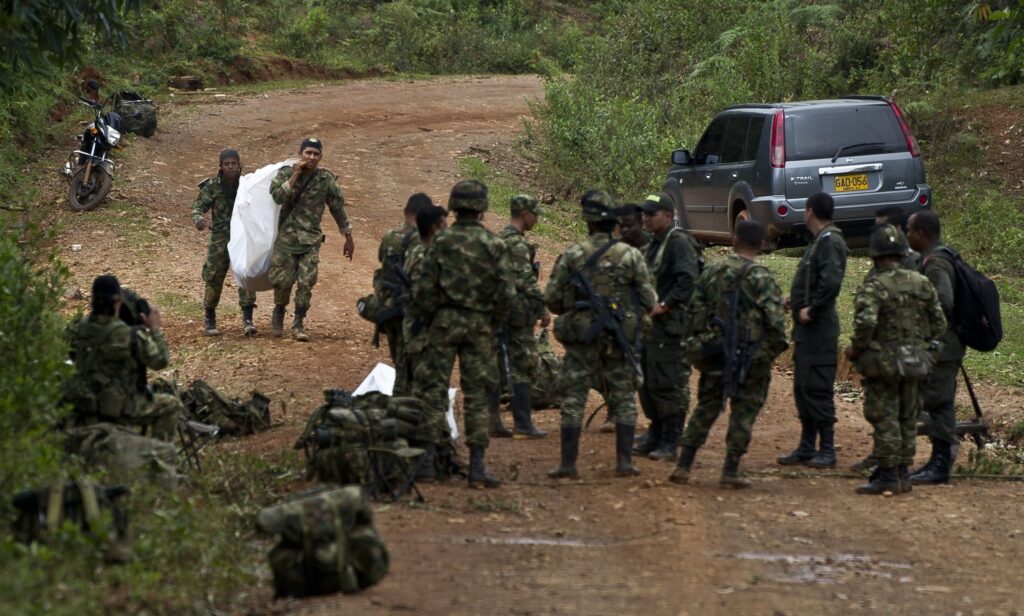
The history of Colombia’s internal armed conflict is deeply marked by decades of violence, displacement, and political instability. At the center of this prolonged struggle stands the Revolutionary Armed Forces of Colombia (FARC), one of Latin America’s most influential guerrilla groups. Founded in 1964, FARC evolved from a Marxist-inspired rural insurgency into a powerful armed organization responsible for numerous attacks affecting both military targets and Colombian civilians. Throughout this conflict, the impact of FARC Rebel Attacks on Colombian Civilians has been profound and far-reaching.
While FARC has long argued that its actions were part of a revolutionary struggle against inequality and state neglect, the reality of the conflict is far more complex. Civilian populations frequently found themselves caught between guerrilla forces, paramilitaries, and government troops. Over time, FARC’s tactics increasingly included kidnappings, bombings, forced recruitment, extortion, and territorial control strategies that directly impacted non-combatants.
This article explores the history, motivations, key attacks, humanitarian consequences, and long-term legacy of FARC’s actions against civilians. It also examines peace efforts, the 2016 peace agreement, and the ongoing challenges of post-conflict Colombia.
The origins of FARC are rooted in Colombia’s deep social and economic inequalities during the mid-20th century. Rural communities faced land concentration, poverty, and limited access to state services, creating fertile ground for insurgent movements.
FARC emerged from peasant self-defense groups aligned with Marxist ideology, advocating for agrarian reform and redistribution of land. Initially, the group focused on rural guerrilla warfare against government forces.
However, as the conflict escalated, FARC’s structure became more militarized and financially dependent on illicit activities such as:
These revenue streams significantly expanded FARC’s operational capacity but also deepened its involvement in civilian harm.
Although FARC primarily positioned itself as a guerrilla army targeting state institutions, civilians became central to its operational environment. In many rural areas, distinguishing between combatants and civilians became increasingly difficult.
FARC’s strategies often included controlling territory, influencing local governance, and enforcing compliance among rural populations.
According to Colombia’s National Center for Historical Memory, the armed conflict resulted in more than 220,000 deaths between 1958 and 2012, with a significant proportion being civilians.
One of the most widely condemned aspects of FARC’s operations was its systematic use of kidnapping.
Between the 1990s and early 2000s, thousands of Colombians were abducted, including politicians, journalists, military personnel, foreign tourists, and ordinary citizens.
Kidnappings served multiple strategic purposes:
High-profile cases such as the kidnapping of presidential candidate Íngrid Betancourt drew international attention and condemnation. She was held for more than six years in jungle captivity before being rescued in 2008.
At its peak, Colombia was considered one of the kidnapping capitals of the world, with FARC responsible for a large share of abductions.
FARC operations frequently targeted infrastructure, often affecting civilian populations indirectly.
Common targets included:
These attacks were often intended to disrupt state control and economic activity. However, they also caused widespread environmental damage and civilian hardship.
For example, pipeline bombings led to oil spills that contaminated rivers and farmland, affecting local communities’ access to clean water and agriculture.
Colombia became one of the most heavily landmine-affected countries in the world due to the prolonged conflict. FARC and other armed groups used improvised explosive devices and landmines to protect territory and deter military advancement.
The consequences for civilians were devastating:
Even after the peace agreement, landmine clearance remains a major humanitarian challenge in Colombia.
One of the most serious human rights violations attributed to FARC was the forced recruitment of minors.
Children were often taken from rural villages and trained as combatants, messengers, or support personnel.
Reasons for recruitment included:
Many former child soldiers reported experiencing psychological trauma, lack of education, and difficulty reintegrating into society after demobilization.
International organizations, including UNICEF, have consistently condemned the recruitment of children in armed conflict, classifying it as a violation of international humanitarian law.
One of the most tragic events associated with the Colombian conflict occurred in Bojayá, a small town in the Chocó region. In May 2002, clashes between FARC and paramilitary forces led to a devastating explosion inside a church where civilians had sought shelter.
The attack killed more than 100 civilians, including many children.
The Bojayá massacre became a symbol of the human cost of Colombia’s internal war and highlighted the devastating consequences of fighting in populated areas.
Another major incident occurred in Bogotá at the exclusive El Nogal social club. A car bomb explosion killed more than 30 people and injured over 160 others. FARC claimed responsibility for the attack, stating it was targeting elites linked to government and military structures. However, the victims were largely civilians. The bombing intensified public opposition to FARC and increased pressure for military action against the group.
One of the largest humanitarian consequences of FARC’s activities was internal displacement. Millions of Colombians were forced to leave their homes due to violence, threats, and territorial disputes.
Key drivers of displacement included:
Colombia has one of the highest internally displaced populations in the world, with estimates exceeding 7 million people over the course of the conflict.
Over time, FARC became increasingly involved in the cocaine trade, using drug production and taxation to fund its operations.
This involvement had significant consequences:
Civilians living in coca-growing regions often faced pressure from multiple armed actors, including guerrillas, paramilitaries, and government forces.
FARC was not the only armed actor responsible for civilian suffering. Right-wing paramilitary groups also committed widespread atrocities during the conflict.
The interaction between FARC and paramilitaries created a cycle of violence characterized by:
Civilians were often accused of supporting one side or the other, making them vulnerable targets in contested regions.
The Colombian government responded to FARC through a combination of military action and negotiation attempts.
Over time, state strategy evolved to include:
Military pressure gradually weakened FARC’s territorial control, leading to reduced operational capacity in the 2010s.
One of the most significant milestones in Colombian history was the 2016 peace agreement between the government and FARC.
The agreement included:
The peace deal officially ended decades of armed conflict with the group, although implementation challenges remain.
Following the peace agreement, Colombia established the Special Jurisdiction for Peace (JEP) to investigate crimes committed during the conflict.
This transitional justice system aims to:
FARC leaders have admitted responsibility for various crimes, including kidnappings and recruitment of minors, as part of the transitional justice process.
Thousands of former FARC members have entered reintegration programs.
Challenges include:
Successful reintegration is considered essential for long-term peace stability in Colombia.
Despite the peace agreement, violence has not fully disappeared from Colombia. New armed groups, dissident FARC factions, and criminal organizations continue to operate in certain regions.
These groups are often involved in:
Civilians in remote areas remain vulnerable to violence and coercion.
The legacy of FARC’s actions against civilians continues to shape Colombian society.
Long-term impacts include:
At the same time, Colombia has made significant progress toward reconciliation and rebuilding after decades of conflict.
The history of FARC rebel attacks on Colombian civilians is a complex and painful chapter in Latin America’s modern history. While the group initially emerged from ideological and social grievances, its methods increasingly involved actions that severely impacted non-combatants, including kidnappings, forced displacement, infrastructure attacks, and forced recruitment.
Civilians bore the brunt of a conflict that lasted more than five decades, leaving deep scars across Colombian society. Events such as the Bojayá massacre and widespread kidnappings underscore the devastating human cost of prolonged internal warfare.
At the same time, Colombia’s peace process demonstrates the possibility of transition from armed conflict to political dialogue. The 2016 peace agreement, ongoing transitional justice mechanisms, and reintegration efforts represent important steps toward healing and accountability.
However, challenges remain. Violence in certain regions, unresolved grievances, and the persistence of illegal armed groups continue to affect civilians today.
Ultimately, the legacy of FARC’s actions highlights the importance of addressing inequality, strengthening institutions, and protecting civilian populations in conflict zones. Colombia’s experience serves as both a warning and a lesson in the human cost of prolonged internal war and the difficult but necessary path toward peace.