

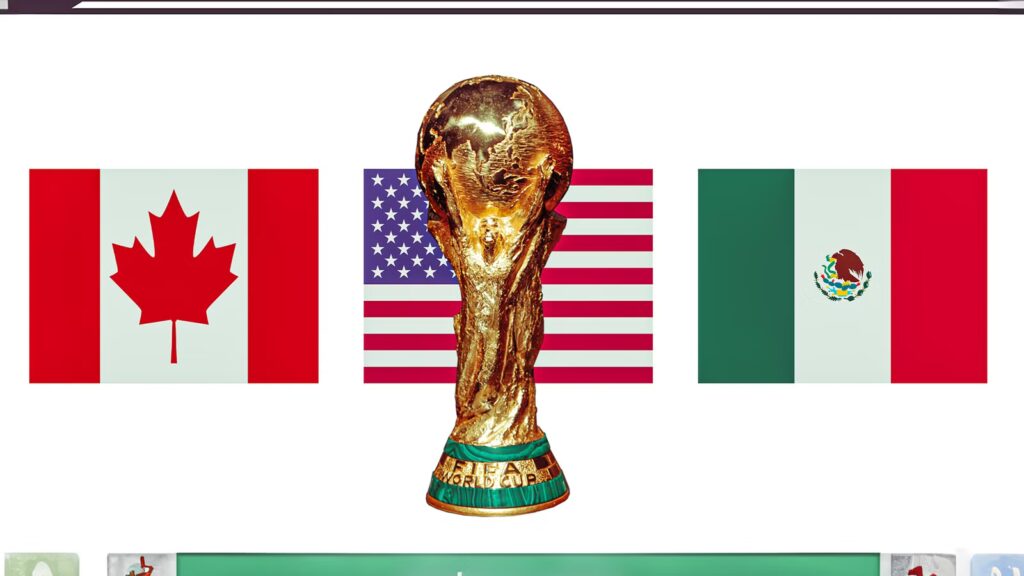
The FIFA World Cup 2026 is set to become the most ambitious and expansive tournament in football history. For the first time ever, the competition will be jointly hosted by three nations: the United States, Canada, and Mexico. These three countries will be the FIFA World Cup 2026 Host Countries. It will also feature a historic expansion from 32 to 48 teams, fundamentally transforming the scale, logistics, economics, and global impact of the tournament.
The decision to award hosting rights to the North American trio marked a major shift in FIFA’s vision for the future of international football. Rather than relying on a single host nation, FIFA embraced a multinational approach designed to maximize commercial reach, infrastructure capacity, and global fan engagement.
From massive stadiums in the United States to passionate football cultures in Mexico and rapidly growing support in Canada, the 2026 World Cup promises to blend tradition, innovation, and continental diversity in ways never seen before.
This article explores the host countries of the 2026 FIFA World Cup, examining their roles, stadiums, infrastructure plans, economic expectations, and the long-term legacy this tournament could leave on global football.
In June 2018, FIFA officially awarded the 2026 World Cup hosting rights to the United States, Canada, and Mexico after the “United 2026” bid defeated Morocco in a FIFA Congress vote.
The North American bid received overwhelming support due to several advantages:
Unlike previous World Cups that required massive new stadium construction, the 2026 hosts already possessed many NFL, MLS, and multi-purpose venues capable of accommodating large international crowds.
The tournament also aligns with FIFA’s long-term strategic goal of expanding football’s footprint in North America ahead of future commercial growth.
The United States will host the majority of matches during the tournament, including the final. Out of the 104 total matches planned under the expanded format, the U.S. is expected to host 78.
The country’s role includes:
American cities selected as hosts include:
The United States is expected to be the commercial engine of the tournament due to its enormous sports media market and advanced infrastructure.
Canada’s inclusion is historically significant because it marks the country’s first time hosting men’s World Cup matches.
Canadian host cities include:
Although Canada will host fewer matches than the U.S. or Mexico, its role is symbolically important for football development in the country.
In recent years, Canada’s football profile has grown dramatically:
The 2026 tournament could accelerate Canada’s transformation into a major football nation.
Mexico will make history as the first nation ever to host the FIFA World Cup three times, having previously hosted in 1970 and 1986.
Mexican host cities include:
Mexico’s football culture is among the most passionate in the world. Stadiums are expected to feature intense atmospheres, vibrant supporter traditions, and high attendance figures.
Mexico City’s iconic Estadio Azteca will become the first stadium in history to host matches in three separate World Cups.
The 2026 World Cup will be the first tournament featuring 48 teams instead of 32, significantly increasing the number of matches and participating nations.
Key changes include:
This expansion aims to:
However, critics argue that the expanded format may dilute overall match quality and increase player fatigue.
The economic implications of hosting the 2026 World Cup are enormous. Analysts estimate that the tournament could generate billions of dollars in economic activity across North America.
Expected economic benefits include:
In the United States alone, economists project economic impacts potentially exceeding $10 billion depending on attendance and tourism patterns.
Mexico and Canada are also expected to benefit significantly through infrastructure upgrades and tourism visibility.
Hosting a tournament of this scale presents major logistical challenges.
The three host countries must coordinate:
One of the biggest concerns involves travel distances. Unlike compact tournaments such as Qatar 2022, the 2026 World Cup will span an entire continent.
Fans and teams may need to travel thousands of miles between matches, creating scheduling and fatigue challenges.
The 2026 World Cup will feature some of the most technologically advanced stadiums ever used in football.
Notable venues include:
Many stadiums will require temporary modifications to comply with FIFA standards, including:
The tournament is expected to showcase innovations in fan engagement, broadcasting, and stadium technology.
The 2026 World Cup could become a defining moment for soccer in the United States.
Since hosting the 1994 World Cup, American soccer has experienced major growth:
The arrival of international stars such as Lionel Messi in MLS has also boosted interest dramatically.
Many analysts believe the 2026 tournament could permanently elevate soccer into America’s mainstream sports culture.
Mexico enters the 2026 World Cup with one of the richest football traditions outside Europe and South America.
Historic moments hosted in Mexico include:
For Mexican fans, football is deeply connected to national identity, and hosting again reinforces the country’s importance in global football culture.
Canada’s role in the 2026 tournament represents a new chapter in the country’s sporting evolution.
Historically overshadowed by hockey, Canada is now investing heavily in football development.
Key growth factors include:
The tournament may inspire a new generation of Canadian football talent.
One criticism of the 2026 World Cup involves environmental impact.
Concerns include:
FIFA and host organizers have pledged sustainability initiatives, including renewable energy use and carbon reduction strategies, though critics remain skeptical about implementation.
Coordinating security across three countries presents a unique challenge.
Authorities must manage:
The multinational structure requires unprecedented cooperation among federal, regional, and local agencies.
The 2026 World Cup is not just another tournament—it represents a turning point in football globalization.
It combines:
This combination could reshape FIFA’s future business strategy and influence how future tournaments are hosted.
The FIFA World Cup 2026 host countries—the United States, Canada, and Mexico—are preparing to stage the largest and most ambitious football tournament ever organized.
Each nation brings something unique to the event:
Together, these three countries will host a tournament that could redefine international football for generations.
From expanded participation and technological innovation to economic impact and global fan engagement, the 2026 World Cup is shaping up to be far more than a sporting event—it is becoming a global cultural milestone.
As the countdown continues, the world is preparing for a World Cup unlike any before it, hosted across an entire continent and driven by a vision of football as a truly global game.